NASA astronaut Mike Fincke said Friday that doctors still have not determined what caused him to suddenly lose the ability to speak aboard the International Space Station in January — an episode that triggered the first medical evacuation in NASA history.
Fincke, 59, a retired Air Force colonel and four-time space flier, told the Associated Press from Houston’s Johnson Space Center that he was eating dinner on Jan. 7, the night before a planned spacewalk, when the incident struck without warning.
“It was completely out of the blue,” Mr. Fincke said. “It was just amazingly quick.”
The episode lasted roughly 20 minutes, and he recalled no pain, but his crewmates immediately recognized he was in distress. All six gathered around him within seconds, and flight surgeons on the ground were brought in to assist.
Doctors have ruled out a heart attack, and Mr. Fincke said he was not choking. Beyond that, the cause remains unresolved, with investigators leaving open the possibility that the incident was connected to his accumulated 549 days in weightlessness. He has not experienced anything like it before or since.
Mr. Fincke declined to elaborate further on the medical details, citing NASA’s interest in protecting astronaut privacy so crew members do not hesitate to report health problems in the future.
The space station’s ultrasound machine was used at the time of the incident, and Mr. Fincke has undergone numerous tests since returning to Earth. NASA is also reviewing other astronauts’ medical records for any comparable events that may have occurred in space.
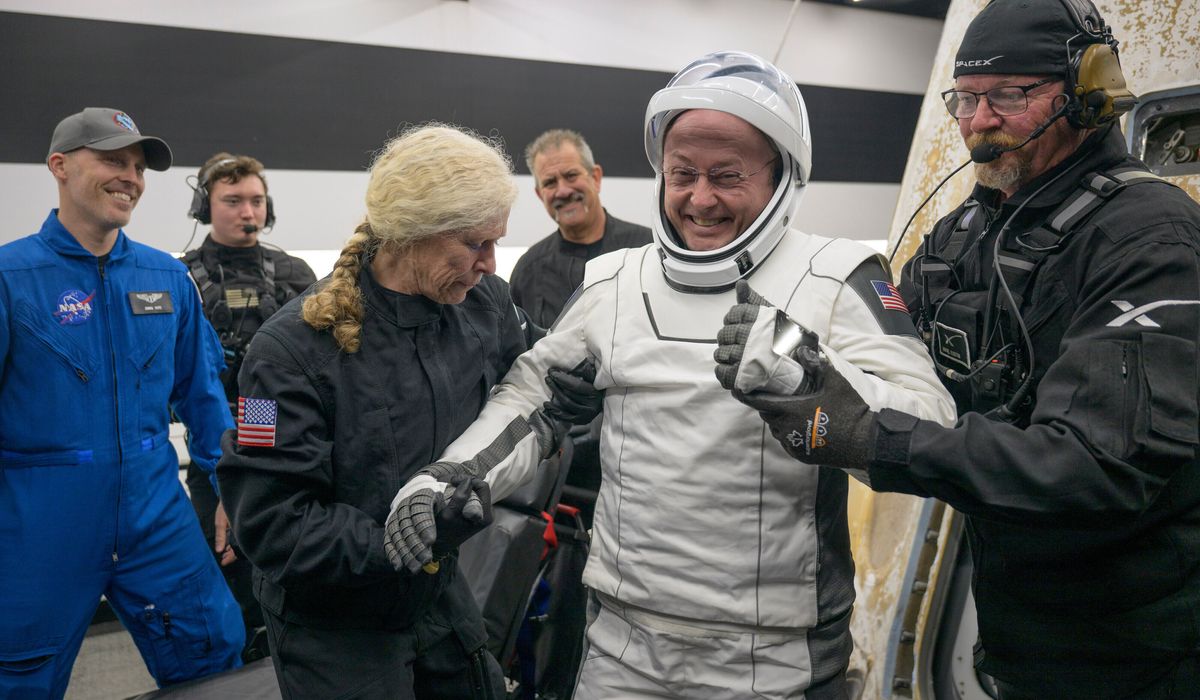
The scare forced the cancellation of what would have been Mr. Fincke’s 10th spacewalk — and the first for crewmate Zena Cardman. SpaceX brought the Crew-11 team back to Earth on Jan. 15, more than a month ahead of schedule, and they were taken directly to the hospital upon arrival.
Mr. Fincke said he felt guilty about cutting his crewmates’ mission short but stopped apologizing after NASA Administrator Jared Isaacman intervened.
“This wasn’t you. This was space, right?” colleagues assured him. “You didn’t let anybody down.”
Mr. Fincke, who publicly identified himself as the astronaut involved late last month, said he still hopes to return to space one day.
This article was constructed with the assistance of artificial intelligence and published by a member of The Washington Times’ AI News Desk team. The contents of this report are based solely on The Washington Times’ original reporting, wire services, and/or other sources cited within the report. For more information, please read our AI policy or contact Steve Fink, Director of Artificial Intelligence, at sfink@washingtontimes.com
The Washington Times AI Ethics Newsroom Committee can be reached at aispotlight@washingtontimes.com.