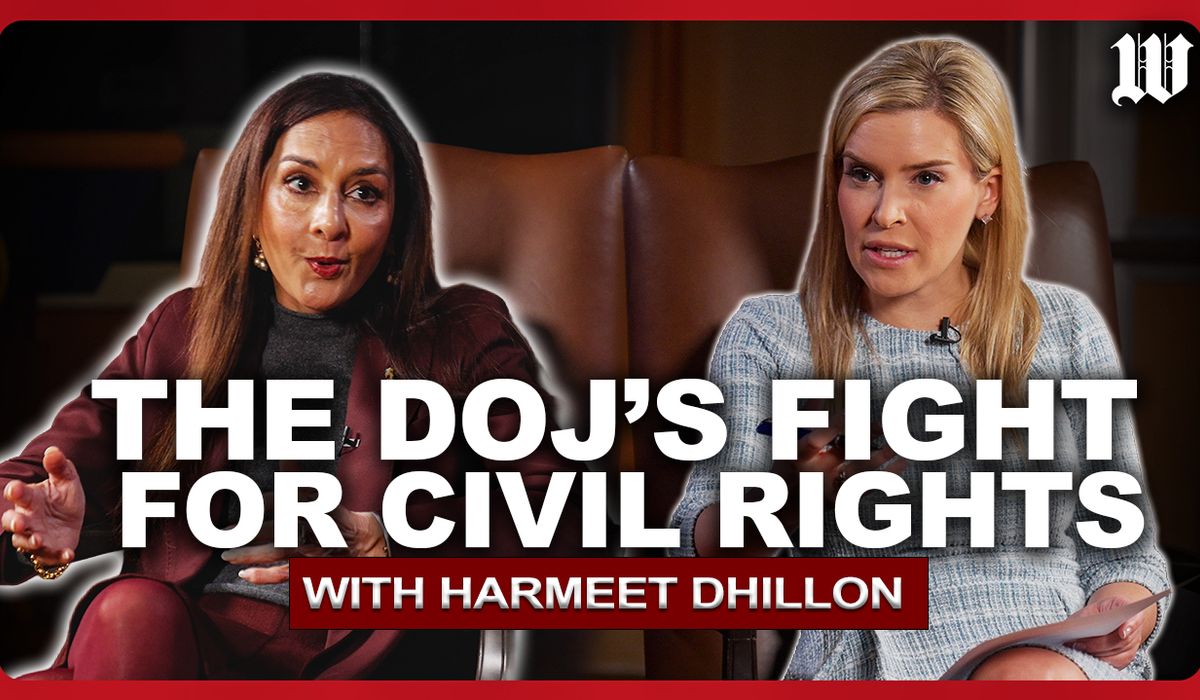
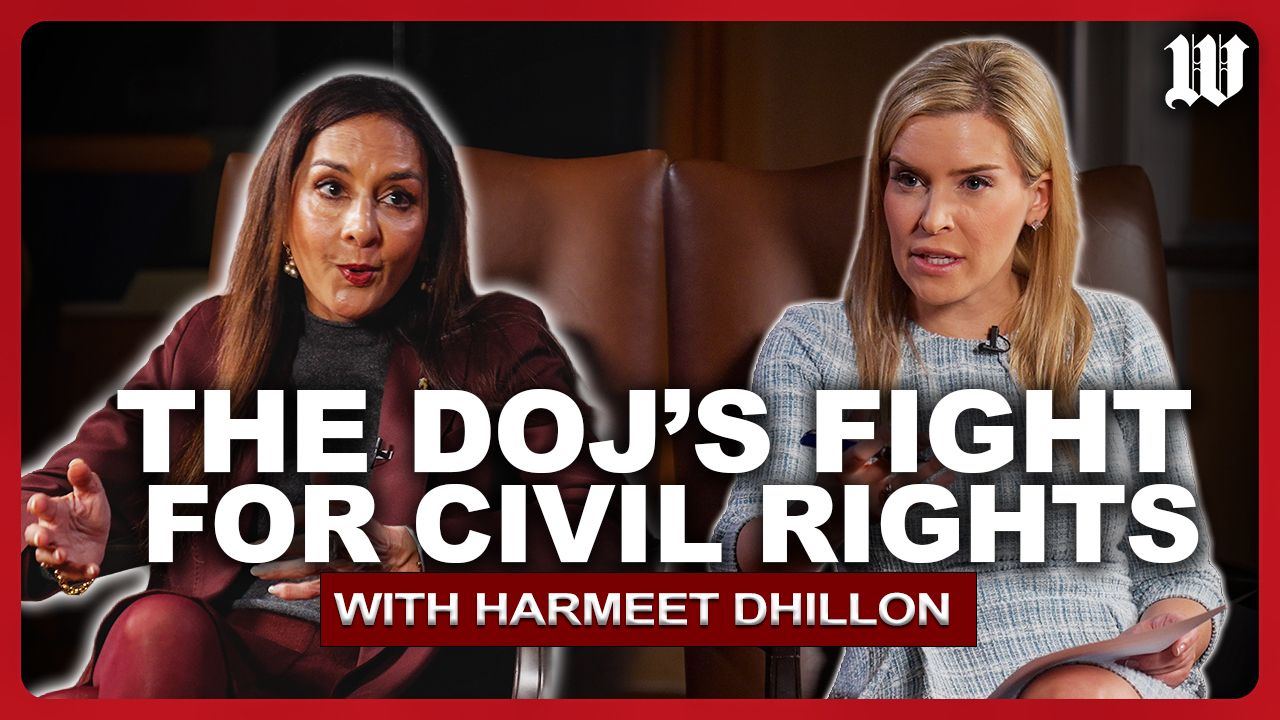
Harmeet Dhillon sits down with Alex Swoyer to discuss the Justice Department’s civil rights priorities, including election integrity, parental rights, Harvard, and religious liberty. In this interview, she explains how the DOJ is approaching voter roll access, school-related legal fights, and high-profile enforcement cases under the Trump administration.
[SWOYER] I wanted to talk about the election aspect and voter rolls. You’ve been seeking states’ complete voter rolls over the past several months, identifying numbers. I know that the DOJ has talked about this a little bit in court, obviously, but I wanted to get a sense from you in basic terms for our readers and our watchers out there. What are you trying to build with the data? What are you finding so far?
[DHILLON] Well, really, we’re trying to help states comply with their federal obligation to maintain clean voter rolls, and this has become particularly important after the COVID changes to laws throughout the United States that made mail-in balloting much more prevalent. And so when you have inaccurate voter rolls, you suddenly have thousands of ballots that are being sent to places or people who shouldn’t receive them or who don’t exist anymore, which really leaves the system open to vulnerability. And that in turn causes many voters to lose confidence in our elections and then stay away from the polls.
I feel like it’s really important that all Americans, whatever their political background, they should first be motivated to vote. And second, be satisfied with the outcome of those elections. And so the attorney general has the right under the 1960 Civil Rights Act to review these records and we’re helping states clean up their voter rolls. And I’m happy to say that a significant number of the states — it’s 15 so far with another several we’re in negotiations with — complied with our request. They have nothing to hide and they either just handed over their voter rolls for us to help them and then give them back a sort of markup, if you will, of this is what we found in our federal records and you might want to look at these particular names or remove them. These people are dead. These people aren’t citizens. These people are also registered in another jurisdiction. These are pretty basic things that every secretary of state should want.
Then we have some states who claim that their state privacy laws prevent them from giving us this information. The information we’re seeking — to make sure that we’re accurate in reviewing it vis-a-vis our federal records — is social security numbers or driver’s license numbers, some unique identifiers that help us make sure we’re talking about the same Jack Smith or Sue Jones and not a different one, so that we’re accurate in our work. Which is kind of silly because the federal government actually issues the Social Security numbers. So keeping information confidential from us is dumb.
And a lot of these states are actually sharing this information with so-called nonpartisan, but really quite partisan groups, like ERIC. And I just saw a case of one of the states who’s in litigation with us, Washington State, yesterday. They have had a hack of their entire driver’s license database. It’s not super secure in Washington, apparently. And the same information they’re refusing to give us is information that some hacker now has. We just at the end of the day want to make sure we have clean and accurate elections that Americans have confidence in. That’s why we’re doing this.
[SWOYER] Is there anywhere that you have fear could be the worst offender? Or ones that you’re honing in on? I ask because I live here in Washington, D.C. I can tell you at my house, I get half a dozen ballots to my house of people that don’t live there anymore. One I know is deceased because it was an estate sale home, right? And so I just was curious if there’s certain areas that are of primary focus.
[DHILLON] I think this is a national problem. It’s a red state and a blue state problem. I get the mail of the last five people who lived at my house, even though I keep sending it returned to sender back to the post office. What people need to know is when your loved one dies — I had two of them in 2024 who died — you need to take affirmative steps to get them off the voter rolls. Even then, some states don’t respect that. So we all have a job to do to maintain the integrity of our elections. When you move, make sure — don’t assume the government’s going to update the records just because you did a change of address. They won’t in most states. So you need to really take some steps to make sure that your ballot isn’t being voted by somebody in California when you move to D.C., in my case. So, you know, everyone has to do a little bit of homework there.
[SWOYER] You mentioned that you were suing under the Civil Rights Act of 1960. I think there’s been 29 lawsuits in D.C.
[DHILLON] Yeah, 29 lawsuits plus D.C.
[SWOYER] And I know there’s some cases that have gone before a judge. Michigan, California. I think the California judge, I’m not sure which appointee, which we can always talk about, but was talking about that the Civil Rights Act is meant to promote voting, that this move is turning on its head. I know you talk about your appeal. Is there any sort of response to that type of reasoning?
[DHILLON] I respect Judge Carter, very decades on the bench, but I disagree. I think that having clean voter rolls promotes voting. It makes people feel confident that their vote is only being counted once and only with other American citizens. And a lot of Americans have lost confidence in the sanctity of our elections after widespread violations of state election laws in the 2020 election. I was an election lawyer during that time, and I personally litigated cases and did fact-finding in multiple jurisdictions, including Pennsylvania. All the swing states had violations, major violations. Some violations, some would argue, that changed the outcome of the election.
The rest of the world has elections and they occur on a single day and then they have the outcome later that day. The U.K. determined Brexit in an election that’s placed in a single day with the outcome later that day. Why can’t America do it? It’s a real problem. So we need to clean that up. But this starts with clean voter rolls. And so I think when we have this done eventually, Americans will feel more confident.
Watch the video for the full conversation.