Maryland lawmakers are debating a bill that would require menstrual hygiene products to be stocked in all public restrooms inside state-owned or state-operated buildings, including men’s bathrooms.
What does the bill do?
House Bill 941, titled “Public Health – Public Buildings – Hygiene Products,” would require every public restroom in every public building to maintain an adequate supply of hand soap, toilet paper, hand-drying devices, water, waste containers and menstrual hygiene products — defined as tampons, sanitary napkins and sanitary pads.
The bill defines “public building” as any structure owned, leased, or operated by the state or a political subdivision of the state, including mass transit terminals supported by public funds and public parks or recreation centers. Schools that primarily serve K-12 students are excluded.
Who introduced it?
The bill was introduced on Feb. 5, 2026, sponsored by Delegates Nikki Hill, Darryl Barnes Alston, Guy Guzzone, Ariana Kelly Kaufman, Marleny Taveras, Curtis Taylor, Courtney Watson White Holland, Stewart Woods and Dana Woorman and assigned to the House Committee on Government, Labor, and Elections.
SEE ALSO: Democrats and their love affair with men’s tampons
What’s the controversy?
Because the bill requires hygiene products in all public restrooms — not just women’s — it would apply to men’s restrooms as well.
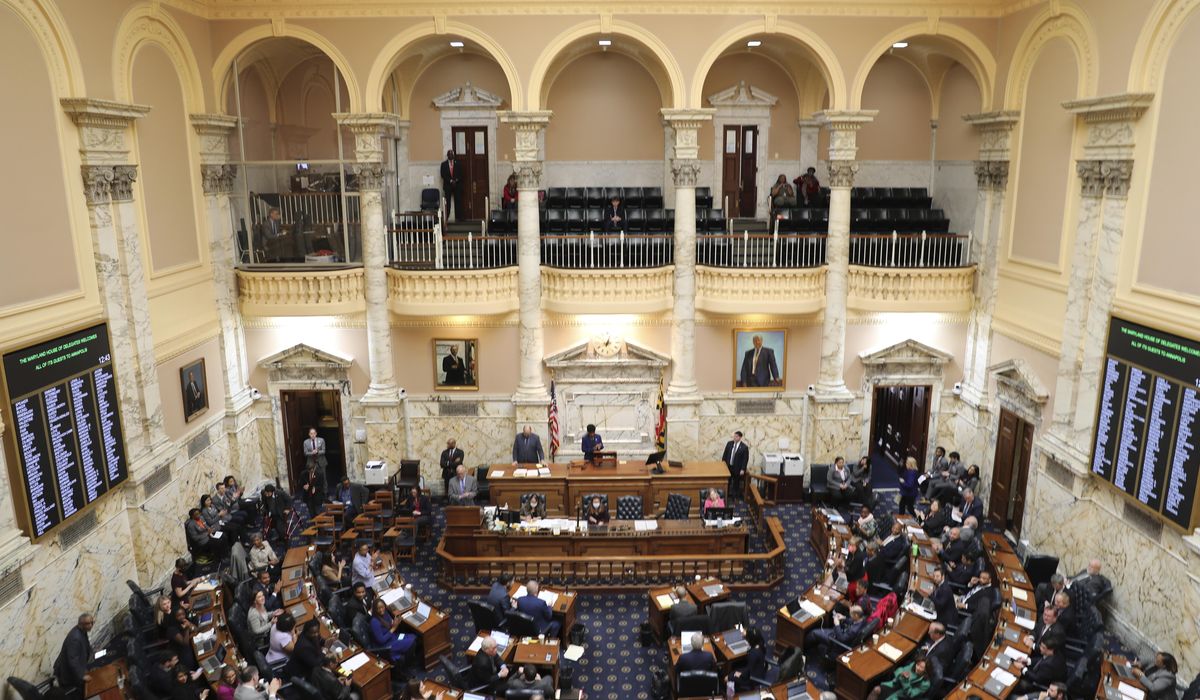
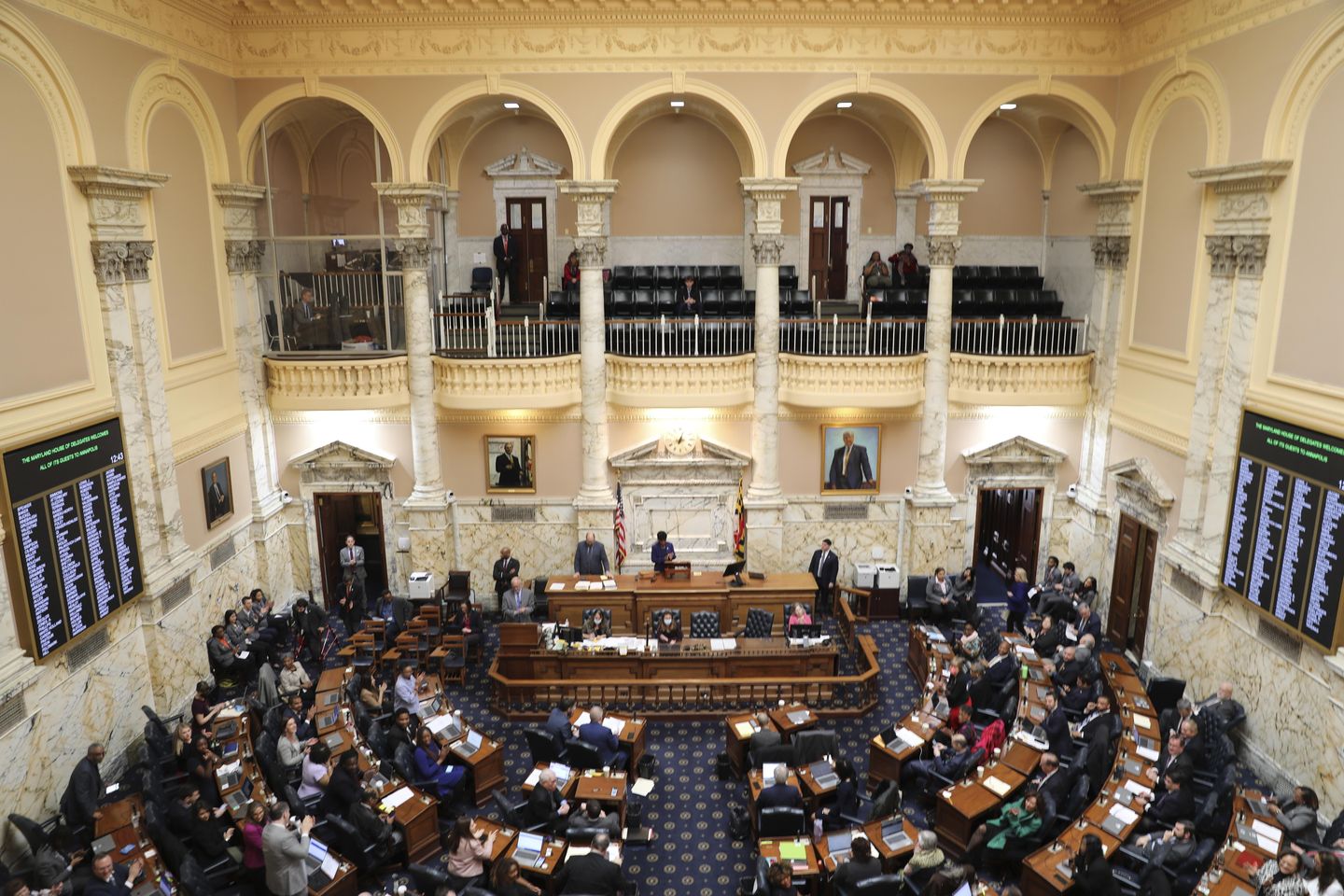
Republican Del. Kathy Szeliga took to the House floor to question which public buildings would be affected and specifically whether venues like Ravens Stadium or Camden Yards — both state-run facilities — would be required to stock tampons in men’s bathrooms. Democratic Del. Ken Kerr of Frederick County, the bill’s lead sponsor, confirmed they would. Szeliga also questioned the bill’s language calling for “appropriately sized tampons,” drawing laughter from parts of the House chamber.
Where does the bill stand?
The bill passed its second reading in the House with amendments on March 17 but had not yet advanced to the Senate. Szeliga subsequently declared the bill “dead” in a video posted to her Facebook page, writing that public outcry over the proposal had stopped it “in its tracks.”
If enacted, the law would take effect Oct. 1, 2026.
This article was constructed with the assistance of artificial intelligence and published by a member of The Washington Times’ AI News Desk team. The contents of this report are based solely on The Washington Times’ original reporting, wire services, and/or other sources cited within the report. For more information, please read our AI policy or contact Steve Fink, Director of Artificial Intelligence, at sfink@washingtontimes.com
The Washington Times AI Ethics Newsroom Committee can be reached at aispotlight@washingtontimes.com.