California schools are once again required to hide the opposite-sex gender identities of students from their parents under an emergency stay issued by the 9th Circuit Court of Appeals.
The court temporarily halted last month’s class-wide permanent injunction against the state’s mandate on transgender-student privacy pending the outcome of an appeal by California Attorney General Rob Bonta.
The three-judge panel found that the state had made “a substantial case for relief on the merits based on the sweeping nature of the district court’s injunction, the dubious class certification, and the weakness of Plaintiffs’ substantive due process claim.”
California forbids school officials from disclosing to parents the opposite-sex names and pronouns of students without their consent, but the appeals court said that the policy also contains an exception for cases in which there is a “compelling need” to protect the students’ well-being.
“Because the policies at issue do not categorically forbid disclosure of information about students’ gender identities to parents without student consent, other parties in this action, including the Plaintiffs, will not be substantially injured from the issuance of a stay,” said the 13-page decision released Monday. “Additionally, the public interest in protecting students and avoiding confusion among schoolteachers and administrators weighs in favor of a stay.”
The decision was issued by Chief Judge Mary Murguia and Judge Andrew Hurwiz, both Obama appointees, and Judge Salvador Mendoza Jr., a Biden appointee.
Mr. Bonta’s office cheered the ruling, saying that it “protects vulnerable students and avoids confusion for teachers and schools while we appeal the district court’s decision.”
“We are pleased that the Ninth Circuit has agreed we are likely to succeed on appeal in arguing that the district court’s injunction is unnecessarily vague, far more sweeping than necessary to remedy the alleged harms, reliant on faulty readings of the policies at issue, and contrary to longstanding principles of constitutional law,” said the office in a Tuesday statement.
The ruling came two weeks after U.S. District Judge Roger Benitez ruled against the policy in a first-of-its-kind decision, finding that the state’s interest in protecting student privacy was superseded by the First and Fourteenth amendment rights of parents and teachers.
Attorneys for the Thomas More Society said they would immediately seek an en banc rehearing before the full appeals court as well as a review by the U.S. Supreme Court. Both motions are expected to be filed this week.
“We are deeply disappointed that this three-judge panel has taken the extraordinary step of staying a class-wide permanent injunction, disregarding the severe irreparable harm that will now occur to our clients and all members of the classes,” said Paul Jonna, Thomas More Society special counsel. “We believe the panel’s decision misapplied both the facts and the law.”
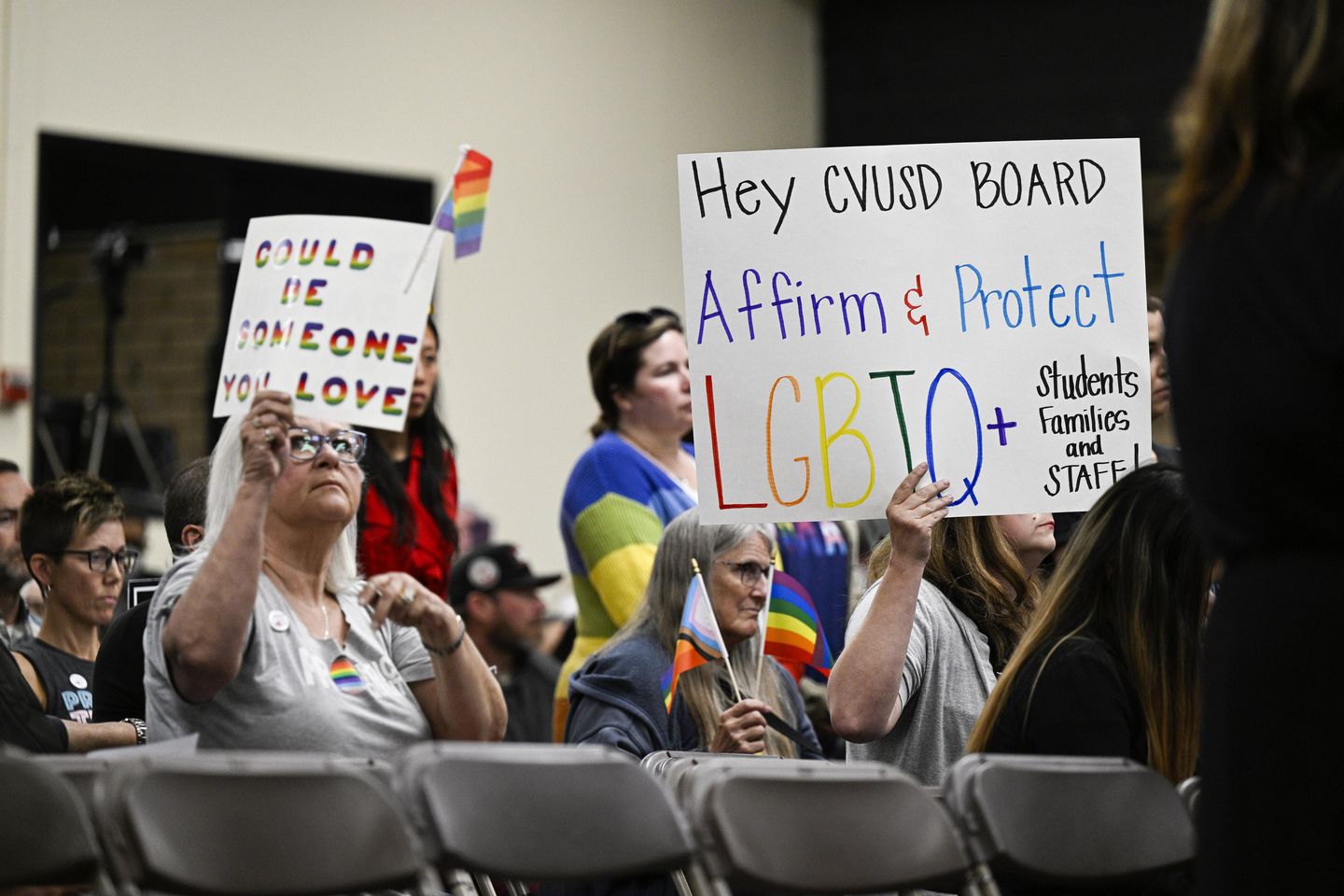
Parents’ rights groups have blasted the policy as a “parental exclusion policy,” while transgender-rights advocates say that it protects students by banning “forced outing.”
📢 BREAKING: Thomas More Society will seek immediate en banc reconsideration & U.S. Supreme Court review after the Ninth Circuit pauses landmark parental rights ruling against gender secrecy policies…
Read our reaction ⬇️https://t.co/yaLAHTYMeH
The Ninth Circuit Court of… pic.twitter.com/STiaPDo3Vo
— Thomas More Society (@ThomasMoreSoc) January 6, 2026
The legal organization represents Elizabeth Mirabelli and Lori West, Christian teachers in the Escondido Union School District who said the policy required them to lie to families by using students’ transgender names in class but their legal names when speaking to parents.
Under the state policy, school officials must have permission from students to reveal their transgender identities, including names and pronouns, to their families.
The teachers won a preliminary injunction in September 2023 that protected them from the state’s policy. The lawsuit was expanded afterward to include all California parents, teachers and school districts.
“California is trying to undo this victory for families and educators, but we will not let that happen,” Mr. Jonna said in a Tuesday statement. “This is an issue of national importance and will likely need to be settled by the U.S. Supreme Court.”
Peter Breen, Thomas More Society executive vice president and head of litigation, called the stay a “temporary setback, not a final outcome.”
“The district court’s thorough analysis of the constitutional issues remains sound. We will continue to stand with Elizabeth Mirabelli, Lori West, and the courageous families who brought this case forward,” said Mr. Breen. “Their fight to restore transparency and parental involvement in California’s public schools is far from over.”