Something flew over one of the most sensitive military sites in the country by unknown pilots, and boy, did it not belong there.
That fact alone ends any talk about harmless curiosity.
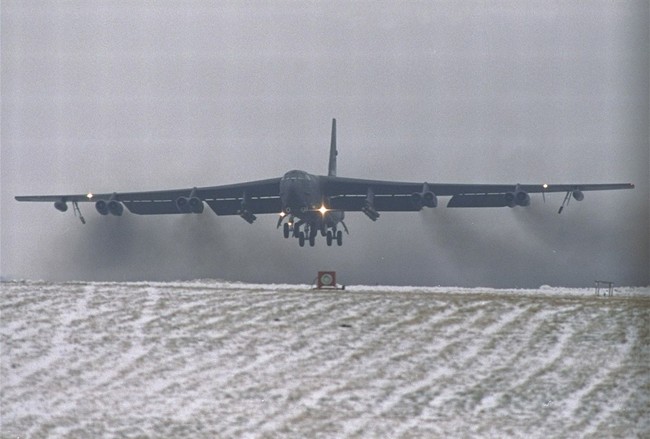
Barksdale Air Force Base in Louisiana confirmed multiple unauthorized drone incursions during the week of March 9. That installation is home to the 2nd Bomb Wing and supports B-52 Stratofortress bombers directly tied to the nation’s nuclear deterrent. Those planes aren’t there for show; they exist for the worst-case scenario, and their presence carries weight every hour of every day.
A spokesman for the base made a singular point: Flying drones over a military installation is a federal crime. That statement cuts through the noise; nobody accidentally drifts into restricted airspace, especially not more than once.
Nothing happened in a single pass; reports described repeated incursions over several days, a detail that shifts the story from a one-time mistake to something organized. One stupid decision may be an accident, but this pattern suggests intent.
Barksdale carries more responsibility than most installations; in addition to the B-52 bombers, it serves as headquarters for Air Force Global Strike Command, which also controls the nation’s intercontinental ballistic missiles.
With a mission sitting at the core of strategic deterrence, an unauthorized drone flight appearing over that kind of target tests more than perimeter security.
Former Deputy Assistant Secretary of Defense Mick Mulroy described the activity as deliberate.
“It looked like this was deliberate and intentional to see just how they would react,” he said. “Seeing this probe on a base in the United States is very troubling.”
His brief but accurate assessment aligns with how modern threats operate: Nobody needs to breach a gate or cross a fence line anymore; a drone with a camera can gather useful intelligence in minutes. Flight paths, response times, patrol routines, and blind spots all become visible.
Security forces at the base quickly reacted; officials raised the force protection level and issued a shelter-in-place order during the incursions. This response doesn’t happen over a toy; it clearly signals that the threat, or at least the unknown behind it, carried enough weight to restrict movement and heighten alert status.
We can ignore the timing, which adds another layer of complexity. Operation Epic Fury’s action against Iran doesn’t prove a connection, of course, but it changes how the event gets evaluated. Unusual activity near critical infrastructure always looks different when global tensions rise.
Technology has shifted the balance, as defense systems built to track large aircraft don’t always catch small drones flying low and slow, which creates gaps. Anybody paying attention to modern warfare knows those gaps exist, and some are more than willing to test them.
Nobody has publicly identified the drone operators, a silence that leaves little room for a casual explanation. A hobbyist doesn’t return to restricted airspace over several days without facing consequences. Federal law enforcement and military security don’t shrug off that kind of activity.
What remains is the possibility that someone probed the system, not to break it, but to study it. Testing doesn’t need success to be useful; it only needs access.
The story doesn’t end with the drones leaving the airspace. The real issue is what they learned while they were there and whether anybody else is taking notes.
A small machine in the sky doesn’t sound like much until you consider where it’s flying and why it keeps coming back. I mean, it’s not like the Trump administration allowed a Chinese spy balloon to traverse the United States.
Barksdale isn’t an ordinary location, and those flights weren’t random. Someone decided to send those drones into restricted airspace tied to nuclear-capable bombers. That decision carries weight far beyond a few minutes in the air.
Now, the question isn’t about the breach; it’s whether the next try looks the same or whether the flights have different missions.
Serious coverage doesn’t stop at surface-level headlines. It digs into patterns, intent, and consequences that others move past. A PJ Media VIP membership provides you with access to that deeper level, along with voices that won’t soften hard realities. Right now, get 60% off with promo code FIGHT.