We’ve all lived with a warped doorframe for years, choosing to ignore it rather than fix it. If you lift the door juuust right, the latch still works, friends learn the maneuver, and it eventually it grows into a family joke.
Eventually, the frame splits, sticking the thing for good, and repairing it now costs a bloody lot more than it would’ve been at the start.
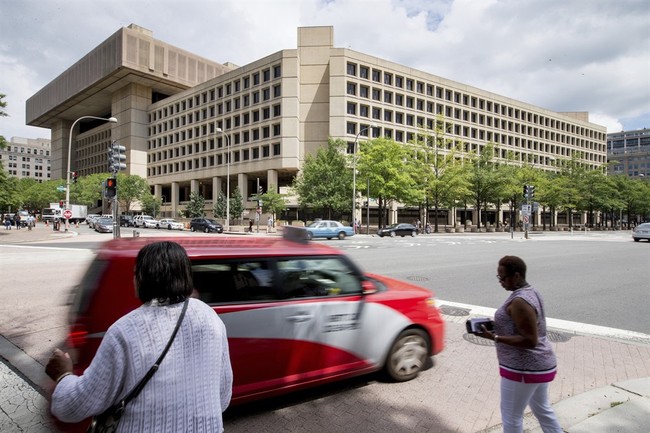
When FBI Director Kash Patel announced the permanent closure of the J. Edgar Hoover Building, it mirrored the doorframe situation. Federal officials finally stopped lifting the door juuust right and pretending everything would continue working swell.
A Building Past Its Prime
Over 50 years ago, the Hoover Building opened with an air of authority and visually appeared bereft of character: heavy concrete, narrow windows, and a fortress design that projected seriousness and permanence.
Over time, bad decisions, structural deterioration, outdated systems, and safety concerns turned any symbolism into risk. Concrete failures were flagged years ago by concerned structural engineers, but band-aid fixes extended occupancy while doing nothing for safety.
Our nation boasted unmatched strength, yet tolerated conditions that private employers would never accept: stalled elevators, water leaks, and aging mechanical systems. However, workers adapted because of duty.
Choosing Function Over Posture
Shuttering the building and relocating roughly 1,500 employees marked a significant shift in thinking, a move favoring function over posture. Smaller, updated facilities deliver modern security standards, reliable infrastructure, and layouts built for contemporary investigative work.
Federal law enforcement doesn’t need a monument, or one butt-ugly giant piece of concrete; it requires a safe, functional space. Critics frame relocation as, if you can believe this, retreat, while others call it realism.
Buildings exist to serve missions, not flatter egos, and when walls threaten workers, that symbolism loses even more standing.
Why Federal Maintenance Stalls
What baffles me is the federal hesitation to modernize aging buildings; it defies logic when they don’t hesitate to buy a $75,000 hammer. Private companies renovate or relocate as soon as cost curves turn ugly; cities replace bridges before they collapse, but federal agencies sometimes wait until there’s undeniable danger.
Much of that inertia is easily explained by politics; renovations draw scrutiny, relocations disrupt routines, and high budget requests attract outrage. Doing nothing offers quiet — temporarily — and masks growing liability. Common sense goes out the window. Leadership willing to accept short-term noise prevents long-term failure, and avoidance wears a costume that looks like caution. But in reality, that avoidance costs so much more.
Practical Benefits Beyond Bricks
I find it funny when the left goes off on President Donald Trump’s ideas, complaining again about tyranny, his ego, and the way he never buttons his jacket. Yet with all their caterwauling, they forget something: Construction means jobs. Engineers, electricians, masons, and laborers gain steady work. Updated buildings drop maintenance waste and energy loss, and safer buildings lower the risk of injury. At the same time, productivity improves because people don’t have to dodge things while walking to the bathroom (just a little hyperbole, promise).
In addition to the ‘BUT TRUMP!’ arguments, the opposition floats ideas in total abstraction: benefits show up in concrete terms, safer workspaces, lower costs, and respect for people who carry enormous responsibility.
Strength Revealed in Upkeep
You can always tell a country’s priorities by how it maintains its buildings. Pride shows up in unglamorous choices, like roads repaired before breaking down, buildings replaced before signs of danger, and when it prioritizes function over theatrics.
When allowing decay, it signals complacency; addressing it signals confidence, because power erodes quietly when upkeep becomes optional, and leaders mistake nostalgia for stability.
Closing the Hoover Building checks the box on a much overdue correction, acknowledging that permanence depends on care, not concrete alone.
The homeowner living with the warped door never planned on failure, but each workaround felt easier than fixing it. Each season, as humidity shifts, the fixes become harder, and eventually the frame splits beyond saving.
Failure wasn’t the result of a simple mistake, but from years of tolerated neglect.
Final Thoughts
For what seems like forever, we’re seeing a federal administration treating governance like stewardship because of a decision that made sense: closing an unsafe building and moving forward.
Straightforward, or not so simple, maintenance rarely earns praise, but history rewards the leaders who fix problems instead of acting like Kevin Bacon in Animal House screaming, “All is well! All is well.”
Foundations and tools matter, and ignoring both always leads to greater repairs down the road.
PJ Media’s YUGE Christmas and New Year’s sale is on — now at our lowest rate of the year! This huge sale on our VIP Memberships ends on January 1, so make sure you join the club to get our special behind-the-scenes look at the news. Receive 74% off by following this link and using our promo code MERRY74.