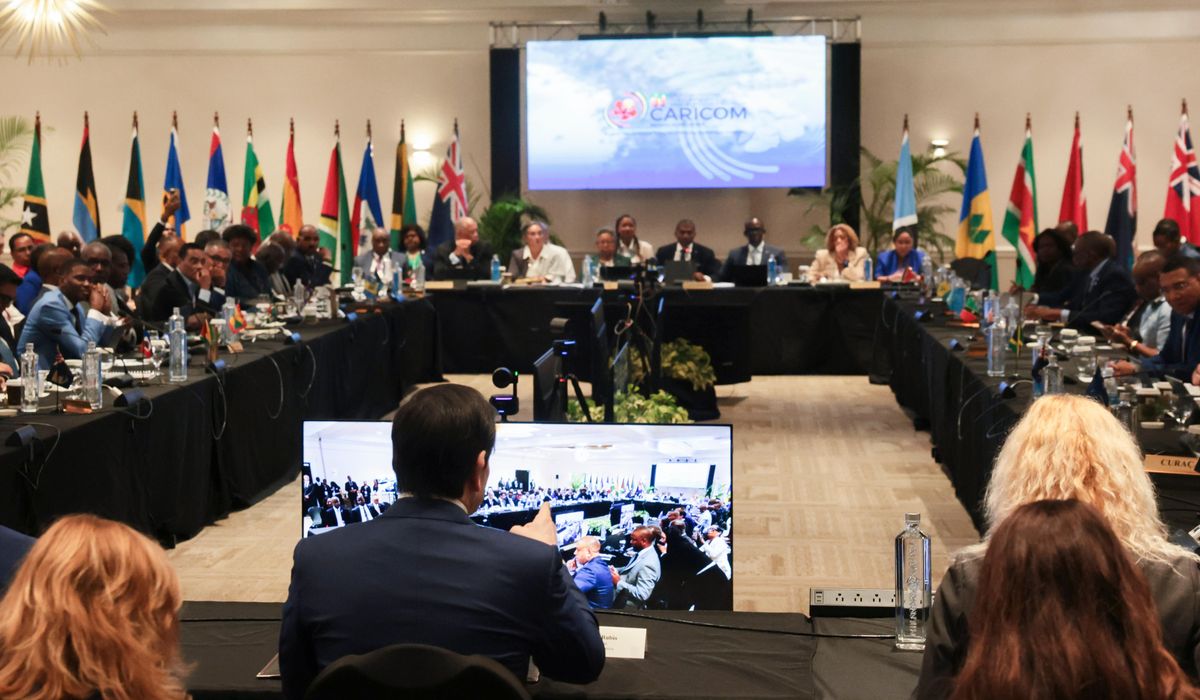
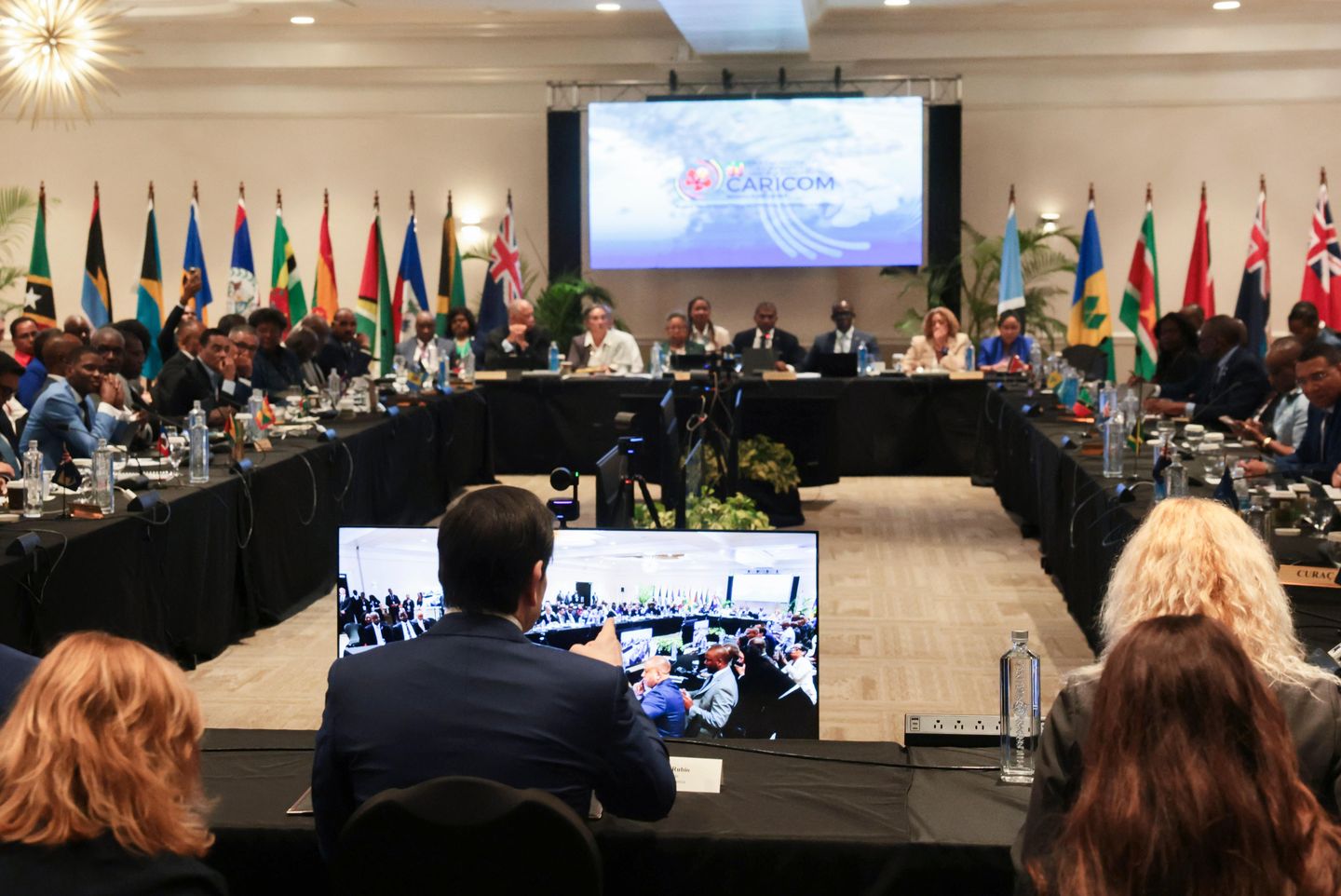
BASSETERRE, St. Kitts and Nevis — U.S. Secretary of State Marco Rubio on Wednesday defended the Trump administration’s military operation to capture Venezuela’s Nicolas Maduro, telling Caribbean leaders, many of whom objected to that move, that the country and the region were better off as a result.
Speaking to leaders from the 15-member Caribbean Community bloc at a summit in the country of St. Kitts and Nevis, Mr. Rubio brushed aside concerns about the legality of Mr. Maduro’s capture last month that have been raised among Venezuela’s island-state neighbors and others.
“Irrespective of how some of you may have individually felt about our operations and our policy toward Venezuela, I will tell you this, and I will tell you this without any apology or without any apprehension: Venezuela is better off today than it was eight weeks ago,” Mr. Rubio told the leaders in a closed-door meeting, according to a transcript of his remarks later distributed by the U.S. State Department.
Mr. Rubio said that since Mr. Maduro’s ouster and the effective takeover of Venezuela’s oil sector by the United States, the interim authorities in the South American county have made “substantial” progress in improving conditions by doing “things that eight or nine weeks ago would have been unimaginable.”
The Caribbean leaders have gathered to debate pressing issues in a region that President Trump has targeted for a 21st-century incarnation of the Monroe Doctrine meant to ensure Washington’s dominance in the Western Hemisphere. The Republican administration has declared a focus closer to home even as Washington increasingly has been preoccupied by the possibility of a U.S. military attack on Iran.
In his remarks to the group, America’s top diplomat tried to play down any antagonistic intent in what Mr. Trump has referred to as the “Donroe Doctrine.” Mr. Rubio said the administration wants to strengthen ties with the region in the wake of the Venezuela operation and ensure that issues such as crime and economic opportunities are jointly addressed.
He said transnational criminal organizations pose the biggest threat to the Caribbean while recognizing that many are buying weapons from the United States, a problem he said authorities are tackling.
He also said the U.S. and the Caribbean can work together on economic advancement and energy issues, especially because many leaders at the four-day summit have energy resources they seek to explore. “We want to be your partner in that regard,” he said.
Mr. Rubio said the U.S. recognizes the need for fair, democratic elections in Venezuela, which lies just miles away from Trinidad and Tobago at the closest point.
“We do believe that a prosperous, free Venezuela who’s governed by a legitimate government who has the interests of their people in mind could also be an extraordinary partner and asset to many of the countries represented here today in terms of energy needs and the like, and also one less source of instability in the region,” he said.
Mr. Rubio added: “We view our security, our prosperity, our stability to be intricately tied to yours.”
Godwin Friday, newly elected prime minister of St. Vincent and the Grenadines, echoed the fears of many European leaders when he said the Caribbean is “challenged from inside and out.”
“International rules and practices that we have become used to over the years have changed in troubling ways,” Mr. Friday said.
Rubio on Wednesday was holding a series of one-on-one meetings with individual heads of government, including the prime ministers of St. Kitts and Nevis and Trinidad and Tobago.
Terrance Drew, prime minister of St. Kitts and Nevis and chair of the Caribbean Community bloc, said the region “stands at a decisive hour.”
“The global order is shifting,” he said during the summit’s opening ceremony Tuesday. “Supply chains remain uncertain, energy markets fluctuate and climate shocks intensify.”