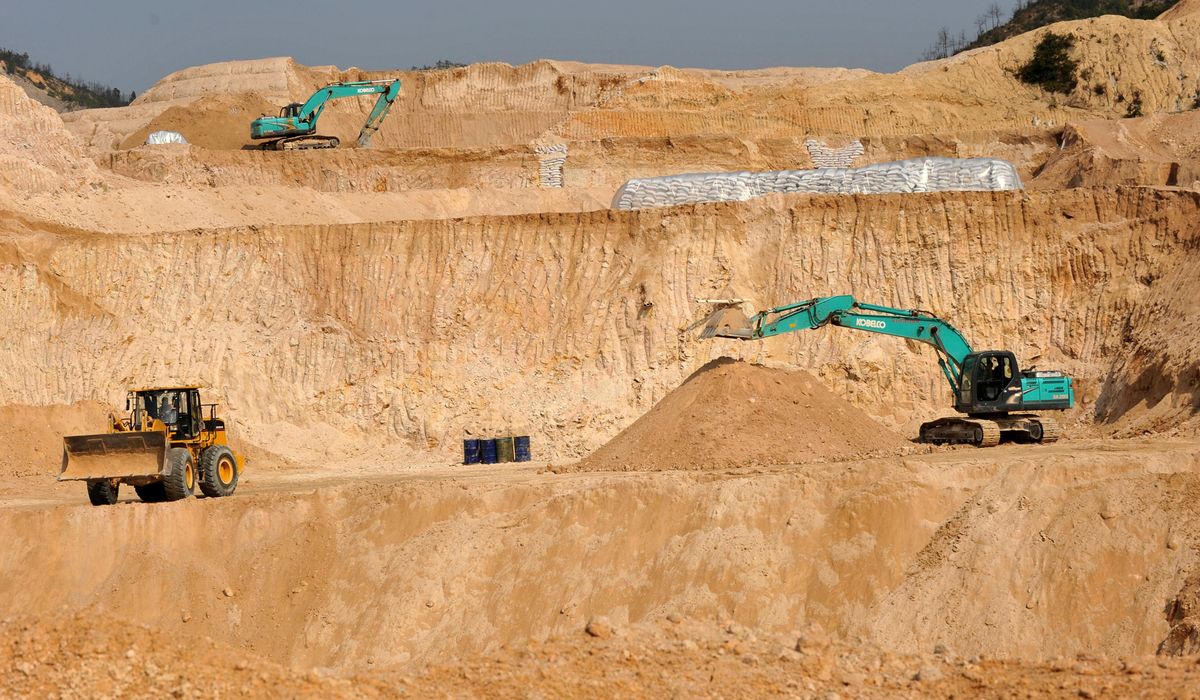
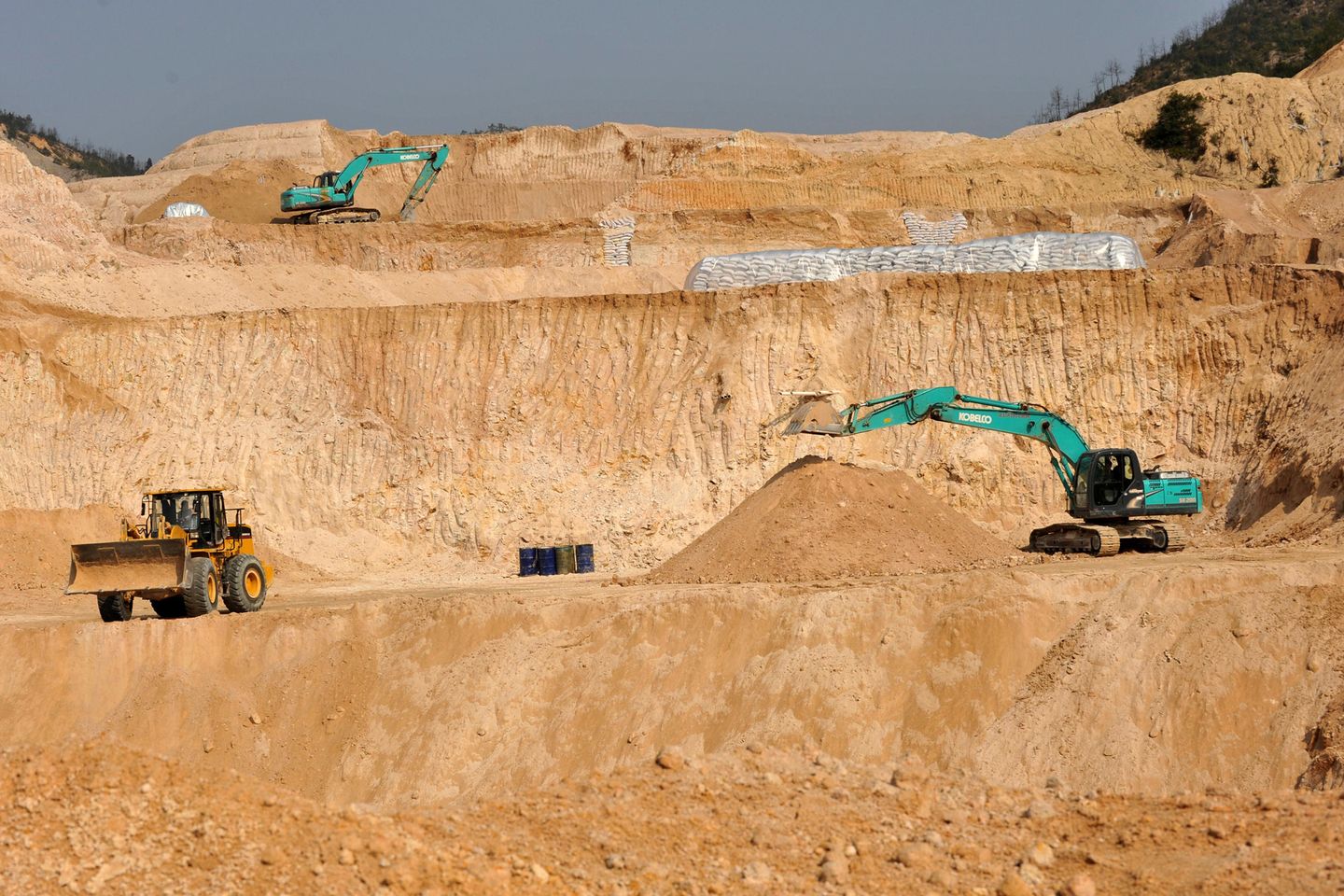
The House passed a bill Wednesday that would codify President Trump’s executive action to increase mining of hardrock minerals, including rare earth elements, to end U.S. reliance on foreign suppliers such as China.
The bill would also direct the Department of the Interior to accelerate mineral production on federal lands by identifying projects that can be immediately approved.
The Critical Mineral Dominance Act passed 224-195, with 10 Democrats joining Republicans in support.
“There is no reason for the United States to be dependent on other countries, including foreign adversarial nations, for our critical mineral future. Nobody does it better than the United States,” said Rep. Pete Stauber, a Minnesota Republican who introduced the bill.
Minerals, especially rare earth minerals, are vital to the production of military and civilian technology. They are used in products such as cellphones, hard drives, hybrid engines, lasers, medical devices and televisions, as well as high-tech military weapons systems.
The bill would direct the Interior and Agriculture departments to report to Congress about mining projects on federal land and remove bureaucratic barriers to domestic mining.
It calls for the departments to give Congress a list of each mining project that has the potential to increase the production of hardrock minerals, like lithium, copper, nickel and rare earth elements.
The bill would codify certain provisions in three of Mr. Trump’s executive orders from last year that aimed to increase domestic mining and processing of minerals, as well as create stockpiles to decrease U.S. reliance on foreign mineral imports.
Critics, like the National Parks Conservation Association, argue the bill places “some modest oversight on the administration’s mineral agenda [but] does not adequately address the fundamental underlying issues with mining on public lands.”
Mr. Stauber said the bill does not “greenlight any mining project without the necessary scrutiny.”
“Nothing in this bill allows for a project to bypass the [National Environmental Policy Act,] the Clean Air Act, the Clean Water Act or the Endangered Species Act,” he said. “This bill is a strong signal from Congress to the executive branch that we need to get serious about our critical mineral strategy and take necessary steps to win once again.”
Rep. Jared Huffman, California Democrat, called the bill a “corporate giveaway,” and said the environmental safeguards Mr. Stauber mentioned are also under attack by Republicans and the administration.
“It is cold comfort indeed,” he said. “And I’m frankly shocked that anyone across the aisle could even say these things with a straight face.”
Earlier this week, Mr. Trump created a first-of-its-kind stockpile of critical minerals to reduce the country’s dependence on China for minerals like cobalt and lithium that companies need to operate.
The project, called Project Vault, started with $2 billion in private seed money along with a $10 billion loan. Companies like Google, General Motors and Boeing are expected to get involved to have access to the minerals.
The stockpile will include critical minerals and rare earths, and the idea is that it will ensure a steady supply of minerals to U.S. companies that need them.