Chronic illness, opioid addiction, overmedication, politicized medicine, youth depression, obesity — the list of medical crises in America is long and alarming. The Trump administration aims to reverse the disastrous trend.
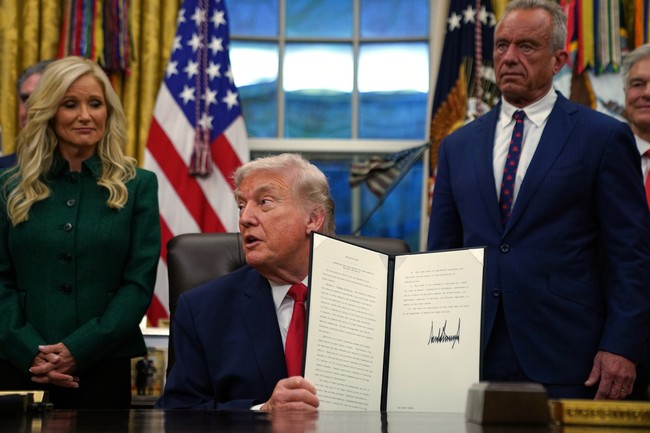
Constitutionally speaking, the federal government should not be involved in healthcare, and its being so has caused endless problems. But that ship has unfortunately sailed, and so now our main goal is to have federal healthcare agencies try to be helpful instead of harmful. Department of Health and Human Services (HHS) Secretary Robert F. Kennedy Jr. has been one of the most laudable Trump administration picks so far, and he is trying to continue his positive track record with what Donald Trump calls the “Great American Recovery.”
The Department of Health and Human Services (HHS) actually made the announcement Monday, Feb. 2, but it also issued a Feb. 3 press release to highlight how many outlets, advocates, organizations, and government officials are praising the move.
“The Great American Recovery” is supposed to emphasize recovery and self-sufficiency, which would indeed be a welcome change from past policy. Goldman Sachs analysts posed a chilling question back in 2018, “Is curing patients a sustainable business model?” Unfortunately, much of the medical establishment and bureaucracy in this country seemed to have decided the answer was “no.” Kennedy is bringing overdue reform.
Read Also: Trump Wants $1 Billion in Damages, ‘Nothing Further to Do’ With Harvard Over Ongoing Antisemitism
The HHS release summed up the news:
[Kennedy described] a comprehensive plan to strengthen prevention, expand treatment, and carry out the executive order President Trump signed last week to ignite the Great American Recovery. The centerpiece of this plan is a $100 million investment to solve long-standing homelessness issues, fight opioid addiction, and improve public safety by expanding treatment that emphasizes recovery and self-sufficiency.
The Safety Through Recovery, Engagement, and Evidence-based Treatment and Supports — or STREETS — Initiative will fund targeted outreach, psychiatric care, medical stabilization and crisis intervention, while connecting Americans experiencing homelessness and addiction to stable housing with a clear focus on long-term recovery and independence.
HHS followed that summary with a list of links and quotes, as mentioned above.
For example, Rep. Vern Buchanan (R-Fla.) called the announcement a “Big step for prevention and recovery. @SecKennedy announces $100M for the STREETS Initiative expanding evidence-based treatment.” MAHA Action is particularly hopeful for the effects on kids: “It’s critical to get them help before it’s too late.”
For Our VIPs: High School Promotes Hijabs to U.S. Girls, Hides Islam’s Violent Misogyny
The Center for Urban Renewal and Education commented, “The old rehab model is built to profit from endless relapses—more detox cycles = more billing. RFK Jr. is right: flip it to outcome-based care where providers are held accountable for real, lasting recovery, not repeat customers.”
Ophthalmologist and research scientist Houman D. Hemmati praised Kennedy and stated that Americans “needed a plan to RECOVER & become SELF SUFFICIENT, not crammed into a motel room for life.”
This is another win for Americans.
Editor’s Note: Support and follow PJ Media’s coverage of federal reforms and other key news in this midterm year. Join PJ Media VIP and use promo code FIGHT to get 60% off your membership.