RYE, England— Britain is wracked by political, economic and social angst, but on its southeast coast, a tiny fortress town famed for its medieval charm is holding back the tide of malaise.
From afar, America’s closest ally looks solid. The U.K. boasts the world’s sixth-largest economy, nuclear arms and a soft power armory stuffed with Shakespeare, the monarchy and Premier League soccer.
Close up, media and residents fret endlessly about “Broken Britain.”
Politically, Prime Minister Keir Starmer took power in 2024 on a blast of hope after his Labor Party overturned 15 years of majority Conservative Party rule.
He is botching it. He is the least popular British prime minister in history, according to recent polls, personifying widespread dissatisfaction with politics.
Economically, the promise of 2016’s Brexit – Britain’s withdrawal from the European Union — never materialized. Brits are suffering from sluggish growth, a cost-of-living crisis and disintegrating public services.
Socially, polarization runs deep with noisy debate – frequently toxic – focusing on immigration.
Seventy-eight miles south of central London, the 4,800-person town of Rye both exemplifies and defies national trends.
New vs. established parties
The Labor Party seized Rye from the Conservatives in the 2024 election, but recent developments there mirror the shifts in Parliament.
In January, a town council member slashed her Labor affiliation, while in November, a nearby special election, called a “by-election,” was won by Aidan Fisher, representing MAGA-inspired Reform U.K.
“Reform won the by-election because people have lost faith in the traditional parties,” Mr. Fisher said. “People don’t feel listened to and are extremely disillusioned.”
New parties are rising. No general election is expected before 2029, but Your Party now challenges Labor on the left, while Reform strives to replace the Conservatives on the right.
Per pollster YouGov, Reform is leading national polls. It has pushed debate on one red-button issue: illegal immigration.
“The main national issue residents raised with me was illegal immigration; people want something done,” Mr. Fisher said, though his platform focused on fiscal responsibility and making local services more efficient, not immigration. “[Mainstream parties] have promised to ‘stop the boats,’ yet the problem has only worsened.”
Rye’s local lifeboat has plucked wannabe migrants from the English Channel, and 14 bolted from a vessel that beached nearby in 2022.
But in Rye itself, immigrants are invisible, except for 15 Ukrainians sheltering from Russia’s invasion.
Quaint streets, hidden stresses
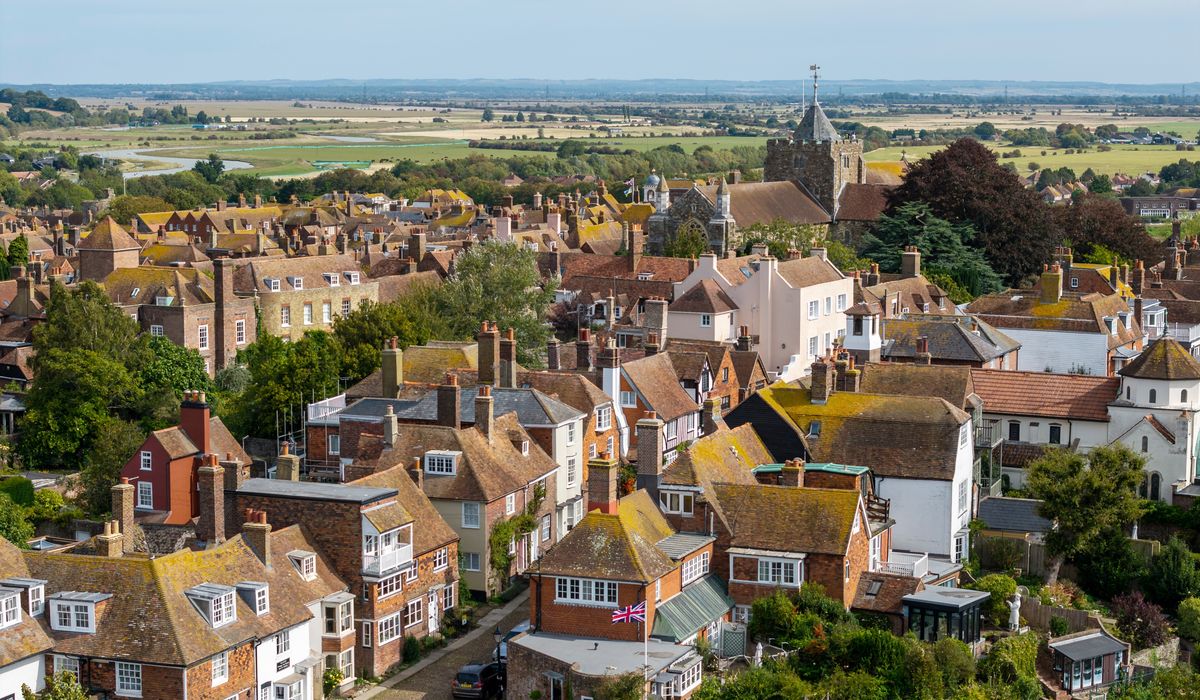
Backed by rolling countryside, Rye was both a hub for, and a victim of, cross-Channel raids during the 100 Years War. It later became a hive of smuggling and today is renowned as one of England’s prettiest towns.
It boasts a 13th-century castle, a 14th-century fortified gate and a 15th-century hotel, the Mermaid Inn, where guests including Judy Garland, President Eisenhower and Johnny Depp have braved its (alleged) ghosts.
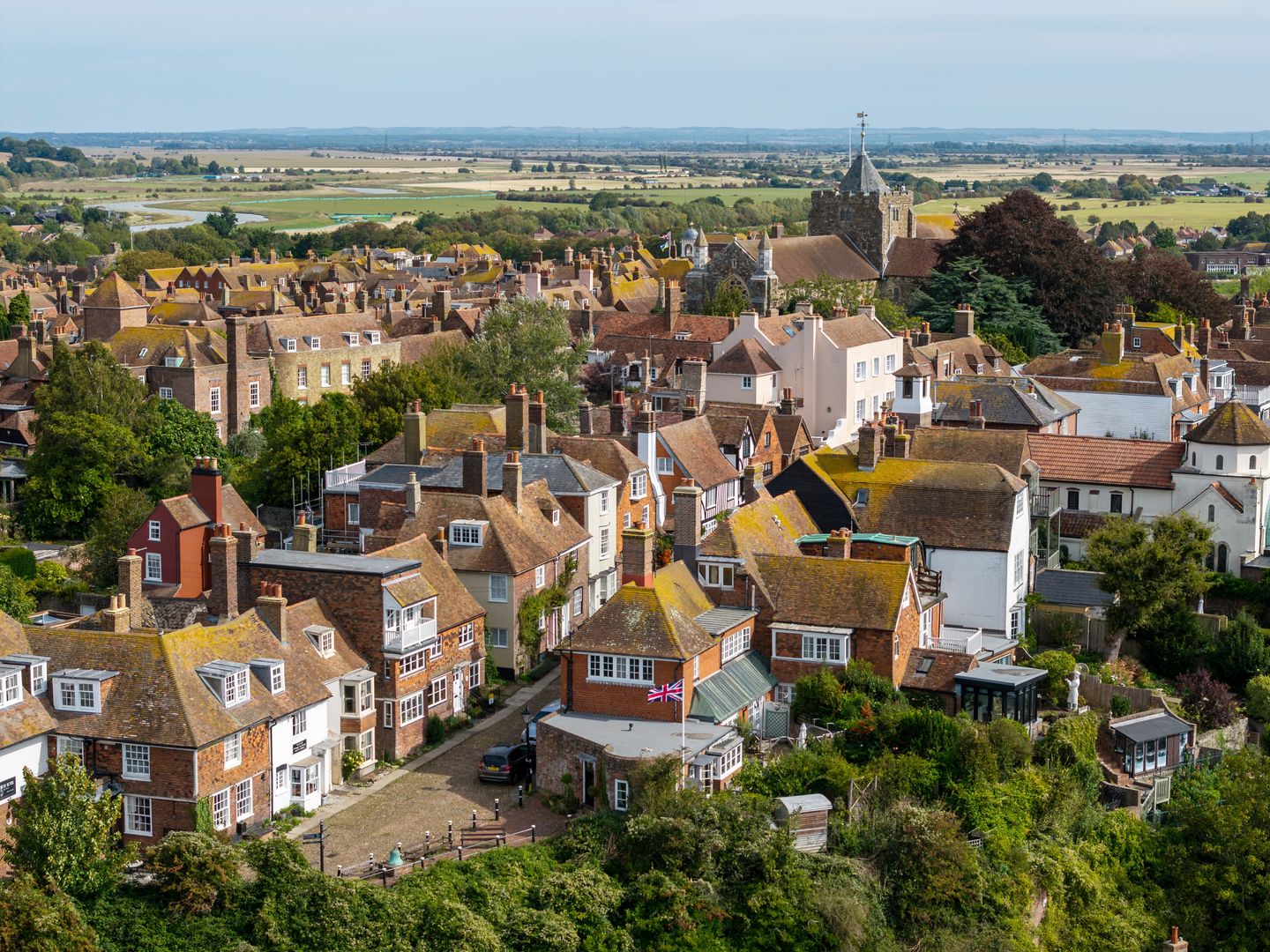
The winding, cobbled streets of Rye’s Citadel — lined with Medieval, Tudor and Georgian architecture — are frequently used as period drama sets.
The main street features none of the empty storefronts that depress multiple British town centers. Snug gift shops, galleries, cafes and pubs bear not a single global brand: Virtually every business, run by cheery locals, is independent.
But shabby infrastructure makes reaching Rye tricky. There is no expressway from London, secondary roads are honeycombed with potholes, and trains are expensive and frequently canceled.
Communal spirit fills the gaps in faltering public services. “In Rye, everyone is a volunteer,” said RyeNews Editor James Stewart.
Rye’s police station is open just 12 hours per week, but an informal community of “curtain twitchers” and a network of CCTV cameras installed outside its many Airbnbs provide watchful eyes.
Local firefighters – many volunteers – successfully contained a 2019 hotel blaze that could have gutted the town.
“People look out for each other: It works,” said Rye Mayor Andy Stuart, speaking at Town Hall, with its list of clerks dating to 1300. “But there’s always a need for more.”
And enduring old-school decency comforts Rye’s Ukrainian refugees.
“‘Rye’ is the Ukrainian word for ‘paradise,’” Mr. Stuart said. “Their expectations were high, but they were amazed that this is a paradise of calm and acceptance. It’s touching.”
Anticipating local government restructuring, Rye is bracing for further cuts. British bureaucracy, however, is alive and kicking.
Mermaid Inn Proprietress Judith Blincow recalls facing legal sanction from fire authorities if she did not install modern safeguards – and from heritage preservation authorities if she did.
In the surrounding countryside, fruit farming has declined, with many European pickers departing with Brexit. Rye’s beleaguered fishing fleet faces larger foreign boats, tight quotas and hungry — and protected — seals.
That leaves tourism as Rye’s main earner – aided by COVID. After international travel cratered, intra-U.K. tourism exploded. Rye, leveraging its innate dreaminess, saw the number of visitors surge.
Merchants benefit, but not everyone’s happy.
“Rye has become a theme park,” sniffed one.
“The shops here are for tourists, not us,” said a hotel receptionist. “We have to buy groceries in Hastings” – a town 12 miles away.
Income inequality is stark.
Downtown is dominated by cheery Barbour-clad, dog-walking members of the middle class. But lower-income residents are being driven out by pricey housing. An estate across Rye’s rail tracks is in the bottom 25% of U.K’s most deprived wards.
“Hospitality work does not pay hugely,” Mr. Stuart acknowledged.
“We are not a big town, we don’t have many things you pay money to go and see,” added Sarah Broadbent of Rye’s Chamber of Commerce. “Rye is experiential: It’s walking around the town.”
Still, a new winery sector is fermenting nicely. Fast-heating Southeast England is now home to vineyards that surround Rye on three sides, and major French winemakers are investing.
“This may be the one upside to global warming,” said expatriate Norwegian Kristin Syltevik, who sold her tech company to establish the Oxney Organic winery. She dates the area’s wine industry to 2012.
Old traditions, new challenges
Elsewhere, the countryside is grappling with the loss of its community pillars: Pub and church.
Pubs for centuries have been hubs of British community but last year were closing at “alarming” rates of one per day nationwide, driven by shifting drinking habits and high alcohol taxes.
Rye is served by a dozen pubs, but three nearby villages have lost theirs in recent years. Volunteers bought one back from the brink in January when villagers pooled resources to acquire their closed pub, which will re-open as a co-op.
The outlook for churches is equally murky.
In 2025, the Church of England trumpeted a 1.02% one-year rise in attendance to 1.05 million churchgoers, a sliver of England’s population of 58.6 million.
In Rye’s St. Mary’s, a January Sunday service drew just 50 congregants. Vicars are no longer assigned to outlying villages and instead rotate around parishes.
The National Church Trust reported in 2025 that 3,500 churches had closed nationwide over a decade. Some have been repurposed as cafes and even nightclubs. One near Rye has become a home, its garden the graveyard.
“I don’t know what the future holds for rural communities and culture,” said Christopher Breeds, a retired vicar. “It could change beyond recognition.”
Rye Church Warden Roy Abel is more upbeat, noting that St. Mary’s hosts choral evenings and jazz fests.
“The church is a functional space,” he said. “Let the building work its magic.”