WASHINGTON — Elizabeth Kautz says she now carries her passport around the Minneapolis suburb where she’s been the mayor since 1995.
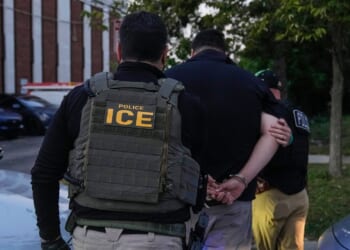
“Those ICE agents don’t know that I’m the mayor of the city of Burnsville,” Kautz, a Republican who has occasionally diverted from the Trump administration’s views, said Wednesday as the United States Conference of Mayors opened its meeting in Washington. “I could be coming out of a store and be harassed so I need to make sure that I have credentials on me.”
Her comments reflected a sense of frustration and exasperation hanging over the gathering of mayors, which would typically be a venue for leaders to strategize over issues ranging from affordable housing and transit to climate change and addressing urban violence.
But much of that was overshadowed by the fallout from the killing of Alex Jeffrey Pretti by two federal agents in Minneapolis on Saturday, reigniting a national debate over the Trump administration’s aggressive law enforcement tactics, which have often focused on cities.
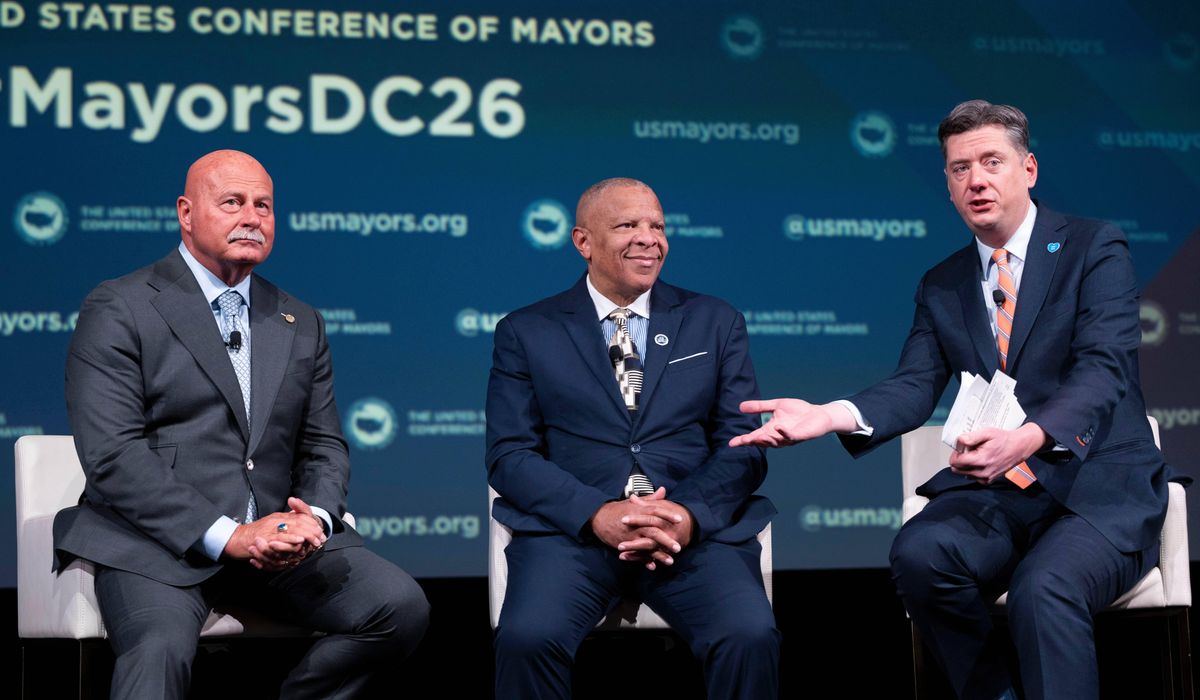
“There has been no more urgent challenge facing all Americans these past few weeks than the chaos in Minnesota stemming from an unprecedented surge in immigration enforcement,” said Oklahoma City Mayor David Holt, a Republican who is the conference’s president this year.
Multiple mayors said they appreciated President Donald Trump’s nod this week toward deescalating the federal government’s operation in Minnesota, adding that they agreed with the administration’s goal of deporting undocumented immigrants who have committed crimes.
But they also described a dynamic in which they’re facing pressure from constituents to evict federal agents from their cities – something they can’t do – while struggling to align with federal counterparts.
The surge has had a notable impact even in cities that haven’t faced the brunt of the federal government’s pressure like Minneapolis.
“When trust is lost in how laws are being enforced in one city, we feel the risks to our police officers and to our residents in all cities,” said Leirion Gaylor Baird, the Democratic mayor of Lincoln, Nebraska.
Asked about the mayors’ concerns, Department of Homeland Security spokeswoman Tricia McLaughlin responded: “Have they seen the plummeting murder rates? It’s not a coincidence when you remove tens of thousands of gang members, murderers and known and suspected terrorists from the country who were here illegally.”
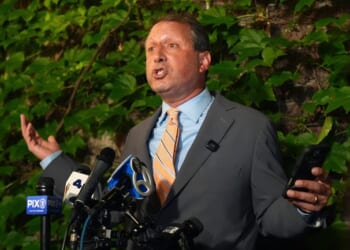
Holt said the White House hasn’t invited the mayors for a meeting while they’re in town this week. Trump has repeatedly put the onus on local officials to cooperate with federal law enforcement, saying Wednesday on social media that Minneapolis Mayor Jacob Frey was “PLAYING WITH FIRE” for saying his city won’t enforce federal immigration laws.
Jerry Dryer was the police chief in Fresno, California, for 18 years before he was elected mayor in 2020 as a Republican. He said he wasn’t in Washington to “bash” ICE or the administration and expressed appreciation for Trump’s work to secure the U.S.-Mexico border.
But he criticized the way federal immigration enforcement has been implemented and said ICE was “being rejected” by communities across the U.S. In the process, he warned, trust in law enforcement is in peril.
“In order to gain that trust, we have to police neighborhoods with their permission,” he said. “We cannot be seen as an occupying force when we go into these neighborhoods.”
Jim Hovland, the nonpartisan mayor of Edina, Minnesota, a suburb just south of Minneapolis, described “external forces” that are tearing “at the very fabric of our communities that we’re responsible for shepherding.”
“It’s really hard to figure out how to deal with it,” he said.