OPINION:
New START, the last treaty limiting the nuclear arsenals of Russia and the U.S., will expire on Feb. 5. Once it does, there will be no limit to the number of nuclear weapons the U.S. or Russia can field.
In September, Russian President Vladimir Putin offered to extend the treaty for one year, suggesting that the U.S. and Russia should maintain the New START limits on operationally deployed strategic warheads — but offered little to no further details on what such an extension would entail.
Mr. Putin’s offer is almost certainly a trap.
Russia suspended New START inspections in 2022, largely due to the U.S. supporting Ukraine’s defense following the Russian invasion that year. In 2023, Russia suspended its participation in the treaty entirely — despite the fact that there was no provision in New START for either party to suspend the treaty.
In 2024, the State Department noted that Russia “may have exceeded” the New START limit on deployed nuclear warheads. As a consequence, Russia has been in violation of the treaty for years and forbidden the U.S. from carrying out inspections to verify its compliance with the treaty’s limits on operationally deployed warheads.
Why then does Mr. Putin seem so interested in extending a treaty that he unilaterally violated and then ended?
The short answer is that a New START extension would benefit Russia and China, to the detriment of the U.S.
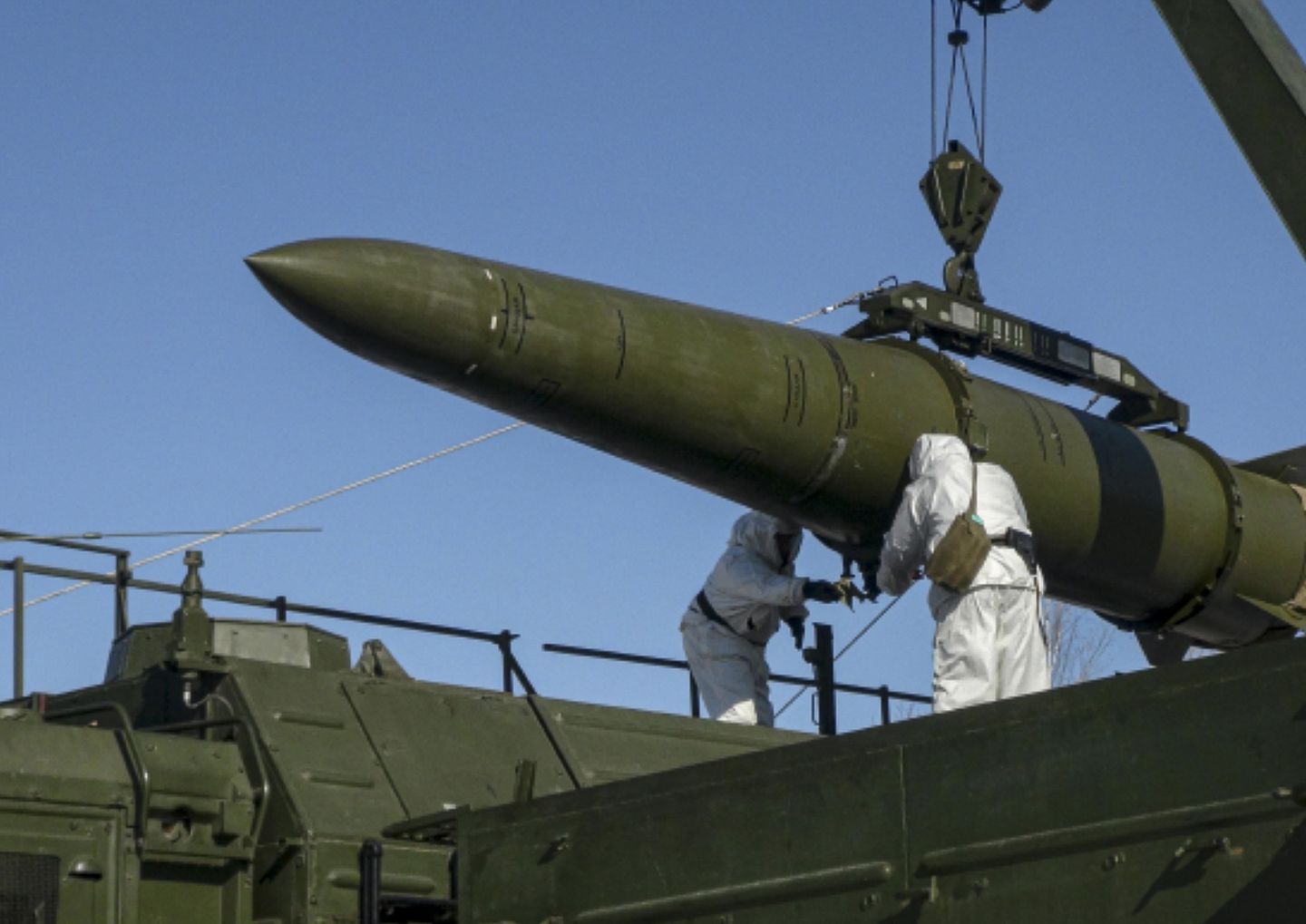
New START does not address the fundamental nuclear challenges facing the U.S. or its allies in Europe or the Indo-Pacific. China is the fastest-growing nuclear power on the planet. It is building 100 new warheads a year and now has more ICBM silos than the U.S. has active Minuteman III silos. Russia fields 2,000 nonstrategic nuclear weapons that are not part of the New START warhead limits.
In short, the size of the combined Russian and Chinese nuclear arsenals today is more than double the size of the U.S. operationally deployed nuclear arsenal.
And New START does nothing to address these problems.
Allowing New START to expire, however, gives the U.S. some options to address some of these challenges. If the U.S. uploaded its ICBM force with additional nuclear warheads, it would allow us to hold at risk both Chinese and Russian strategic nuclear targets, without having to deploy additional missiles, bombers or submarines.
Even if Russia uploaded its own ICBM force in response, this would not increase U.S. targeting requirements. Nor would the U.S. uploading its ICBM force significantly change Russian targeting requirements.
So what is the compelling reason for the U.S. to extend New START?
What is the benefit to the U.S. of having a political agreement to extend New START at current limits on deployed warheads, particularly if there is no way to verify Russian compliance with the treaty?
Some may say that if New START expires, there would be more nuclear weapons deployed in the world, and that’s bad. But that’s not a compelling reason, in and of itself, to extend a treaty that is currently not in the U.S. national interest.
Some offer that extending New START would stave off an arms race. But given China’s nuclear breakout and Russian nuclear coercion, New START has done little if anything to stave off the autocrats’ nuclear desires. Nor is the fact that New START expiration means that this will be the first time in a half century without treaty-based arms control between the U.S. and Russia a compelling reason to extend a treaty that cannot be verified.
Some might claim that New START contributes to strategic stability. However, Russia doesn’t seem particularly interested in strategic stability, given its continued invasion of Ukraine or its regular nuclear coercive threats against the West.
Another argument is that a New START extension would demonstrate that the U.S. is willing to live up to the ideals of the Nonproliferation Treaty and get to a world without nuclear weapons. But the U.S. tried to get to a world without nuclear weapons — no one followed.
The U.S. tried for 10 years to bring Russia back into compliance with the landmark Intermediate Nuclear Forces Treaty, before Russian treaty violations finally caused that agreement to end. The U.S. has attempted to engage China on multilateral arms control, only to be rebuffed.
America’s nonproliferation and arms control bona fides are strong. Extending New START simply to demonstrate such credibility is not a compelling reason to extend the treaty.
Perhaps the best reason to extend New START is that it would buy time to negotiate a more enduring treaty between the U.S. and Russia. If the U.S. could get a one-year extension with Russia, with the weapons inspection and verification protocols reinstated, and that the extension would not exceed 12 months, it may be worth extending the treaty.
But those 12 months should focus on negotiating a legally binding follow-on treaty that must include not only the U.S. and Russia, but also China, given its nuclear break. And it must account for all operationally deployed nuclear weapons, to include Russia’s 2,000 nonstrategic nuclear weapons that are currently not limited by New START. While such an outcome is unlikely, a New START extension may be worth such a development.
In closing, the U.S. should not sacrifice its ability to deter an expanding nuclear power that is a conventional peer of the U.S. (China) to maintain a bilateral treaty with a regional power (Russia), particularly given its repeated arms control treaty violations and its bringing of war to Europe.
• Robert Peters is a Senior Research Fellow for Strategic Deterrence in the Heritage Foundation’s Allison Center for National Security.