A year ago, Sheri Lilley had spent the day looking at wedding venues for her son Sam while he was flying as an airline pilot. Hours later, she would learn Sam was killed in the nation’s worst aviation accident in a generation.
Now Ms. Lilley and her husband, Tim, have turned their grief into advocacy for better flight safety in the year since an Army Black Hawk helicopter collided with an American Airlines regional jetliner near Ronald Reagan Washington National Airport.
The couple says they are working in remembrance of Sam, who was among the 67 killed in the crash over the Potomac River.
“We’ve said a couple of times in the past, we wanted to make the name Sam Lilley synonymous with aviation safety,” Ms Lilley said. “That would be a great legacy and a way to honor his name.”
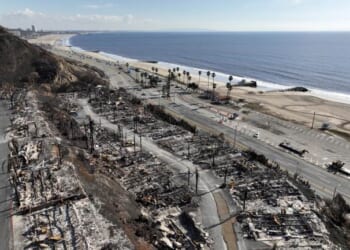
Thursday marks the first year after the collision that has prompted Congress and federal regulators to push for changes to make the skies around the nation’s capital safer. That includes increased control tower staffing, less aircraft congestion around Reagan National and advanced tracking systems so aircraft operators can know where they are in real time.
Some of these issues had been systemic and longstanding, which the National Transportation Safety Board laid out Tuesday while sharing its final report on the worst domestic plane accident since 2001.
The NTSB said the Federal Aviation Administration had ignored a decade-old recommendation to divert helicopter traffic away from Reagan National — one of the country’s busiest airports with a history of near misses.
Citing FAA data, the safety board previously said there were 85 near misses at the airport in which two aircraft flew within a few hundred feet of each other in recent years. The NTSB previously noted that airplane pilots had to take evasive maneuvers to avoid striking helicopters at least once a month from 2011 through 2024.
An air traffic controller at Reagan National told his supervisor he was “overwhelmed” in the 90 seconds leading up to the Jan. 29 collision because he was managing 12 aircraft, including five helicopters, investigators said. Despite the plea for help, the supervisor did not adjust his workload.
Investigators further determined the Army helicopter crew was flying 78 feet above its 200-foot-max altitude when the collision took place just before 9 p.m. on Jan. 29, 2025.
That was due in part, the NTSB said, because the Black Hawk’s altimeter was malfunctioning. Investigators said the Army knew the altimeter had accuracy issues, but did not share that with the three soldiers aboard the aircraft.
“I’m sorry for you, as these pages of these reports are written in your family members’ blood,” NTSB board member Todd Inman said during a hearing. “I’m sorry that we have to be here.”
Some of the victims’ family members who attended the hearing struggled to accept how carelessness was the cause of their loved one’s death.
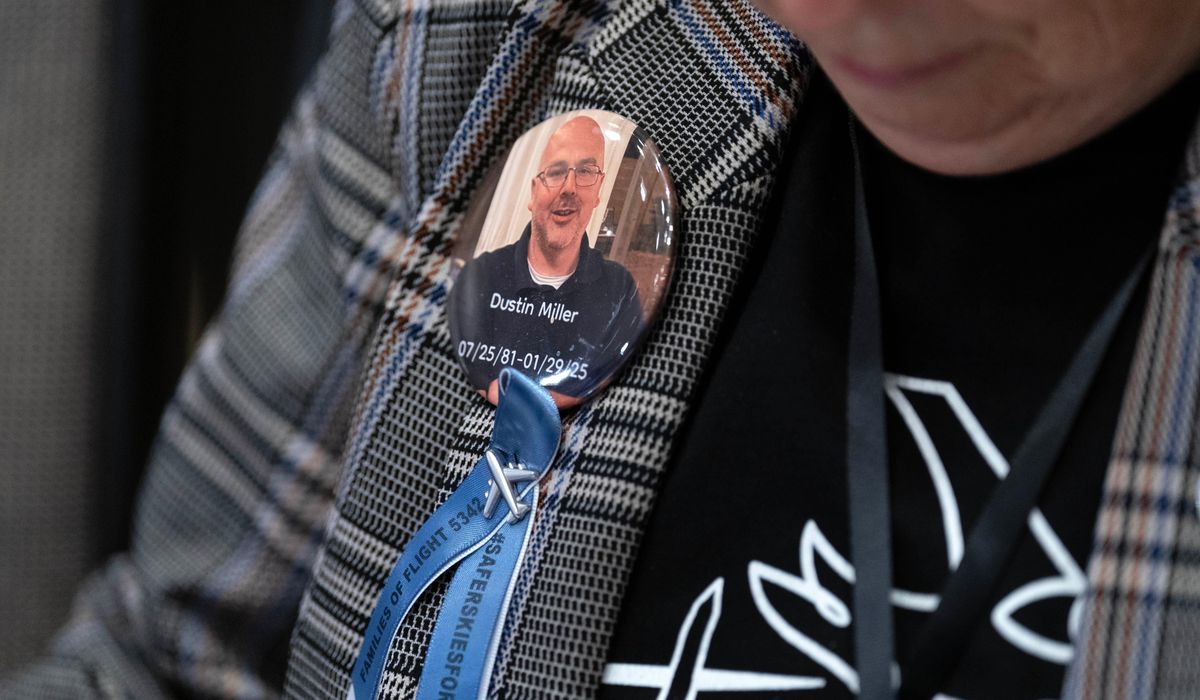
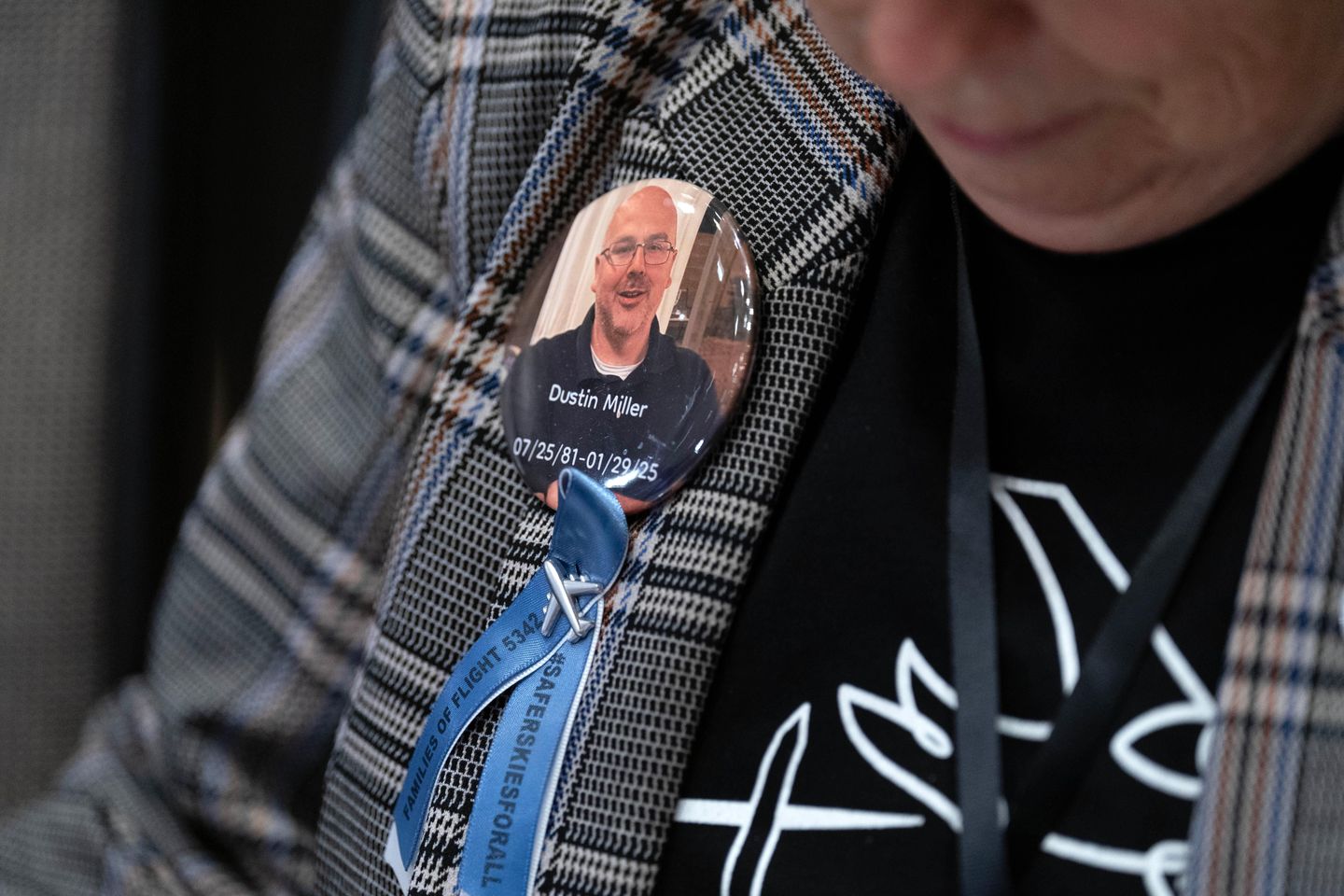
“The negligence of not fixing things that needed to be fixed killed my brother and 66 other people. So I’m not very happy,” Kristen Miller-Zahn, whose brother Dustin Miller died in the crash, told The Associated Press.
Federal officials have moved to fix safety issues surrounding Reagan National in the wake of the collision.
The FAA enacted a rule that helicopters and airplanes would no longer share airspace around the bustling runways.
The agency also bumped up staff numbers inside Reagan National’s control tower and cut down on the number of arrivals from 36 to 30 per hour to avoid overburdening its air traffic controllers.
Last month, Sen. Ted Cruz and Maria Cantwell helped pass the ROTOR Act, which requires all aircraft to use their Automatic Dependent Surveillance–Broadcast, or ADS-B, technology to broadcast their location.
The Black Hawk helicopter had its ADS-B technology turned off at the time of the crash because the Army didn’t want observers to know its whereabouts during a training mission.
In the wake of the deadly crash, the military last spring required all its aircraft to make use of the technology when traveling through crowded airspaces.
The ROTOR Act has yet to be taken up by the House.
The FAA’s updated rules also require military aircraft to share their location. The agency went a step further and said air traffic controllers can no longer rely on visual separation as well.
Investigators have said the Black Hawk crew may have misidentified which aircraft they were supposed to keep an eye on during their flight, which was likely compounded by their limited depth perception when using night vision.
To Ms. Lilley, the mother of crash victim Sam Lilley, she said she hopes the Army refines how it teaches visual separation to its pilots.
She said NTSB documents revealed the Army was not instructing its pilots to keep passing aircraft in sight until the approaching plane or helicopter had flown by.
If the military ever plans on resuming its flights around Reagan, Ms. Lilley said the lax attitude about those flights needed to change.
It’s part of her broader crusade against a “culture of complacency,” as she put it.
She mentioned how in prior NTSB hearings about the crash, none of the military pilots questioned said they had ever filed a safety report over a concern about the aircraft. Ms. Lilley suggested that this was likely due to them fearing retribution from their commanding officers.
“If the individuals using it believe that it can be used punitively, no one will adopt it. That seemed to be the case with the military,” Ms. Lilley said. “We’ve talked a lot about culture and how a safety management system cannot be used to discipline aviators or mechanics flight crew.”
• Susan Ferrechio contributed to this article, which is based in part on wire service reports.