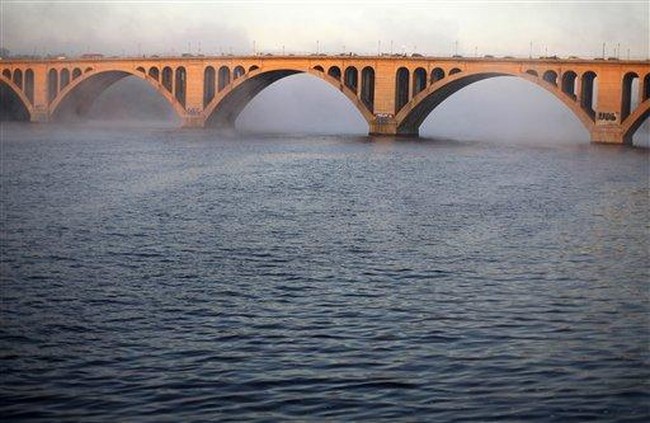
We know what it means when it hits the fan, but how about floating downstream?
Raw sewage is flowing into the Potomac River upstream from our nation’s capital after a major infrastructure failure sent untreated waste into one of the most politically and symbolically important waterways in the country.
There are myriad risks associated with raw sewage, including public health, environmental damage, and an uncomfortable political message. Washington depends on systems it often neglects.
Local officials confirmed that millions of gallons of untreated politics — oops, I meant sewage — entered the river following a breakdown at a wastewater treatment facility that serves parts of Maryland. The discharge occurred north of the capital, upstream of communities, recreation areas, and ecosystems, posing substantial risks.
What Happened and Who is Responsible?
The Washington Suburban Sanitary Commission manages water and sewer service for Montgomery and Prince George’s counties, who’ve acknowledged that a mechanical failure caused the untreated sewage to bypass normal treatment and spill into the Potomac.
Environmental regulators from Maryland confirmed the release and issued public advisories warning residents to avoid contact with the river water. While cleanup crews worked to stabilize the system, there’s nothing to be done about the damage that already occurred, exposing fish habitats, spiking bacterial levels, and eroding public trust.
One agency wasn’t responsible for the accident; federal environmental oversight, state regulators, and regional planning authorities all share equal roles in prevention, inspection, and enforcement. Each layer exists to prevent these outcomes.
A River with a Long Memory
There has been a systemic abuse of the Potomac for decades, with industrial runoff, agricultural waste, and sewage overflows plaguing the river through much of the past 100 years. Cleanup efforts improved water quality over time, but progress relied on constant maintenance and investment.
Failures like the current spill show how fragile those gains remain against aging infrastructure, deferred upgrades, and bureaucratic fragmentation leaves the river vulnerable. It isn’t until something bad happens that political attention shifts back to an aging system.
Washington benefits from the Potomac’s visibility, but doesn’t accept responsibility for its condition. The capital drinks the water from the same source that is allowed to deteriorate.
Public Health Is Not Abstract
Raw sewage plays host to E. coli, viruses, and chemical contaminants in waterways used for fishing, swimming, boating, and water intake. Advisories reduce risks but don’t prevent exposure, especially for communities without access to timely alerts.
The same demographic of people who always get hurt are at high risk here: children, the elderly, and the immunocompromised. Environmental harm extends well beyond immediate health effects, as aquatic life suffers long-term consequences that rarely make headlines.
Enforcement of the environmental factors typically focuses on private actors while giving public utilities a pass, but the river doesn’t care whose fault it is.
Symbolism That Writes Itself
There’s an unavoidable symbolism in raw sewage flowing toward Washington, where leaders debate climate priorities, environmental justice, and regulatory authority while waste slowly flows past monuments to governance.
This accident highlights a recurring problem: grand promises coexist with neglected fundamentals, and infrastructure rarely earns political credit, while failure delivers immediate consequences.
Washington acts like a steward, while pretending to be an innocent bystander. Unfortunately for them, the river keeps score.
Final Thoughts
What happened upstream from Washington didn’t occur in isolation; it followed years of postponed maintenance, diluted accountability, and political distraction.
Stop me if you’ve heard this before.
Cleanup statements will fade, while the river remains.
There’s more to accountability than emergency responses and press releases; it demands sustained investment and ownership from every level of government that benefits from the Potomac’s presence.
Anything less means that history will repeat itself. Again.
Environmental failure often reveals deeper patterns of neglect and misplaced priorities. PJ Media VIP digs beneath surface narratives to examine responsibility, competence, and consequences. Support reporting that follows problems upstream and refuses to look away when accountability gets uncomfortable.