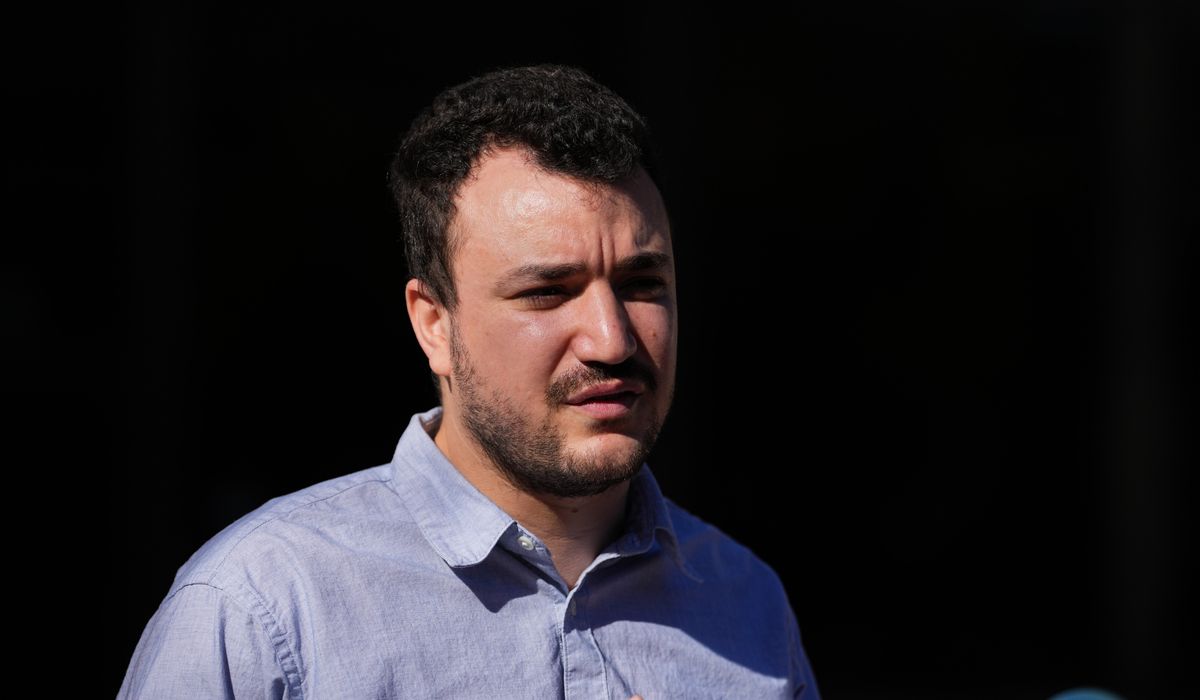

A federal appeals court ruled Thursday that a lower court didn’t have the power to issue orders protecting Mahmoud Khalil from being arrested by immigration authorities, delivering a belated win to the Trump administration in its pursuit of a prominent pro-Palestinian protester.
The 3rd U.S. Circuit Court of Appeals said Mr. Khalil still has other avenues to challenge his deportation and was too hasty in rushing to a federal district court.
The ruling opens the door to his rearrest and detention, more than half a year after Judge Michael Farbiarz first ordered his release.
The American Civil Liberties Union, which has defended Mr. Khalil, said it is pondering an appeal.
Mr. Khalil had come under scrutiny by the Trump administration for his role in the anti-Israel protests at Columbia University in the wake of Hamas’ 2023 attack on Israel.
President Trump’s Department of Homeland Security tried to deport him, winning a removal order from an immigration judge. But a U.S. district judge stepped in and blocked that, ruling Mr. Khalil’s rights were violated and he needed to be released.
In a 2-1 ruling, the 3rd Circuit said the case was premature.
In an unsigned opinion, the majority said the Immigration and Nationality Act lays out strict rules for how deportation cases proceed, and Mr. Khalil needed to wait until his case was ripe for the regular federal courts.
“Each of the legal questions Khalil raises in his petition can be decided later,” the court ruled.
For now, though an immigration judge has deemed Mr. Khalil removable, that is not a final order. The Board of Immigration Appeals would also have a say, and then he can go to the regular courts.
Mr. Khalil, in a statement issued by the ACLU, called the ruling “deeply disappointing” but said it “does not break our resolve.”
“The door may have been opened for potential re-detainment down the line, but it has not closed our commitment to Palestine and to justice and accountability,” he said.
The ruling could have broader implications for the president’s immigration policy. Mr. Khalil had brought a habeas corpus petition, which is a challenge to detention and is heard in the regular federal district courts.
The Washington Times has reported that migrants are seizing on habeas petitions as a way to combat the Trump enforcement surge.
But the 3rd Circuit ruling could undercut that tactic.
The majority said challenges to immigration detention and deportation are supposed to wait until the immigration courts are done, and then be channeled into a single petition for review at the circuit courts. That would seem to cut the district courts — where migrants have been remarkably successful in winning habeas petitions — out of the loop.
The two court members in the majority were Judges Thomas Hardiman, a George W. Bush appointee, and Stephanos Bibas, a Trump appointee.
Dissenting was Biden-appointed Judge Arianna Freeman, who said she saw the law as letting Mr. Khalil bring his case now.
Mr. Khalil, born in a Palestinian refugee camp in Syria and a citizen of Algeria, came to the U.S. on a student visa to study at Columbia University.
He married a U.S. citizen in 2023 and obtained lawful permanent residency. However, the Trump administration has alleged that he engaged in fraud by failing to disclose a past association with a U.N. agency that worked in Gaza.
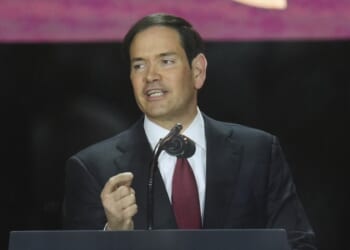
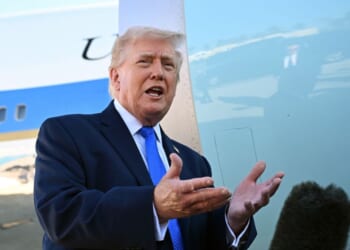
When Mr. Trump took over last year, his team adopted a policy of trying to oust foreign nationals who were active in pro-Palestinian protests. Secretary of State Marco Rubio declared them to be harmful to U.S. foreign policy interests.
Mr. Khalil challenged that designation by Mr. Rubio, and his subsequent immigration arrest, as unconstitutional retaliation.
Judge Freeman said she worried Mr. Khalil won’t be able to raise those constitutional concerns in the immigration courts.