Hourly workers in 19 states will enjoy a salary bump in their next paycheck, even as economists warn that minimum-wage hikes reduce jobs and add to inflation.
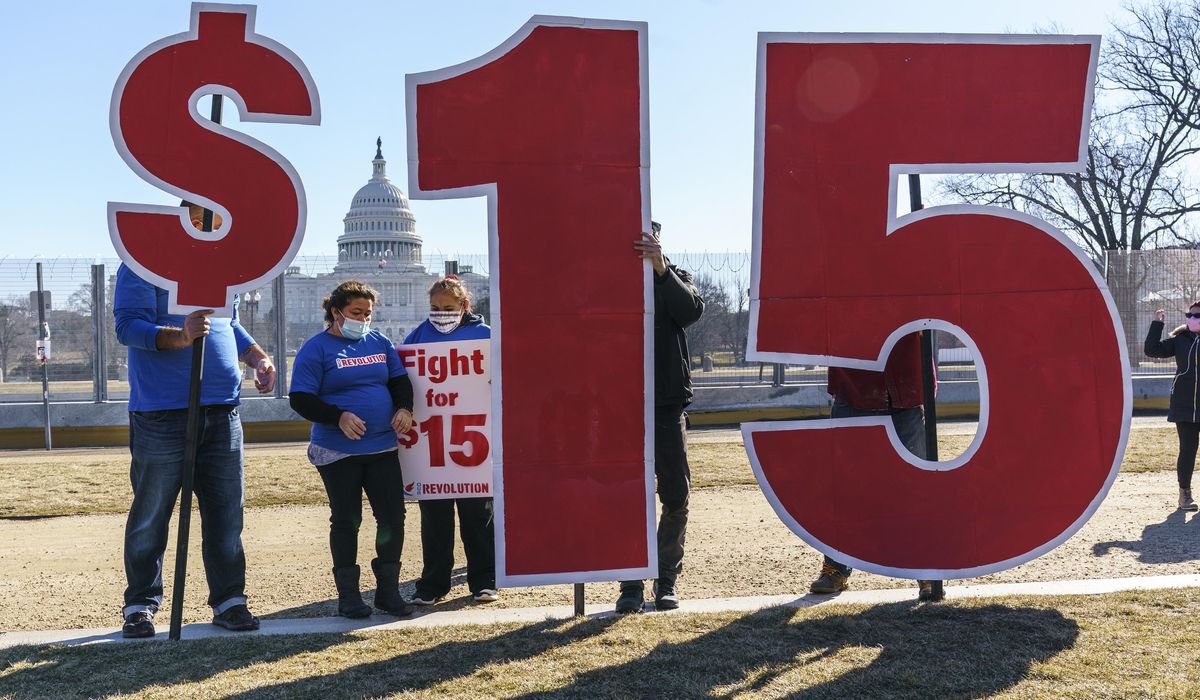
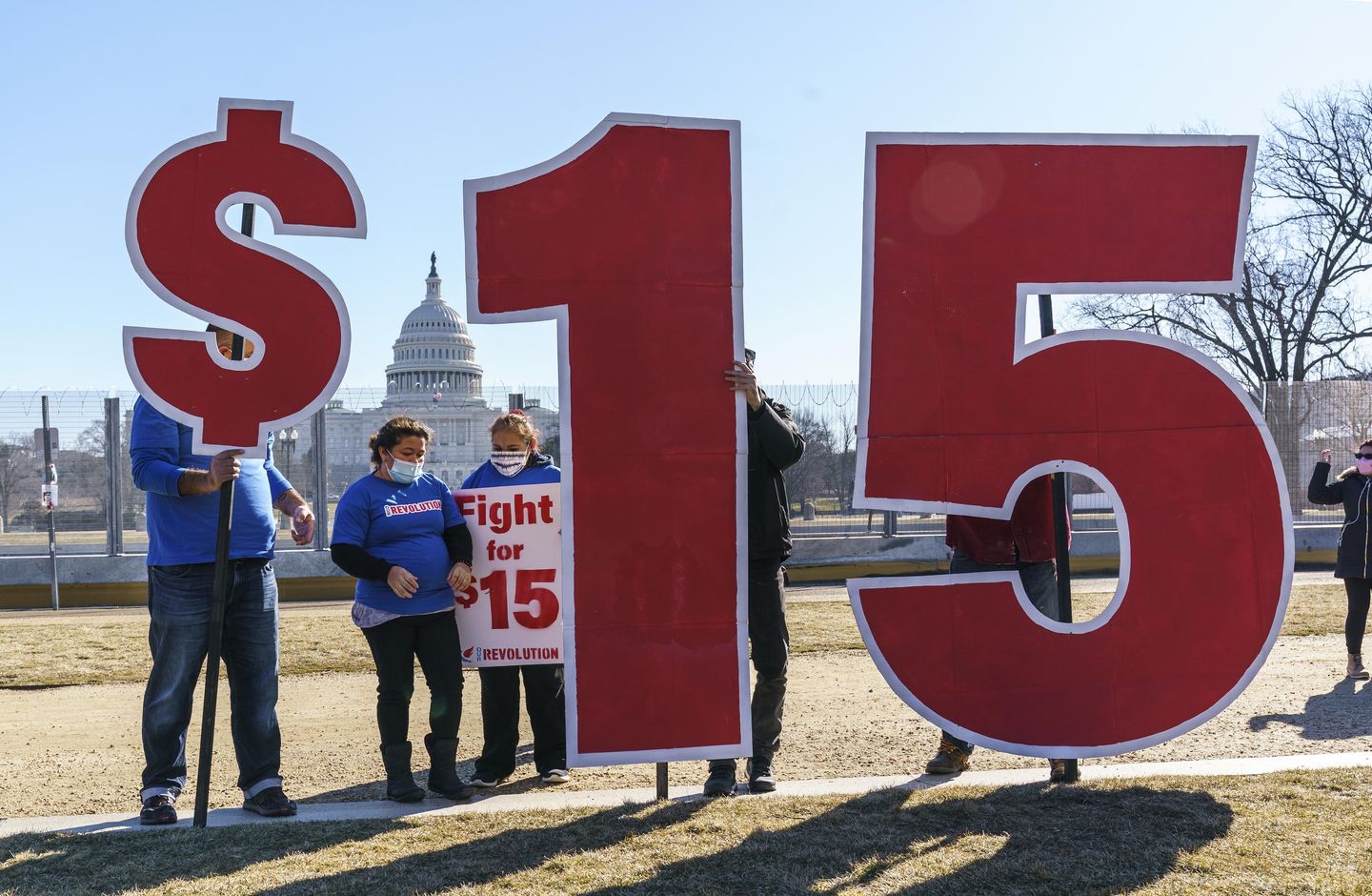
The left-leaning Economic Policy Institute estimates the increases that took effect on New Year’s Day will boost cumulative pay by $5 billion for more than 8.3 million workers in those states. That includes 11 states now requiring a minimum wage of at least $15 an hour, ranging from $15.15 in Arizona to $17.13 in Washington.
Alaska, Florida, Oregon and dozens of cities will hike minimum wages later this year at scheduled or inflation-adjusted rates. Other states, such as Maryland, are considering adding voter initiatives to upcoming ballots that could push wage floors as high as $20 an hour.
“State and local minimum wage increases are crucial, wherever they are possible, as the federal minimum wage falls further and further behind the cost of living,” Holly Sklar, CEO of the advocacy group Business for a Fair Minimum Wage, said in a statement shared Friday with The Washington Times.
Ms. Sklar said regular wage hikes foster economic growth, reduce employee turnover, and mitigate rising costs of living for these workers.
Since 2009, when the federal minimum wage rose to its current level of $7.25 per hour, dozens of states and cities have periodically raised their minimum above it.
The Economic Policy Institute projects that 17 states will pay $15 an hour this year, compared with 20 still holding to the $7.25 federal minimum. States paying the federal minimum include Georgia, Indiana, Iowa, Kansas, Kentucky, Pennsylvania, Texas, Utah and Wisconsin.
“States staying at $7.25 are making a trade-off,” said Angelica Gianchandani, a New York University marketing instructor, in an email. “They are prioritizing employer cost certainty, especially for small and rural businesses, over sending a [political] signal.”
Virginia, where the minimum wage rose to $12.77 an hour on New Year’s Day, is among the other states that implemented hikes this month.
Another eight states with minimums above $7.25 an hour will not raise them this year. They include Maryland, staying at $15 an hour, and West Virginia at $8.75.
Several financial experts reached for comment pointed to years of research showing that minimum wage increases lead companies to automate jobs, cut positions, reduce work hours and raise consumer prices.
A January 2021 analysis published by the National Bureau of Economic Research found 79% of studies linked higher minimum wages to fewer jobs.
“The jobs most often impacted are jobs for teens, unskilled or entry-level workers,” said Shawn DuBravac, a Virginia-based economist and president of the Avrio Institute.
The Bureau of Labor Statistics estimates that only about 1% of workers earn the federal minimum wage or less.
Sean Higgins, an analyst at the libertarian Competitive Enterprise Institute, said the average U.S. worker already makes $35 an hour.
“Raising the minimum wage in high-income areas is the political equivalent of virtue signaling, a way for politicians to send the message they care without affecting anything,” Mr. Higgins said.
According to a forthcoming study accepted for publication in the Journal of Labor Economics, the “fight for $15” minimum wage reduced employment rates among unskilled workers by more than 2.5% in states that adopted this benchmark between 2011 and 2019.
This loss of roughly 250,000 jobs for young entry-level workers includes large states that have since raised their minimum wage even higher. California and New York bumped their statewide minimums to $16.90 and $16, respectively, on Jan. 1.
“Jobs have been lost. Businesses have closed. Pricing increases are through the roof,” Rebekah Paxton, research director at the conservative Employment Policies Institute, said in an email. “And the proponents of these bad ideas are pointing fingers at everyone but themselves.”
“As labor becomes more expensive, employers are pushed to automate entry-level roles they can no longer afford, accelerating the use of AI in ways that can displace workers,” said Andrew Crapuchettes, CEO of the right-leaning jobs board RedBalloon.
Some economists pointed to California, the nation’s most populous state, as an example of how minimum wage increases affect the economy.
In December 2024, the Bureau of Labor Statistics estimated that California fast-food restaurants lost 6,166 jobs after Democratic Gov. Gavin Newsom signed a $20 minimum wage into law in September 2023. That’s 1.1% of positions lost in the industry statewide.
By comparison, the Employment Policies Institute said California added 17,528 fast-food jobs — a 3.1% gain — during the previous comparable period. In November 2024, California voters had rejected a ballot measure to raise the hourly minimum to $18 for some other workers.
Eric Kingsley, a California-based employment attorney, said restaurants feel pressure from such laws to raise prices and cut jobs because of their heavy reliance on unskilled labor.
“The lost jobs will come mostly in terms of reduced working hours or slower pace of hiring,” Mr. Kingsley said.
Analysts say Congress is unlikely to raise the federal minimum wage, regardless of whether Democrats regain control in the upcoming midterm elections.
“A single nationwide wage floor is politically difficult because it imposes uniform costs on very different regional labor markets,” said Peter Earle, a senior economist at the free-market American Institute for Economic Research. “Lawmakers are divided over whether the benefits to some workers outweigh the risk of job losses, automation, or reduced hours for others.”