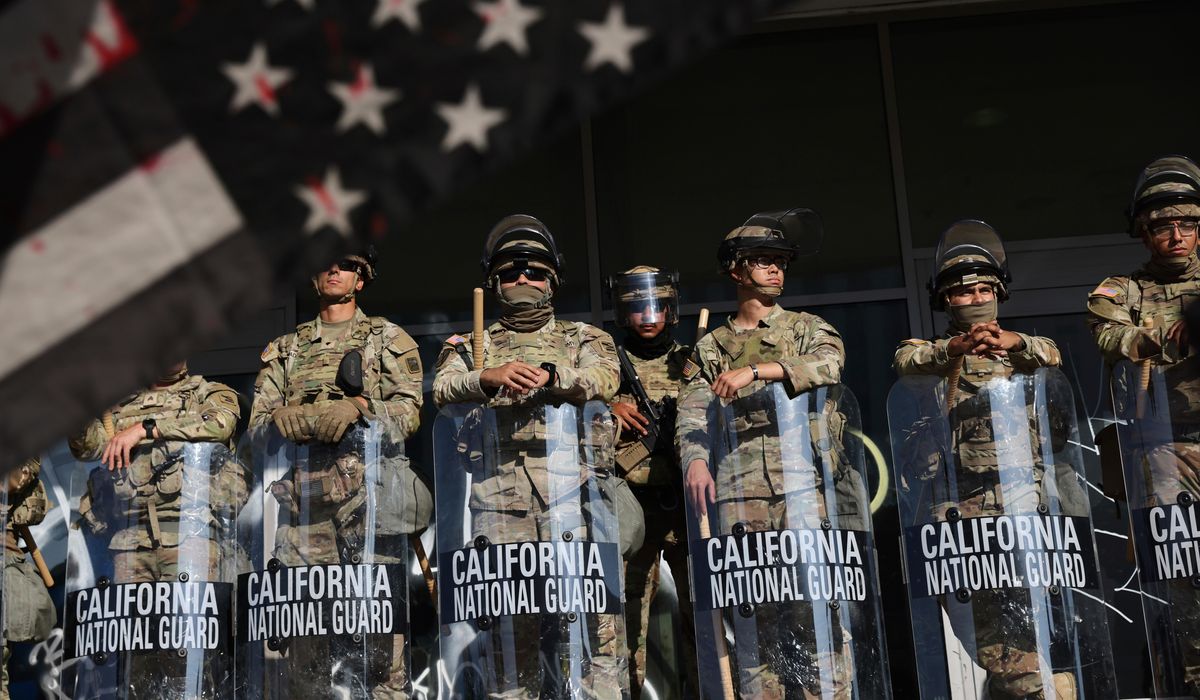
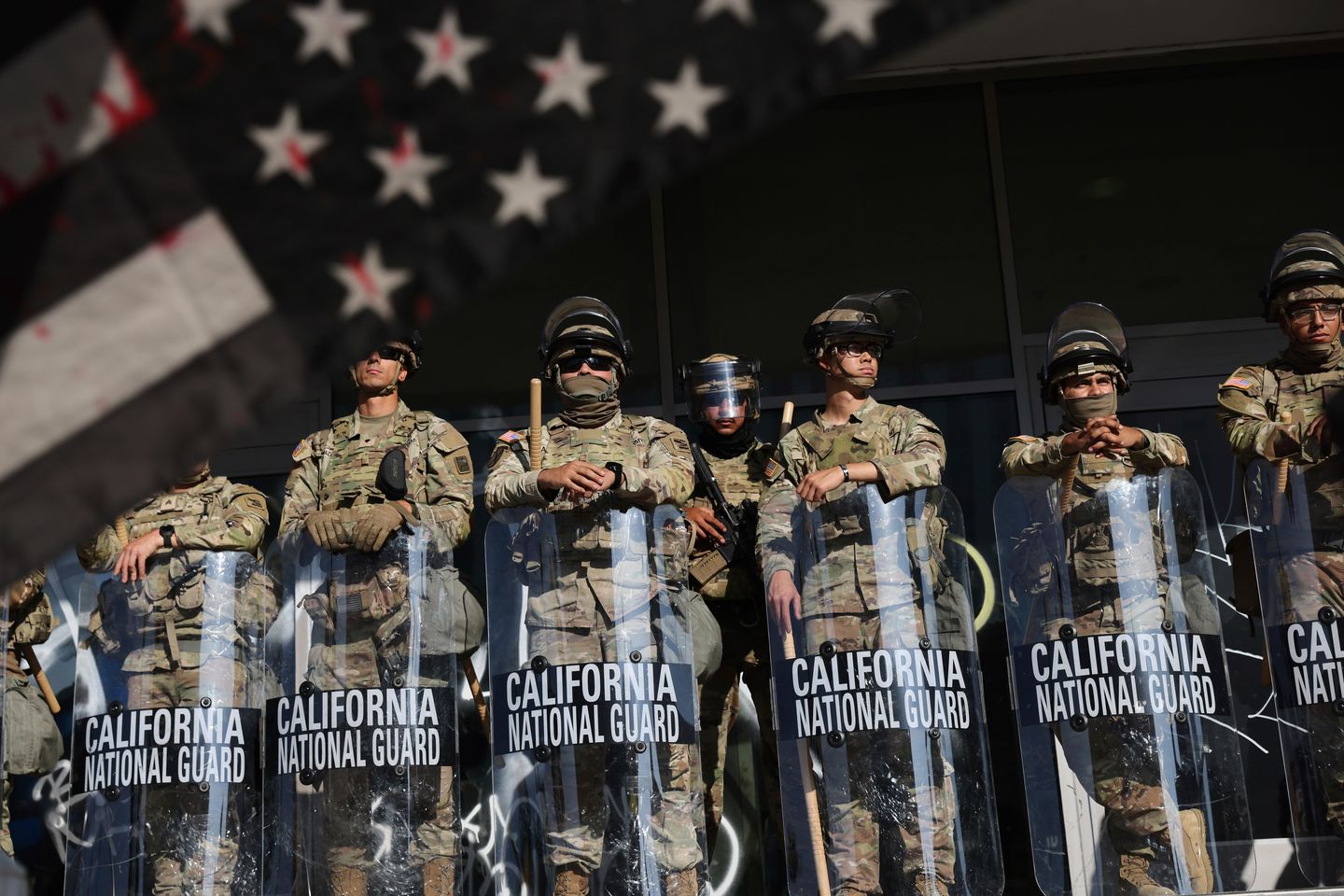
After a setback at the Supreme Court, President Trump said Wednesday he is abandoning his efforts — for now — to deploy National Guard troops in Chicago, Los Angeles and Portland, Oregon, despite his belief that their presence brought down crime.
Troops already had been withdrawn from Los Angeles, where the president deployed them in a crackdown on crime and illegal immigration, after a federal judge ordered their removal.
Mr. Trump had plans for troops to be mobilized to Chicago and Portland, but legal challenges had kept the troops off the streets in those two cities.
“We are removing the National Guard from Chicago, Los Angeles, and Portland, despite the fact that CRIME has been greatly reduced by having these great Patriots in those cities, and ONLY by that fact,” the president wrote on Truth Social. “Portland, Los Angeles, and Chicago were GONE if it weren’t for the Federal Government stepping in.”
The president suggested that he will bring back the guard at some point “perhaps in a much different and stronger form, when crime begins to soar again – Only a question of time!”
Mr. Trump’s push to deploy the troops in Democrat-led cities has been met with legal challenges at nearly every turn.
Mr. Trump’s announcement comes one week after the Supreme Court rejected his request to deploy the National Guard to Chicago and protect ICE agents, a rare loss for the administration. The order was not a final ruling, but was a significant setback by the high court for the president’s efforts.
“At this preliminary state, the government has failed to identify a source of authority that would allow the military to execute the laws in Illinois,” the court said in an unsigned order.
The decision, which was issued over dissents from conservative Justices Samuel A. Alito Jr., Clarence Thomas and Neil M. Gorsuch, jeopardized National Guard deployments to other cities.
Justice Brett M. Kavanaugh, who was nominated by Mr. Trump during his first term, said he agreed with the decision to block the Chicago deployment, but thought the president should be left with more latitude to deploy troops in possible future scenarios.
Lawyers for the Trump administration said the troops were needed to protect federal agents involved in immigration enforcement in the Chicago area. However, the court rebuffed the Trump administration’s argument that the situation in Chicago was so chaotic it justified invoking a federal law that allowed Mr. Trump to mobilize the National Guard into federal service in extreme situations.
Those circumstances include when “there is a rebellion or danger of a rebellion” or “the president is unable with the regular forces to execute the laws of the United States,” according to the law called the Posse Comitatus Act.
The court said the law’s reference to “regular forces” only permits the use of the National Guard if regular military forces are unable to restore order. As a result, it concluded the Trump administration failed to show the Guard was needed to protect federal personnel and property in Illinois.
The 6-3 decision saw the court’s six conservative justices evenly split and all three of its liberal justices in the majority.
“I have serious doubts about the correctness of the court’s views. And I strongly disagree with the manner in which the court has disposed of this application,” Mr. Alito wrote in a dissenting opinion.
“There is no basis for rejecting the President’s determination that he was unable to execute the federal immigration laws using the civilian law enforcement resources at his command,” he added.
In legal flings and arguments before the high court, administration lawyers insisted local officials, judges and surging protesters all made it nearly impossible for the ICE to carry out its laws.
The deployment was challenged in court by the Democratic-led state of Illinois and the city of Chicago, with their lawyers saying Mr. Trump had an ulterior motive for the deployment: to punish his political opponents.
They argued in court papers that Mr. Trump’s invocation of the federal law was not justified and that his actions also violated the Constitution’s 10th Amendment, which places limits on federal power, as well as the Posse Comitatus Act, which generally bars the military from conducting law enforcement duties.
Mr. Trump said Democratic governors and mayor should be thanking him for the deployments.
“It is hard to believe that these Democrat Mayors and Governors, all of whom are greatly incompetent, would want us to leave, especially considering the great progress that has been made???” Mr. Trump said.
In the nation’s capital, District of Columbia Attorney General Brian Schwalb sued to halt the deployments of more than 2,000 guardsmen.
In Oregon, a federal judge permanently blocked the deployment of National Guard troops there.
California National Guard troops had already been removed from the streets of Los Angeles by Dec. 15 after a court ruling. But an appeals court had paused a separate part of the order that required control of the Guard to return to Gov. Gavin Newsom.
California Attorney General Rob Bonta celebrated the decision, writing on X: “For six months, CA National Guard troops have been used as political pawns by a President desperate to be king.”
“Now, in the face of a stinging rebuke by the Supreme Court, the Trump Administration is backing away from its effort to federalize and deploy CA National Guard troops,” he said.
In a statement shared in the post, he said that his office “is not backing down — and we’re ready for whatever fights lie ahead.”
• This story is based in part on wire service reports.