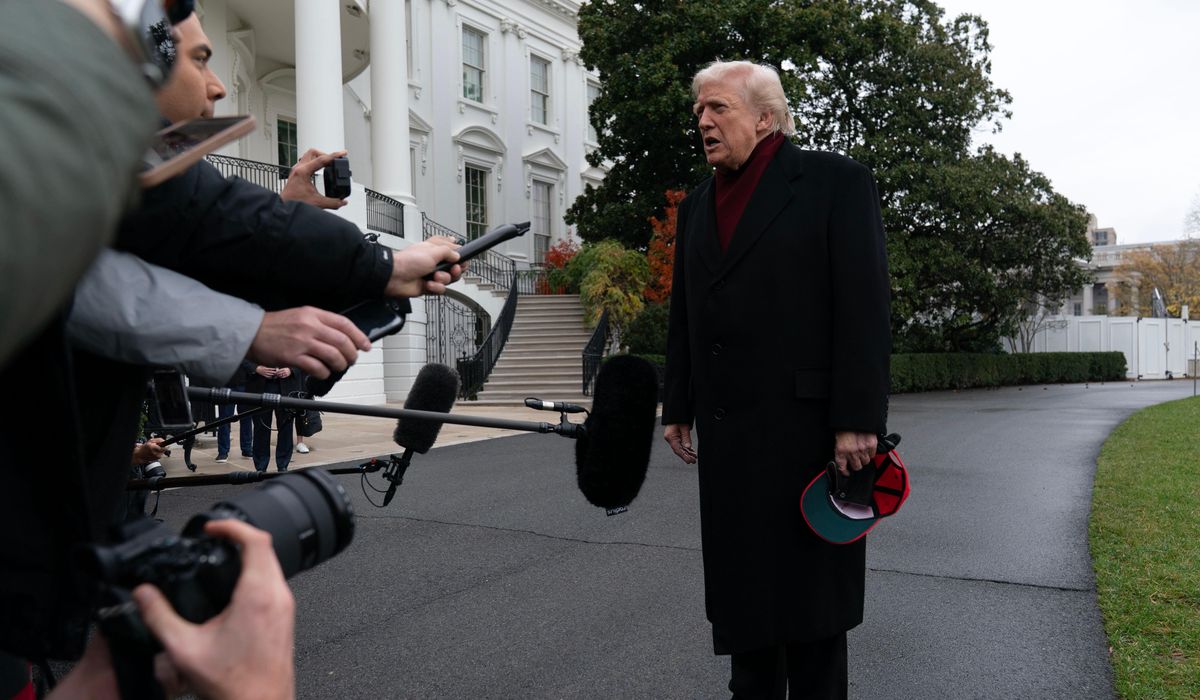
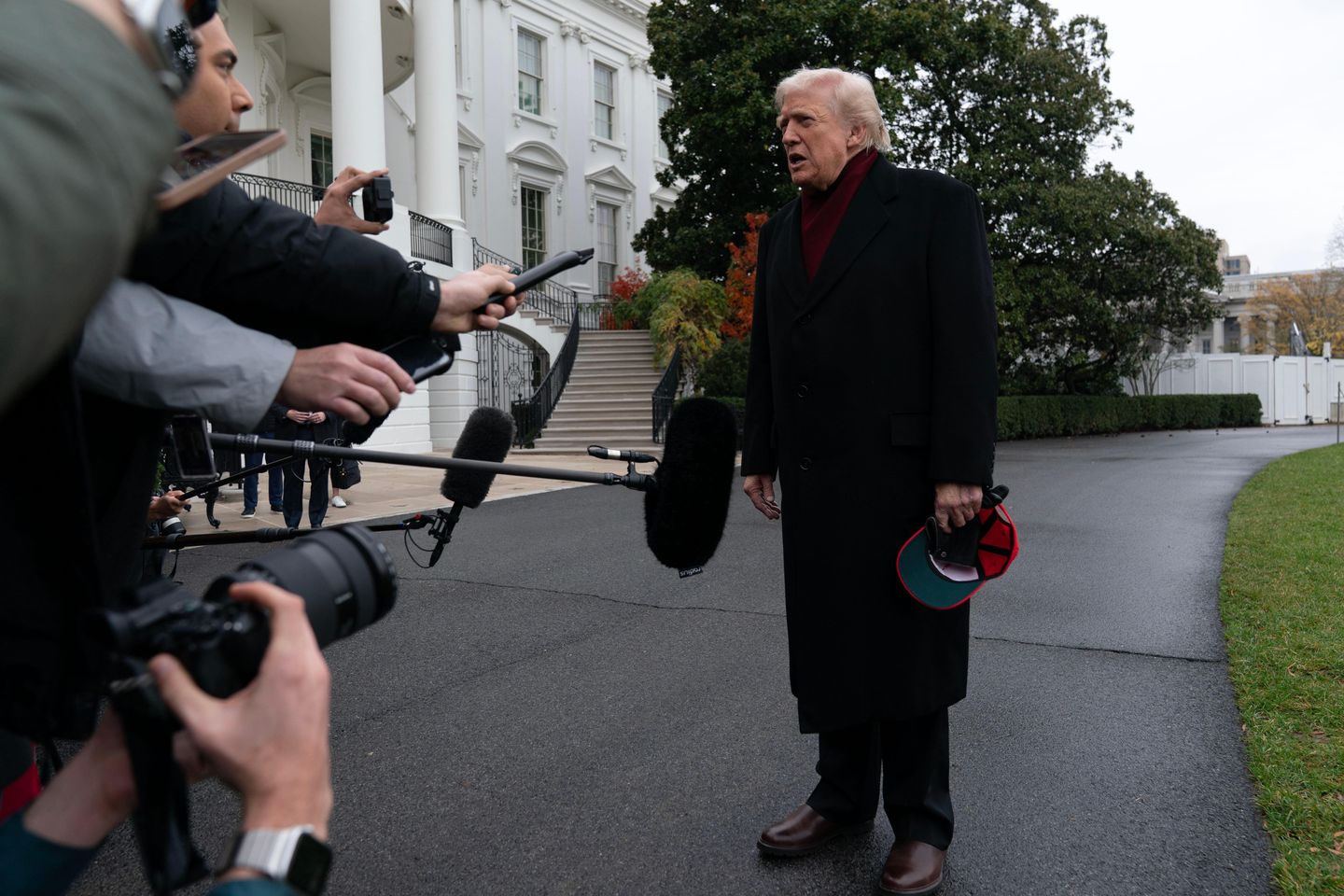
President Trump has ordered a slew of actions based solely on reporters’ questions, creating an unusual contradiction in which the president fiercely criticizes the media but then also follows their prompts.
Since taking office, Mr. Trump ordered the removal of a 41-year-old peace vigil near the White House, revoked Hunter Biden’s Secret Service protection, ordered the government to settle with the family of Ashli Babbitt and designated protesters torching Tesla dealerships as domestic terrorists.
These moves are among the many he took in response to a reporter’s question. In some cases, Mr. Trump acknowledged that he was unaware of the issue until the reporter broached the subject.
None of Mr. Trump’s predecessors in modern times took cues from the Washington press corps as much as he does. It’s also a departure from the adversarial tone he often deploys with reporters.
“It’s new,” said Richard Bernadito, a former White House reporter who now teaches at American University. “It’s an example of how different Trump is compared to other presidents because he really listens to what the press is saying. He’s looking for ways to use their questions to get his message across.”
It’s not just the response to reporters’ questions, but also the speed at which Mr. Trump acts.
On a Friday night in September, Real America’s Voice correspondent Brian Glenn asked Mr. Trump about removing the makeshift blue tent that had been home to the White House Peace Vigil directly across from the White House since 1981. The encampment was completely dismantled by Saturday.
“It’s been there for many years. We took it down. It came down very quickly.” Mr. Trump said afterward.
In March, Mr. Trump revoked Hunter Biden’s Secret Service protection within hours of being asked by The Washington Times why the former first son had 18 agents during an extended trip to South Africa.
Also in March, Mr. Trump was asked if the demonstrators who were attacking Tesla dealerships in protest of former advisor Elon Musk and his Department of Government Efficiency should be labeled domestic terrorists. Within days, the FBI launched a task force to investigate and prosecute those carrying out the protests as domestic terrorists.
In some incidents, the moves took a little longer. For example, Mr. Trump told a reporter he would “look into” a settlement with Babbitt’s family, but the $5 million payout wasn’t reached until June.
Mr. Trump has acknowledged that he became aware of the issue from the reporter.
“I just heard about it for the first time,” Mr. Trump told The Times in response to questions about Hunter Biden’s protection detail. “That’s really interesting. All right, I’m going to take a look at that.”
When asked by Newsmax’s Greg Kelly about Babbitt’s family still pursuing a wrongful death case against the government, Mr. Trump responded, “You’re telling me that for the first time. I haven’t heard that. I’m a big fan of Ashli Babbitt.”
The president also told Mr. Glenn that he was unaware of the peace vigil tent, asking him where it was located near the White House.
Robert Rowland, who teaches presidential rhetoric at the University of Kansas, said the president is seizing upon these reporters’ questions because he’s constantly looking for ways to boost those he favors and rankle his opponents.
“When Trump hears something where he thinks he can help somebody on his side, like Ashli Babbitt’s family, or punish someone who is on the other side, like Hunter Biden, he acts on that to reaffirm what he’s doing for his own people or get even with his enemies,” he said.
Mr. Trump’s use of media questions to spur actions in some ways contrasts with his string of attacks on media outlets that he says are unfairly critical of him.
He banned The Associated Press from the Oval Office, Air Force One and Mar-a-Lago because the outlet refused to adopt the Gulf of America moniker he adopted for the body of water between Florida and Mexico that borders the Southern United States and used to be called the Gulf of Mexico.
The president also delivered a blow to a staple of anti-conservative news by ending taxpayer funding for NPR and PBS, wrangled embarrassing multimillion-dollar settlements out of ABC and Paramount, the owner of CBS News and “60 Minutes,” over their coverage of him.
Mr. Trump has also cheered the suspension of ABC late-night host Jimmy Kimmel, after the comedian made controversial remarks about the assassination of conservative activist Charlie Kirk.
The president has also hurled insults or outright ignored reporters with outlets he doesn’t like while taking questions in the Oval Office and elsewhere.
Peter Loge, who teaches political communication at George Washington University, said the president’s disdain for the news media doesn’t expressly prohibit him from acting upon a reporter’s question when Mr. Trump thinks it’s in his interest.
“If something comes to President Trump’s attention, he often acts on it, but at the same time, says an outlet is ‘fake news.’ He’s not thinking, ‘Oh, I don’t like them, therefore I’m not going to listen to them.’ He’s thinking, ‘This thing doesn’t make any sense, and I’m going to make it make sense by removing it and doing a flashy thing.’”