NEWS AND ANALYSIS:
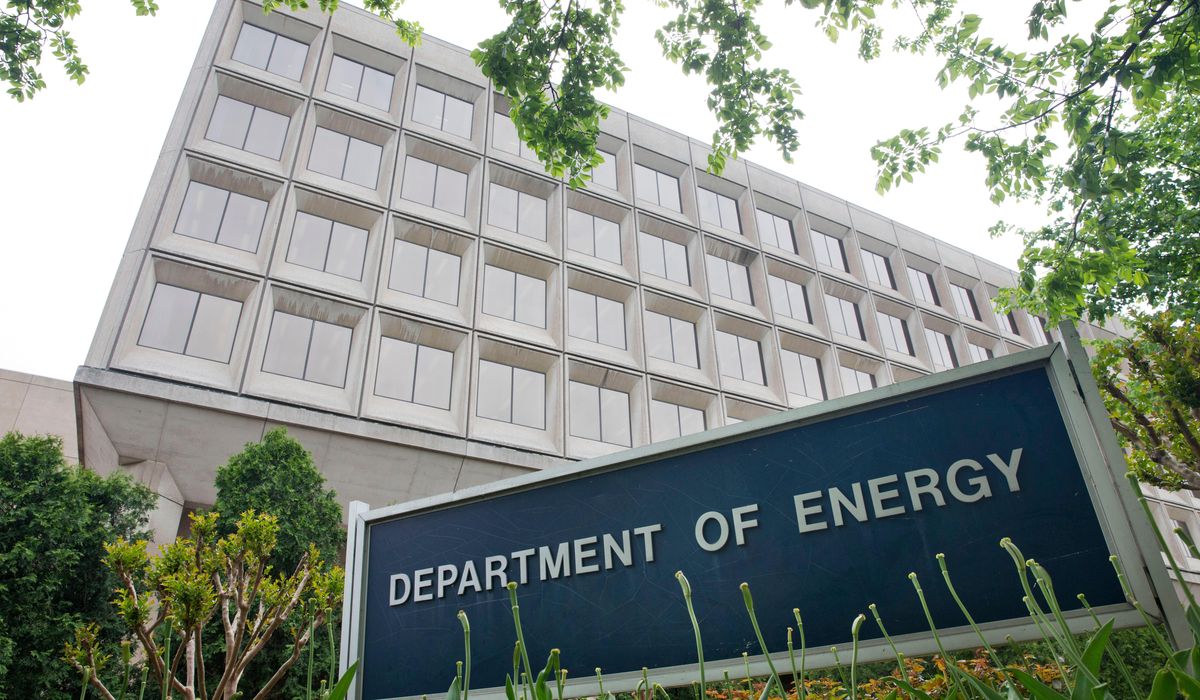
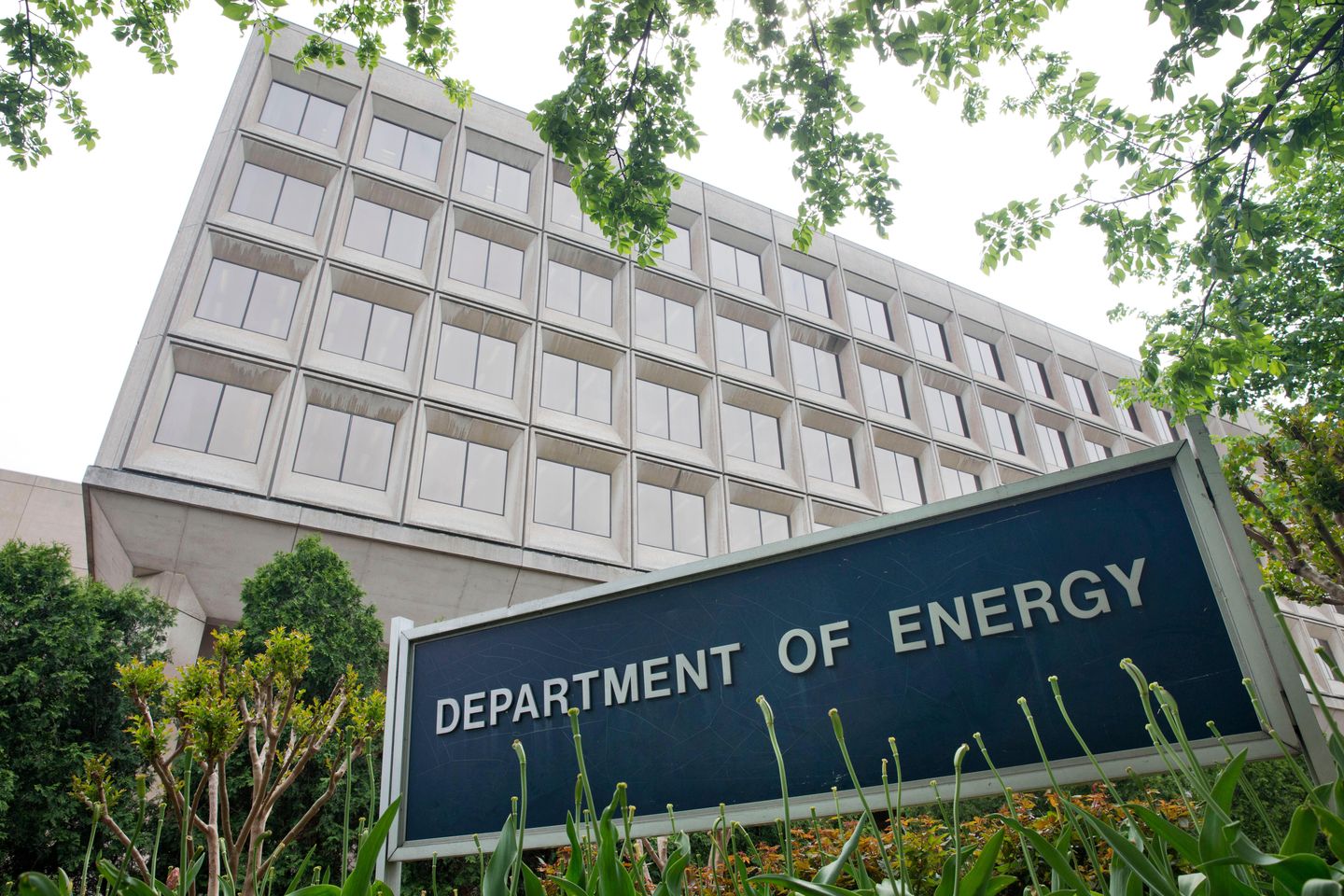
The Chinese Communist Party exploited Energy Department programs to gain access to taxpayer-funded research that has fueled the Chinese military, including its nuclear weapons, according to an investigation by a congressional committee.
The probe identified about 4,350 research papers between June 2023 and June 2025 that involved Department of Energy funding or research support together with Chinese institutes, including about 2,200 that were linked to the Chinese defense research and industrial base, according to the panel’s report made public Wednesday.
The investigation was conducted by the House Select Committee on the Chinese Communist Party and the findings were disclosed in a 120-page report.
Among the most concerning relationships identified by the probe were links between the department and China’s “Seven Sons of National Defense” universities and the Chinese Academy of Engineering Physics and its subsidiaries.
The academy is China’s main nuclear weapons research and development complex and investigators believe the joint work advanced development of China’s large-scale strategic weapons programs.
The nuclear cooperation involves a professor at Stanford University and the SLAC National Accelerator Laboratory who currently holds a position with a subsidiary of the China Academy of Engineering Physics and also engaged in research at Chinese defense laboratories.
A second case in the report revealed fundamental research on nitrogen that was conducted by a U.S. professor who had worked extensively on DOE-funded projects and who also collaborated with a Chinese Academy of Sciences laboratory.
Chinese sources revealed to investigators that the research resulted in “breakthroughs in high-yield explosives and advancements in China’s nuclear weapons development,” the report said.
The Chinese Embassy dismissed the report and said the committee “has long smeared and attacked China for political purposes and has no credibility to speak of,” The Associated Press report.
“A handful of U.S. politicians are overstretching the concept of national security to obstruct normal scientific research exchanges, a move that wins no public support and is bound to fail,” embassy spokesman Liu Pengyu said.
Documents obtained by the committee from the Chinese Academy of Engineering, a Chinese government agency, detailed a 12-year research partnership between the same U.S. professor and a Chinese institution, despite the professor’s long history of working on both DOE and Defense Department-funded research.
According to the report, China’s government described the collaboration as “leading China to develop new materials and technologies for cutting-edge defense weapons and equipment, such as nanomaterial synthesis, multiscale fine structure control, as well as additive manufacturing technology and continuously narrow the technology gap with more advanced countries.”
“This investigation reveals a deeply alarming problem: The Department of Energy failed to ensure the security of its research and it put American taxpayers on the hook for funding the military rise of our nation’s foremost adversary,” said Rep. John Moolenaar, Michigan Republican and committee chairman. “The department must stop providing funding to grantees who allow this exploitation and protect hard-earned taxpayer dollars.”
Sen. Tom Cotton, chairman of the Senate Intelligence Committee, said the findings of the report reveal that China stole critical dual-use technologies directly related to next-generation military aircraft, electronic warfare systems, and radar detection.
Taxpayer-funded research from the Energy Department must be blocked from helping China, said Mr. Cotton, Arkansas Republican.
“For decades, the Chinese Communist Party (CCP) has conducted intellectual property theft, cyber espionage, and illicit technology transfers under the guise of international research collaboration,” said Rep. Rick Crawford, Arkansas Republican and chairman of the House Intelligence Committee. “The CCP has long operated below the threshold of armed conflict to defeat the U.S. without firing a shot.”
The report said that as of 2025, Energy national laboratories are hosting nearly 2,000 Chinese nationals as researchers and contractors.
Energy Department security measures for both personnel and information were faulted in the report.
Officials at the department told investigators that the presence of Chinese nationals at the laboratories was welcome because “we want them in our labs so they can see how advanced we are — and go back to China telling their colleagues, thus giving up on beating the United States,” the report.
“This rationale is not only stunningly naïve, but also completely divorced from decades of empirical evidence and the CCP’s well-documented strategy of deliberately embedding scientific talent abroad to absorb, replicate, and leapfrog U.S. capabilities through reverse-engineering and targeted technology transfer,” the report said.
The U.S.-China scientific and research exchanges were intended as an exercise in openness but “become a conduit for the transfer of taxpayer-funded innovation into the hands of a dangerous strategic adversary,” the report said.
Defense bill mandates increased security at Energy
The defense authorization bill for fiscal 2026 contains several new measures designed to increase security at the Energy Department and its National Nuclear Security Administration which is in charge of nuclear weapons.
A new section of the bill on “Atomic Energy Defense” requires a series of new security measures, including new restrictions on people from China and other foreign adversary states from gaining access to sensitive facilities.
The restrictions prevent nationals from China, Russia, North Korea and Iran from entering Energy facilities except for public locations. Also restricted are nationals from those nations who may be conducting inspections on behalf of the International Atomic Energy Agency.
The new rules also will add polygraph or lie-detector tests of suspects in Energy Department counterintelligence investigations.
“The purpose of the new program is to minimize the potential for release or disclosure of classified data, materials, or information,” the legislation states.
The new security measures are contained in the fiscal 2026 defense authorization bill that passed the Senate on Wednesday and is now headed to the White House for the expected signature by President Trump.
The bill also requires greater reporting requirements to Congress for certain security and counterintelligence failures related to atomic energy defense programs.
The failures are defined as an intelligence loss or compromise of classified information at an Energy facility or one operated by a contractor that is expected to cause significant harm to U.S. national security.
Another section of the bill will require an annual report and certification regarding the security of defense nuclear facilities.
The measures also call for increasing the defenses at nuclear facilities against unmanned aerial aircraft. The defenses must include capabilities for halting drone incursions near nuclear sites.
The measures must include passive or active defenses and direct or indirect physical, electronic, radio, and electromagnetic means.
Cyberattacks against computer networks at nuclear facilities also must be reported regularly to Congress, according to another section of the bill.
Greater review of classified nuclear weapons documents will also be required under the bill to prevent the disclosure of sensitive or classified weapons information.
The Energy Department also will be required to set up a pool of specialists trained and tasked with countering spying and intelligence gathering threats posed by foreign nationals against department employees who travel abroad for laboratory-to-laboratory exchanges.
The new security measures in the bill coincide with an investigation by the House Select Committee on the Chinese Communist Party revealing how Energy collaboration with China was used to advance China’s nuclear weapons and other high-technology arms programs.
Chinese theft of nuclear weapons secrets from the Energy Department has been underway for decades.
In the late 1990s, intelligence officials disclosed that Beijing agents acquired through espionage secrets related to at least seven of the most advanced U.S. nuclear warheads.
The warheads included the W-88 warhead deployed on submarine-launched ballistic missiles, the W-56 on the Minuteman II missile, the W-62 Minuteman III, the W-70 Lance, the W-76, another SLBM warhead, the W-78 Minuteman III Mark 12A, and the W-87 Peacekeeper, and the developmental enhanced radiation version of the W-70 known as the neutron bomb.
A U.S. intelligence report from 1998 stated that the Energy Department “is under attack by foreign collectors.”
“The losses are extensive and include highly classified nuclear weapon design information to the Chinese,” the report stated.
Ex-arms official: China nuclear arsenal expands
Marshall Billingslea, a former presidential arms control official during the first Trump administration, recently warned Congress that China’s nuclear arsenal is expanding rapidly and has set off what he calls “Arm Race 2.0.”
Mr. Billingslea told the Senate Foreign Relations Committee in testimony earlier this month that in 2020 he provided a classified briefing to the panel on China’s early stage of a “massive increasing in its nuclear arsenal.”
“Five years later, the grim assessment I delivered to you back then now seems to have been overly optimistic,” he stated in prepared testimony. “China has proceeded at breathtaking pace.”
The Chinese military has now deployed more than 600 operational warheads and is ahead of schedule in fielding 1,000 weapons by 2030, he said, adding that Beijing is expected to have 1,500 warheads by 2035.
“That is roughly equivalent to what both the U.S. and
Russia field today, and I believe China may ultimately exceed that number by a wide margin,” Mr. Billingslea said.
The Chinese nuclear expansion included three new ICBM fields in the past few years with the total number of silo launchers to about 400.
“That is more silos than we have,” he said. “China has also been recently discovered building 30 new silos for its DF-5 ICBMs in the mountainous regions of central-eastern China. The new DF-5C will be able to carry a multi-megaton warhead — a so-called ‘city buster’ — or may be deployed with 10 warheads.”
The U.S. has no similar megaton-class warhead.
Additional strategic capabilities include new low-yield warheads and a fractional orbital bombardment system that Mr. Billingslea said “could be used in a decapitation first-strike scenario.”