There was a time when Americans looked at surveillance states elsewhere in the world and recognized them immediately.
The government watched the people. The people feared the government. Privacy belonged to those in power, while ordinary citizens learned to live as though someone might always be listening.
We called that tyranny.
So when did we decide it was acceptable here?
Freedom rarely disappears with a marching band and an announcement. It disappears by inches, one emergency, one exception, one technological convenience, one this is for your safety at a time.
And somewhere along the way, something fundamental in the American relationship between citizen and government began to invert: The government knows more and more about us, while we are permitted to know less and less about the government.
The Fourth Amendment wasn’t written because the Founders had something to hide. It was written because they understood human nature. Power, once acquired, rarely volunteers to surrender itself.
Today, your cellphone can reveal where you sleep, where you work, where you worship, which doctor you visit, whom you spend time with and where you travel.
The Supreme Court recognized this danger in Carpenter v. United States, holding that police generally need a warrant to obtain extensive historical cell-site location information. Taken together, those digital breadcrumbs can create an astonishingly intimate portrait of someone’s life.
But technology didn’t stop advancing while constitutional law caught its breath.
We now have a commercial industry dealing in pieces of our lives. The Federal Trade Commission recently obtained an order resolving its case against data broker Kochava after alleging the company sold sensitive location information derived from hundreds of millions of mobile devices. Kochava settled without admitting the FTC’s allegations, and the order restricts the sale or sharing of sensitive location data without affirmative consumer consent.
Surveillance doesn’t always require somebody following you anymore.
Sometimes the information can simply be purchased.
And consider what’s happening right now.
On August 26, Sen. Ron Wyden and Rep. Shontel Brown asked the Government Accountability Office to investigate the Transportation Department’s handling of airline-passenger privacy. Their letter says that a database containing roughly 722 million passenger travel records had been available to federal agencies without warrants or judicial oversight. The program ended in 2025, but lawmakers say the Department of Homeland Security has since sought a replacement passenger-surveillance capability.
722 million travel records.
This isn’t a conspiracy theory whispered in some dark corner of the Internet. It is the subject of congressional scrutiny.
The Government Accountability Office has also documented federal use of facial-recognition technology. Eighteen of 24 surveyed agencies reported using it for at least one purpose. Among federal agencies with law-enforcement personnel, 14 reported using facial recognition to support criminal investigations.
Which raises the obvious question:
Who is watching the watchers?
Because while government’s ability to examine our lives becomes increasingly sophisticated, try turning that scrutiny around.
Try getting records from government. Try getting an agency to explain itself. Try discovering exactly how a decision affecting you or your family was made.
Suddenly transparency becomes considerably less fashionable.
There are exemptions. Redactions. Delays. Confidentiality rules. Administrative walls.
Some government secrecy is legitimate. Intelligence operations cannot be livestreamed. Witnesses sometimes require protection. Children’s identities must be safeguarded.
But exceptions cannot become the operating philosophy of government.
America was built upon an arrangement radically different from the old world:
Government was supposed to fear the scrutiny of the people — not the people the scrutiny of government.
We are the sovereign. They are the servants.
And somewhere along the road, we appear to have misplaced the seating chart.
This isn’t Republican versus Democrat. Please don’t make it that small.
Surveillance powers survive administrations. They outlive presidents and cross party lines. Fortunately, opposition to them does too.
This year, Democrats Zoe Lofgren and Ron Wyden joined Republicans Warren Davidson and Mike Lee in introducing the Government Surveillance Reform Act, which would, among other things, restrict the government’s ability to purchase certain Americans’ information from commercial data brokers.
That is how Americans should think about government power.
Never judge a government power by the politician you trust with it today. Judge it by the politician you would be terrified to hand it to tomorrow.
If you cheered surveillance when your party controlled Washington and suddenly discovered the Fourth Amendment when the other party took power, you didn’t believe in civil liberties.
You believed in home-field advantage.
Rights belong to the person you despise as surely as they belong to you. That’s the whole point.
Security matters. Law enforcement matters. Protecting Americans from genuine threats matters.
But liberty matters too.
Warrants matter. Probable cause matters. Due process, transparency and oversight matter.
And privacy matters — not because free people have something sinister to hide.
Privacy is the space in which a human being gets to exist without first asking government permission.
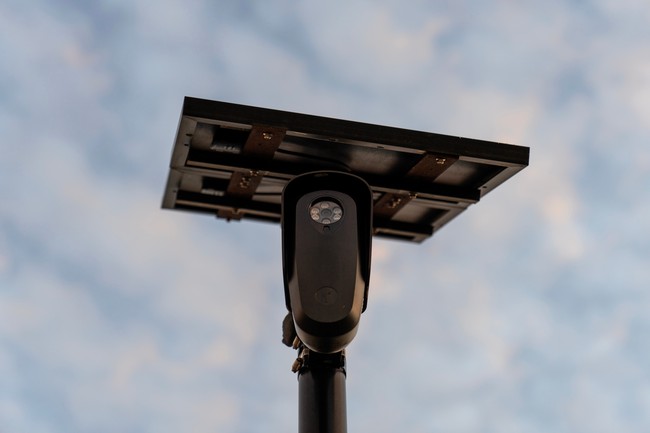
Maybe tyranny doesn’t begin when cameras appear on every corner.
Maybe it begins when surveillance becomes ordinary. When citizens shrug. When I have nothing to hide becomes our answer to a government that was never constitutionally entitled to know everything in the first place.
Our Founders didn’t leave us a Constitution because they trusted government.
They left us one because they didn’t.
A government that can see everything while answering for nothing is not transparency.
It is power.
And in America, power was never supposed to belong to them.
It was supposed to belong to us.
Editor’s Note: Do you enjoy PJ Media’s conservative reporting exposing the radical left and woke media? Support our work so we can keep bringing you the truth.
Join PJ Media VIP and use promo code FIGHT to receive 60% off your membership.