We’ve talked a lot lately about how the people of Latin America have been electing more conservative, pro-United States, and pro-Western values leaders and governments in recent years. No, this has little to nothing to do with USAID (I can already hear the comments — someone said that to get views once and now I hear people parrot it constantly). It was happening before Donald Trump even took office for his second term.
As a matter of fact, it’s part of the same movement that got Trump elected. People up and down the North and South American continents were fed up with crime, bad economics, and woke social policies that were making our countries worse, and we voted our way out of them or tried. That’s what’s driving this shift.
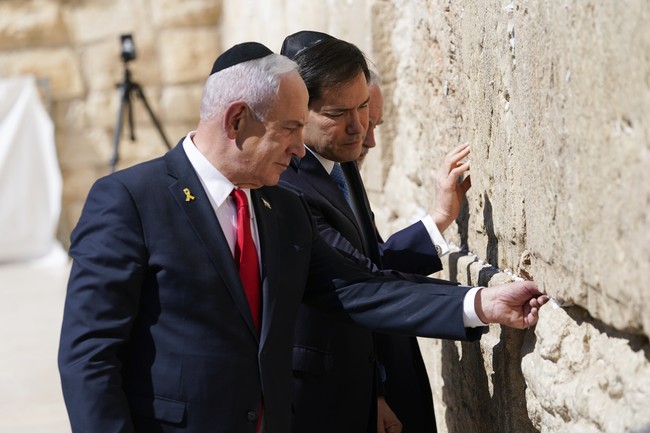
Israel is also benefitting from this. In December of last year, the country’s minister of foreign affairs, Gideon Sa’ar, whose father was actually born in Argentina, declared 2026 to be the “year of Latin America.” He was speaking at the Israeli Foreign Ministry’s Conference of Ambassadors and Heads of Mission in Jerusalem then, but he has repeated it numerous times, as recently as this month.
What did that mean exactly? Well, after October 7, 2023, the date of the Hamas-led attacks on Israel, several left-wing Latin American governments decided to protest Israel’s retaliation campaign in Gaza. They went as far as to recall their ambassadors to Israel and some, like Colombia and Bolivia, cut all diplomatic ties. Colombia’s Gustavo Petro even went as far as to blame Israel for his hand-picked candidate losing this most recent presidential election.
Sa’ar saw these countries turning away from those types of leaders as an opportunity to restore and rebuild those relationships. He said that the Israeli government spent 2025 heavily invested in Africa, but that this year, it would switch its focus to Latin America.
So, has that “year of Latin America” materialized? Absolutely.
Colombia’s newly-elected president, Abelardo de la Espriella, has promised to restore the relationship in a big way. Sa’ar was actually at his inauguration in early August, signaling a new beginning between the two countries.
“Hoy comienza la era dorada de las relaciones entre Colombia e Israel”, asegura el ministro de Exteriores de Israel, Gideon Saar 🇨🇴🤝🇮🇱
El presidente electo de Colombia, Abelardo de la Espriella, recibe al canciller de Israel y marca su reinicio en las relaciones bilaterales. pic.twitter.com/zoxblNE48Y
— RT en Español (@ActualidadRT) August 7, 2026
President de la Espriella has vowed to fully restore diplomatic ties, move Colombia’s embassy from Tel Aviv to Jerusalem, cancel Petro’s plans to install a Palestinian embassy, resume trade with Israel, remove itself from South Africa’s genocide case against Israel, formally recognize Israeli sovereignty over the Golan Heights, and seek military cooperation with Israel.
But the wins don’t end there. Earlier this month, Venezuela’s new foreign minister, Félix Plasencia González, presumably under Marco Rubio’s guidance, announced that, “The Governments of the Bolivarian Republic of Venezuela and the State of Israel report that they have agreed to continue bilateral technical cooperation derived from the emergency and recovery efforts following the double earthquake, as well as to establish a coordination mechanism for the provision of consular services to their respective citizens residing in both countries.”
Following the deadly double earthquakes in Venezuela in June, an Israeli team was photographed in the country, surveying the damage and meeting with “interim president” Delcy Rodríguez.
Bolivia’s new-ish president, Rodrigo Paz, is also restoring diplomatic relations with Israel, and countries like Ecuador, Paraguay, Costa Rica, and Chile have taken steps to strengthen their own relationships, such as signing trade deals, opening innovation offices in Jerusalem, and designating Hamas, Hezbollah, and the Islamic Revolutionary Guard Corps (IRGC) as terrorist groups.
And, of course, Javier Milei of Argentina continues to be one of Israel’s top supporters.
El presidente Milei en Israel 🇮🇱🇦🇷 pic.twitter.com/S0Hj7m8Iwg
— El Peluca Milei (@ElPelucaMilei) April 19, 2026
Earlier this year, Milei visited the country and he and Israeli Prime Minister Benjamin Netanyahu launched the Isaac Accords, a diplomatic, economic, and cultural framework that seeks to bring Israel and the nations of the Americas together on topics like fighting drug trafficking and terrorism, trade, innovation, and combatting antisemitism. While no other countries have joined yet, it’s likely that several will, such as Paraguay, Costa Rica, Ecuador, and El Salvador.
Strategically, it’s a win for Israel, these countries, and even the United States. It strengthens our own security goals in the region and even in the Middle East, creates more economic opportunities, and builds some counterweight against groups like the European Union and the United Nations. It also strengthens Western culture and Judeo-Christian values at a time when both are fragile.
Editor’s Note: Thanks to President Trump and his administration’s bold leadership, we are once again respected on the world stage, and our enemies are being put on notice.
Help us continue to report on the administration’s peace through strength foreign policy and its successes. Join PJ Media VIP and use promo code FIGHT to receive 60% off your membership.