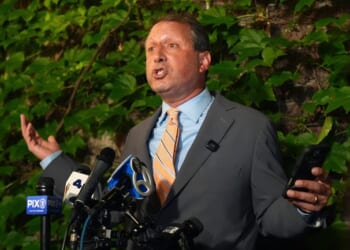
Rep. Steve “KFC” Cohen has represented Tennessee’s 9th Congressional District since 2007. After Republican lawmakers divided Memphis among three new districts, the Tennessee Democrat ended his reelection campaign rather than fight for his job. From Cohen’s press release:
This morning I made public my decision not to run in any of the three gerrymandered congressional districts carved out of the 9th District I have represented for more than 19 years. The state General Assembly last week diluted the Black vote in thirds to make Republican victories likely. Cases are pending that could restore the 9th District to its current contours until 2028 and, if we prevail, I will remain a candidate in the 9th, but that appears unlikely. It has been the honor of a lifetime to represent the people of Memphis in my 47 years of public service, first at the state Constitutional Convention and on the Shelby County Commission, then 24 years in the state Senate and now more than 19 years in Congress. There’s no reason to be modest: No other politician has done more for the city and region – from my decisive vote to create the Regional Medical Center at Memphis (now Regional One), to the state lottery and Hope scholarships that have helped tens of thousands get a college education, to persuading the U.S. Department of Transportation to invest more than $393 million to replace the Interstate 55 bridge, the largest infrastructure investment in the state’s history. At the national level, I was Chairman of the Judiciary Subcommittee on the Constitution, Civil Rights and Civil Liberties when we held hearings to strengthen the Voting Rights Act that the Supreme Court has now destroyed. I was the first to introduce complete Articles of Impeachment against Donald Trump. The Center for Effective Lawmaking, a project of the University of Virginia and Vanderbilt University, named me the fifth most effective legislator in the 118th Congress in its assessment last year. If we prevail in the courts and the 9th District remains intact for the 2026 mid-term election, I will remain a candidate and will be proud to represent its people for another two years. If not, it has been an honor serving you.
A three-judge federal panel has now refused to block those districts before Tennessee’s Aug. 6 primary. The judges didn’t hide the political goal behind the map. Their opinion stated, “The road to a reliably 9-0 map runs through Memphis.”
A three-judge panel on Thursday declined to issue a preliminary injunction against the new districts, paving the way for them to be used in the Aug. 6 primary elections. Tennessee had revised its congressional districts in May, shortly after a U.S. Supreme Court ruling weakened federal Voting Rights Act protections for minorities.
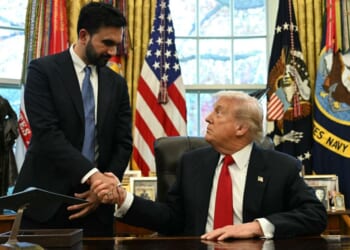
President Donald Trump has urged Republican-led states to redraw districts to their advantage to try to hold on to a slim U.S. House majority in the November elections. Tennessee is among eight GOP states to do so since last year. Trump is hoping the mid-decade redistricting can help Republicans buck a historical pattern in which the president’s party typically loses seats in midterms.
Opponents of Tennessee’s new congressional districts had argued in court that Republican lawmakers who passed the plan were motivated at least partly by racial discrimination, in violation of the U.S. Constitution.
Republicans have insisted they were motivated only by partisan politics, seeking to win the lone Democratic-held seat among the state’s nine districts. Legislatures are free to draw partisan districts under a 2019 Supreme Court ruling.
Republicans currently hold eight of Tennessee’s nine House seats. The old 9th District was majority black, deeply Democratic, and represented by Cohen, who is white.
The new map splits Memphis across three Republican-leaning districts and stretches Cohen’s reshaped district east toward the Nashville suburbs.
Civil rights groups and Memphis voters argued that lawmakers intentionally diluted black voting strength in violation of the Constitution. The panel found the challengers lacked direct evidence of racial motivation and had failed to rule out the state’s stated partisan purpose.
The ACLU is using a racial lens in its announcement:
“The decisions by this court continue to further the disenfranchisement of Black voters in Memphis,” said Amber Sherman, named plaintiff and an affected Memphis voter. “It’s painful to know we’ll head into another election under a map that was designed to weaken the voices of Black voters in Memphis. We deserve the same opportunity to shape our future as anyone else. When our voting power is diluted, our neighborhoods have a harder time making their voices heard on the issues that shape our daily lives. We may not have won today’s ruling, but we aren’t giving up. Every voter deserves equal representation, and that’s what we’ll keep fighting for.”
“Black voters in Memphis are being forced to use a congressional map that unlawfully dilutes their political power as another critical election approaches,” said Ari Savitzky, senior staff attorney with the ACLU’s Voting Rights Project. “At a moment when voting rights are under attack across the country and federal officials continue testing the limits of executive power over our elections, courts should be especially vigilant in protecting communities from ongoing discrimination. We are most saddened for our clients and the Black community in Memphis, whose hard-won political power, built on generations of organizing and struggle, was ripped away by the General Assembly at the first possible opportunity. This racially motivated redistricting is wrong and harkens back to a darker time in America’s past. We will continue to fight for the rights of voters in Tennessee and elsewhere even as anti-voter state legislatures declare open season on Black voters’ fundamental right to vote.”
“Today’s ruling means Black voters in Memphis will face the first election since their congressional district was split apart under a map designed to suppress their voting power,” said Lucas Cameron-Vaughn, legal director of the ACLU of Tennessee. “Tennessee lawmakers deliberately divided Black neighborhoods across multiple districts, minimizing their voting strength and their ability to elect leaders who will represent their interests. The court’s order allows this new map to govern both the August primary and November general election. We will continue fighting for a congressional map that offers a meaningful voice in the political process for every Tennessean.”
Memphis has roughly 610,000 people, while a Tennessee congressional district holds about 768,000 people. The city favors Democratic candidates by about 50 points. Any compact district built around Memphis would therefore give Democrats a strong path to victory, regardless of which surrounding communities joined it.
Republican legislators wanted a map capable of electing nine Republicans. Dividing the state’s largest Democratic stronghold was the clearest way to reach that goal. The judges concluded that partisan intent explained both the lines and their effect on black voters.
Federal courts still police racial discrimination in redistricting. The Supreme Court ruled in 2019 that partisan-gerrymandering claims present political questions beyond their reach.
The plaintiffs’ frustration is understandable. Losing a district changes who answers local calls, carries neighborhood concerns to Washington, and competes for federal attention. A painful political loss, however, can’t supply missing evidence of racial intent.
The lawsuit continues, but the emergency effort to stop the map failed. I’m having a hard time remembering all the lawsuits the Republicans filed in New England for the Democrat gerrymandering work.
Early voting began July 17, ballots were already printed, and the panel found the challengers unlikely to prevail on the evidence presented.
Republicans used their legislative majority to pursue a partisan advantage. Democrats tried to convert the resulting loss into a constitutional claim. The judges demanded evidence of racial motivation, and the record fell short.
Tennessee voters will decide whether the new lines produce a 9-0 delegation. Federal judges were right to let the election proceed instead of treating every aggressive partisan map as proof of unlawful racial intent.
PJ Media is offering 60% off VIP membership with promo code FIGHT. Join today and support independent commentary that follows the facts even when the political fight gets loud.