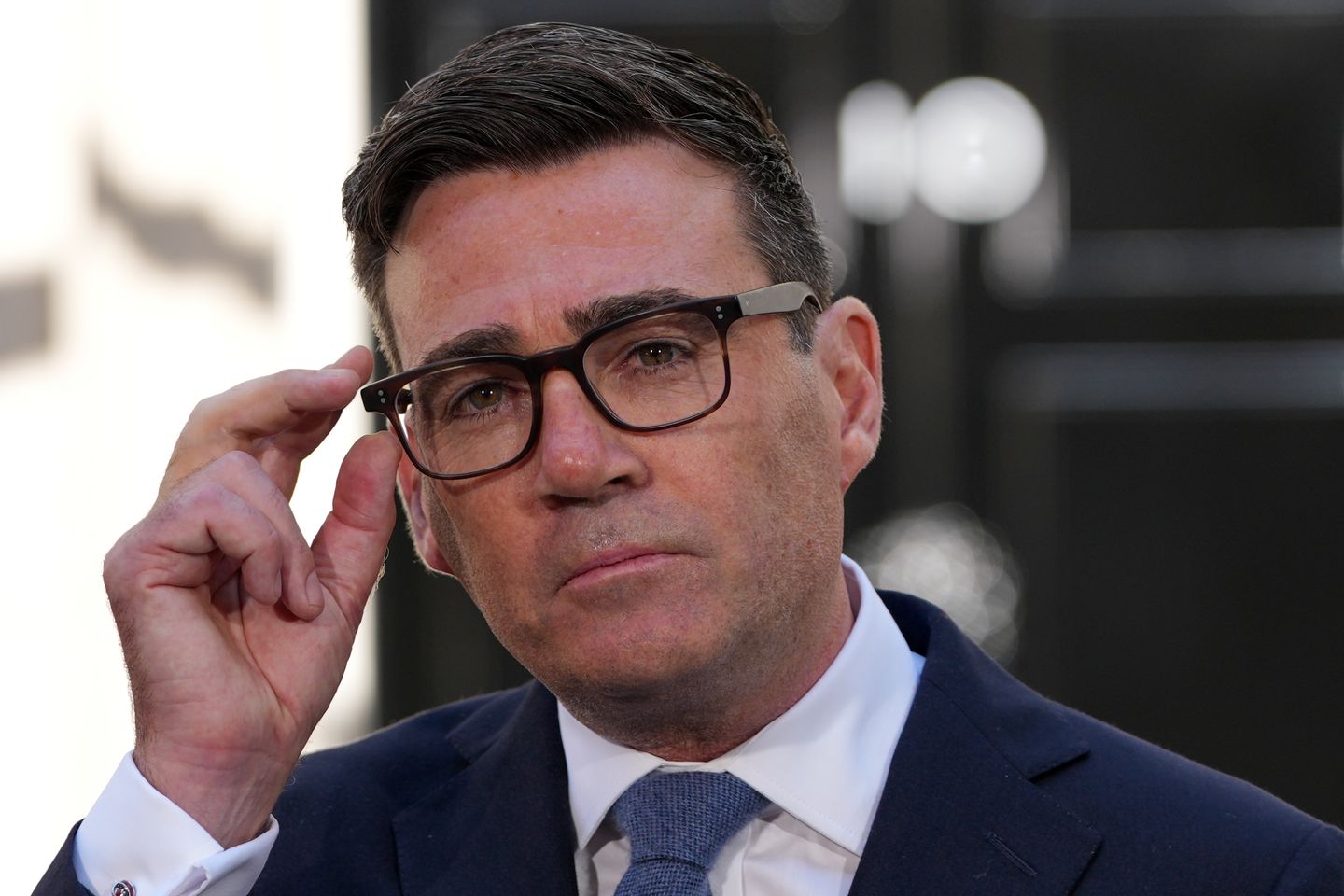
LONDON — Andy Burnham took office Monday as Britain’s new prime minister, promising a 10-year plan to restore political stability and revive the economy while acknowledging that the six prime ministers preceding him failed to do so in the past decade.
Speaking outside 10 Downing St. minutes after being formally appointed by King Charles III, Mr. Burnham pledged to ease the cost of living for ordinary people, decentralize political power, revitalize industry and end street sleeping by homeless people. He said he would deliver a “circuit breaker” for a system that has taken wrong turns since the 1980s, when public services and utilities were privatized and local government eroded.
“We will take power out of here and carry it into every postcode in the land so that they can do more and in doing more, build a new economy where we put life’s essentials back under stronger public control to make them affordable to you again,” he said.
Mr. Burnham said he was “acutely conscious” of the political revolving door he was walking through.
“This is a moment for reflection and new resolution,” he said. “It requires my generation of politicians to raise our game and rise to the new challenge. Britain needs to show the world that we can regain our stability once again, and that is our challenge to make politics work, to make it work better.”
One of Mr. Burnham’s biggest tasks on his first day was to appoint a Cabinet. The key post of chancellor of the exchequer went to John Healey, the former defense secretary who quit the previous government a few weeks ago over funding plans for his department. His appointment as Treasury chief was a surprise.
Mr. Healey replaces Rachel Reeves, the architect of much of the economic agenda of the man Mr. Burnham is replacing, Keir Starmer, as well as some of the missteps that ate away at his support. Others leaving the Cabinet included David Lammy, who was deputy prime minister.
Energy Secretary Ed Miliband was given the role of foreign secretary. He replaces Yvette Cooper, who was appointed health secretary, a demotion but a hugely important post for the Labor Party’s reelection prospects. Shabana Mahmood remains as home secretary. The full Cabinet meets Tuesday.
Mr. Burnham became the seventh prime minister since 2016 in a now well-rehearsed handover after replacing Mr. Starmer as leader of the center-left governing Labor Party on Friday. Mr. Starmer announced last month that he would resign.
He left office just two years after winning a landslide election victory, forced out by his own party after a series of missteps and U-turns.
Britain’s parliamentary democracy allows governing parties to change leaders, and thus prime ministers, without the need for a general election. The next national poll does not have to be held until 2029, though Mr. Burnham can call one sooner if he wants.
Mr. Burnham was the only candidate in a contest to become the party’s new leader, securing nominations from 379 of the 403 Labor lawmakers in the House of Commons.
He will confront many of the same struggles as his predecessor: a sluggish economy, a cost-of-living crisis, overstretched public services, concerns about migration and foreign affairs that include wars in Ukraine and the Middle East.
He will also try to navigate relations with U.S. President Trump, who first warmed to, then soured on, Mr. Starmer. Mr. Burnham’s office said the prime minister spoke to Mr. Trump on Monday afternoon and “underlined his commitment to defense and security.”
The former mayor of Greater Manchester previously pledged to make politics “less toxic,” improve living standards across the country and “bring back the hope we have all been missing.”