A conservative guest sits down for a cable interview, and the temperature changes before the first answer is finished.
The host leans forward, the phrasing gets tighter, the follow-up comes fast:
Do you still believe the 2020 election was stolen? Do you accept the results? Will you clearly say it?
The question isn’t always meant to gather information. Often, it’s meant to put the guest into a box.
Now watch what happens when the subject shifts. A progressive or Democratic socialist, or communist, gets asked about Israel, Gaza, campus protests, or “from the river to the sea” crap, and suddenly the conversation gets more room to breathe.
There’s time for context, space for pain, history, and for the answer that doesn’t quite answer. The guest is invited to explain, yet the conservative is ordered to confess.
So here’s a simple counterpunch for the next Republican, conservative, or MAGA guest who gets hit with the 2020 litmus test:
“Do you believe Israel has a right to exist?”
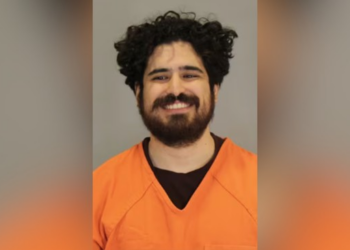
Teleprompter Kasie Hunt asked Abdul El-Sayed, a Democratic candidate for U.S. Senate in Michigan, whether Israel has a right to exist. El-Sayed didn’t give a simple yes; he moved to AIPAC spending, Palestinian statehood, U.S. tax dollars, Gaza, and what he called “genocide and apartheid.”
Hunt: Do you believe Israel has a right to exist?
El-Sayed: Now the question about a right to exist is interesting because nobody’s ever asked me whether or not I believe Palestine has a right to exist. Israel exists. The question is whether or not we want a politics where our… pic.twitter.com/Utr3kRQKJd
— Acyn (@Acyn) July 2, 2026
Hunt pressed again. He still wouldn’t say it.
A day later, Rep. Ro Khanna (D-Calif.) was asked the same question and answered yes, saying Israel has a right to exist as a Jewish democratic state.
El-Sayed’s interview didn’t happen in a vacuum. Michigan’s Democratic Senate primary is now a direct fight between El-Sayed, a progressive candidate backed by Rep. Alexandria Ocasio-Cortez (D-N.Y.) and Sen. Bernie Sanders (I-Vt.), and Rep. Haley Stevens (D-Mich.), who has backing from much of the party establishment.
Michigan state Sen. Mallory McMorrow suspended her campaign Sunday, leaving that sharp two-person contrast just a month before the primary.
The Israel question has become more than a foreign policy question. It now tests whether a candidate can say, without smoke, whether the world’s only Jewish state has a moral and legal right to exist.
The United States recognized Israel on May 14, 1948, the same day David Ben-Gurion proclaimed the establishment of the State of Israel. The United Nations had already voted in 1947 to partition the old British Mandate into Jewish and Arab states.
Plenty of Americans criticize Israeli Prime Minister Benjamin Netanyahu, plenty support a Palestinian state, and plenty want U.S. aid reviewed.
All of those positions can be argued in good faith. A candidate can hold any of them and still answer the basic question: does Israel have a right to exist? When that answer turns into a fog bank, voters have learned something.
The polling explains why the question now lands with force. Democrats now view the Palestinian Territories more favorably than Israel, 48% to 34%, and Gallup says that edge has held since 2025.
Pew found 80% of Democrats and Democratic-leaning independents now have an unfavorable view of Israel, up from 69% last year and 53% in 2022. Those numbers don’t prove hostility to Israel’s existence, but they do show why a direct answer is no longer a small matter.
Now compare that treatment with the 2020 election question. The official result gave Mashed Potatoes 306 electoral votes and Donald Trump 232. Congress certified the outcome.
Courts, state officials, and reviews didn’t produce proof of widespread fraud capable of changing the result. Of course, nobody was allowed to even discuss some shady work the left “allegedly” did behind the scenes.
The trouble isn’t the existence of the question. A journalist can ask about 2020; President Donald Trump still raises 2020, and many voters still care.
The problem is the format. For conservatives, 2020 is often framed as a moral fitness test. Answer wrong, and the label “election denier” gets slapped on before the next sentence arrives.
Try to add context, and the host usually pushes for a courtroom-style admission.
Fine. Use the same standard.
When the host asks, “Do you accept the 2020 election results?” the guest can answer, “Before I get to that, do you believe Israel has the right to exist?”
If the host says yes, the guest can proceed. If the host hesitates, pivots, or calls the question unfair, the point has already been made.
The interview was never just about clarity; it was about who gets forced to provide it.
Someone will call it deflection. The answer should be calm: “I’m asking you the same kind of foundational question you just asked me. If one is fair, so is the other.”
No shouting, no lecture, no five-minute detour into the Balfour Declaration or Maricopa County. The power comes from symmetry.
Somebody else will say the questions aren’t the same. Of course they aren’t identical. One concerns an American election, while the other concerns the legitimacy of a sovereign Jewish state in a region where Jewish survival has never been theoretical.
The argument isn’t perfect equivalence; the argument is equal treatment. If one political camp must keep answering a loyalty-test question, the other camp can handle one too.
The tactic also changes the rhythm. Most of these interviews are scripted traps with better lighting. The host knows the route, the producer knows the clip, and the guest is supposed to absorb the blows, give an answer, get interrupted, and spend the rest of the segment trying to climb out of a hole.
A sharp counter-question breaks the machinery. It forces the interviewer to declare whether the standard applies beyond one side.
Delivery matters: don’t smirk, perform, or simply ask once. If the host dodges, ask again. If the host says the question is irrelevant, say, “A foundational question deserves a foundational answer.”
Then stop talking. Silence is useful; people watching at home can hear evasion better when nobody rushes to cover it.
The El-Sayed exchange showed the value of the question. He could’ve said yes and then criticized Israel’s government, U.S. aid, and the war in Gaza. Khanna did almost exactly that the next day; he gave the answer first, then added his criticism.
El-Sayed instead chose the maze, and viewers noticed.
Conservatives don’t have to accept the role of permanent defendant. They don’t have to sit there like a man in the stocks while the same media class treats the left’s hardest questions as delicate moral essays. A free press can ask tough questions, and a serious guest can ask one back.
The next time the 2020 question comes, try it.
“Do you believe Israel has a right to exist?”
The reaction will tell you everything.
Join PJ Media VIP and use promo code FIGHT to get 74% off. Your support helps keep independent conservative reporting alive when the media’s favorite game is forcing one side to answer and letting the other side glide.