When I was a younger, more wide-eyed man, there was one job I always wanted: weather anchor.
And there was a pretty simple reason for that: Apart from NFL Draft analysis, what other job is out there where you can reliably keep it despite being habitually wrong?
Turns out, I could’ve just been an “expert” during the presidency of Donald Trump, instead.
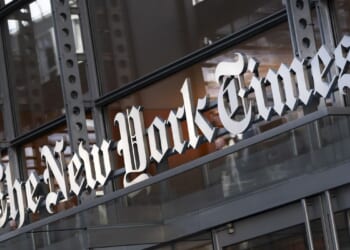
Politico came out with quite an article on Tuesday, entitled “Energy experts said gas prices would stay high. Why were they wrong?”
The article reads exactly how one would expect it to with such a headline, as it effectively asks why so many energy “experts” were wrong about the long-term harm of energy prices under Trump.
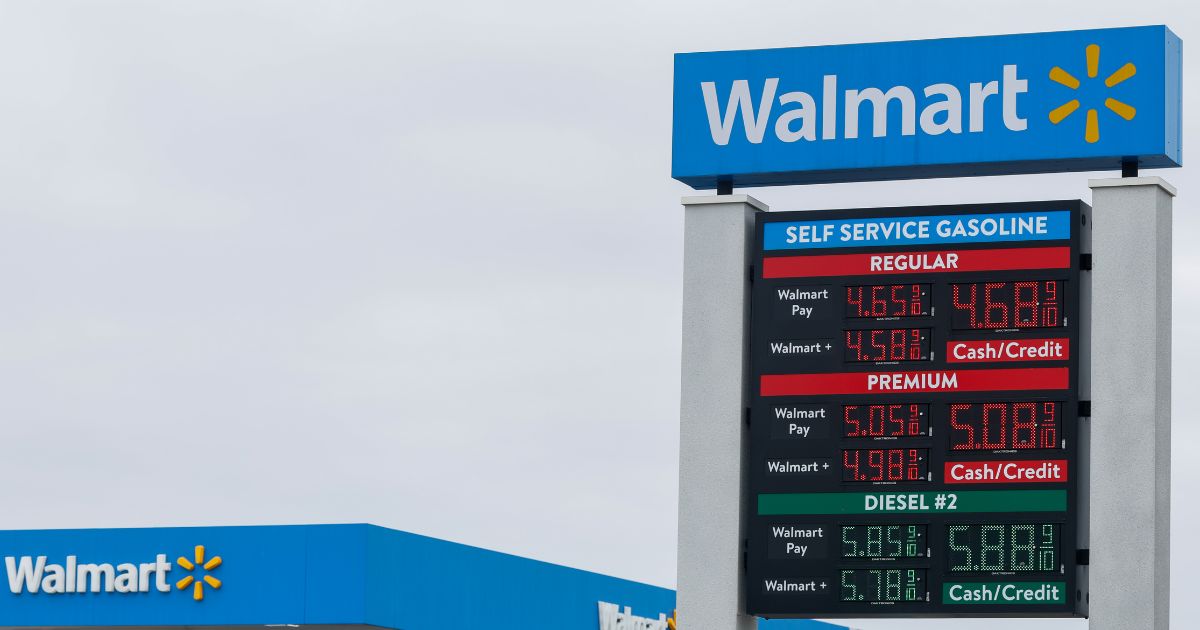
As you’ve undoubtedly heard — and probably felt — gas prices spiked during the worst of the Iran conflict. But instead of remaining high, gas prices have been falling quickly of late.
Or, in other words, these affordable gas prices are “defying expert predictions of a long summer slog with sky-high prices.”
(Funny how that always keeps happening, isn’t it?)
Politico laid out the blunt reality: “Instead of spiraling upward, the average price at the pump has plummeted 70 cents per gallon in a month from a peak of $4.56.”
Oh.
To their minimal credit, Politico at least admitted that they too were wrong, having penned an earlier story about how the experts were predicting doom and gloom for the economy.
The outlet admitted, “It wasn’t supposed to work this way, according to energy experts whose predictions of $150 barrel of oil, $5 gasoline and summer recessions were widely quoted in the media, including POLITICO.”
“It’s the weirdest thing,” one oil analyst told the outlet. “I’ve never seen a market like this.”
Now, here’s the thing: I’m not nearly smart enough to tell you what these experts were actually basing their forecasts on. What I am smart enough to opine on is that this current politicized media landscape heavily favors narratives over facts — and that should be alarming to anyone, whether they’re Democrat or Republican.
To be clear, the problem isn’t that experts sometimes get it wrong — that’s inevitable in any complex system with moving parts, geopolitical shocks, and markets that react faster than models can update.
The problem is what happens next.
The correction rarely gets the same oxygen as the prediction, which often takes on a life of its own. A bold forecast of “$150 oil and $5 gas” travels everywhere. The quiet revision that reality didn’t cooperate barely registers.
In practice and reality, the modern media incentive structure rewards confidence over accuracy, and certainty over humility.
Layer on top of that a media ecosystem that increasingly treats forecasting like storytelling, and you get a feedback loop that’s hard to break. And once a narrative takes hold — “energy crisis incoming,” “summer of pain,” “economic spiral” — there’s a kind of inertia to it that’s hard to stop.
Even when prices at the pump start falling, the original frame lingers because it was more emotionally compelling than the correction ever could be.
Here’s the truth: none of this requires conspiracy, just misaligned incentives.
Experts want relevance, media wants urgency, and audiences are conditioned to respond more strongly to crisis than to calm.
So the system keeps producing the same shape of mistake: overconfident and seemingly biased projections followed by quiet walk-backs, with very little accountability in between.
And over time, that erodes trust — not just in specific forecasts, but in the entire category of “expert consensus,” even when it’s right.
The uncomfortable takeaway is that the issue isn’t whether gas prices go up or down in any given month — it’s whether anyone can meaningfully separate signal from narrative anymore. And with “experts” like these, it’s becoming increasingly harder to separate those two things.
Advertise with The Western Journal and reach millions of highly engaged readers, while supporting our work. Advertise Today.