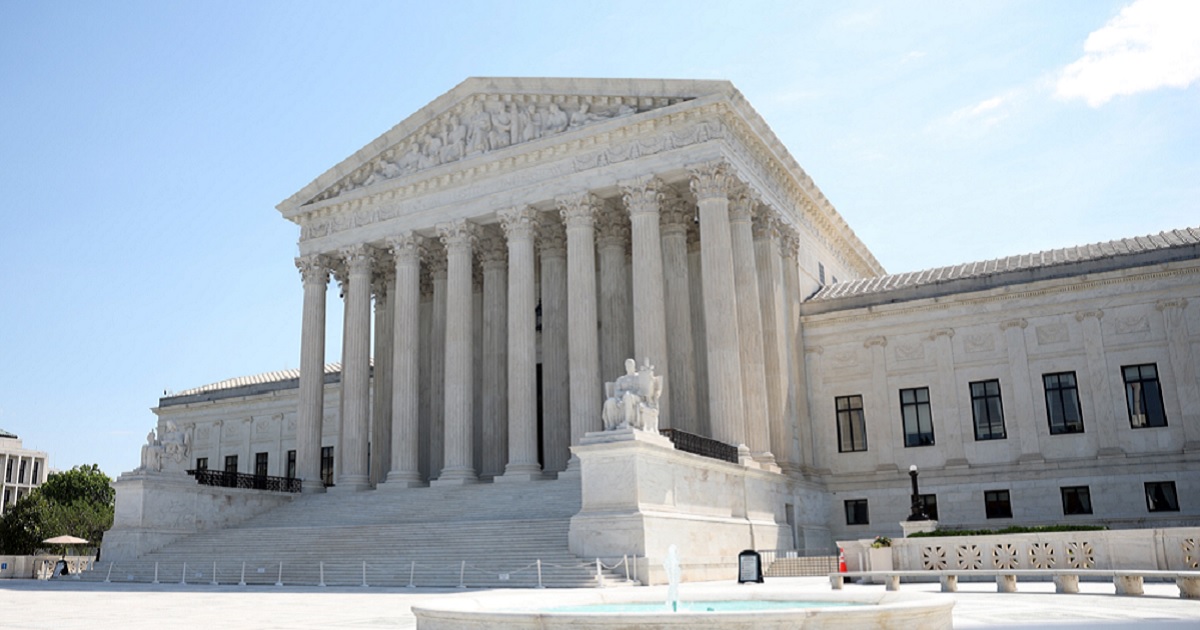
Republicans scored a victory Tuesday at the Supreme Court, and Vice President J.D. Vance can claim some credit.
In a 6-3 ruling, the court got rid of regulations going back to 1974 that limited how much money political parties can spend on campaigns coordinated with their candidates, USA Today reported.
And the case started in Ohio in 2022 when Vance was still best known as an author and candidate for U.S. Senate.
The next opinion is in NRSC v. FEC, on campaign finance. The court holds that the Federal Election Campaign Act’s political-party coordinated-expenditure limits violate the First Amendment.https://t.co/9kMeYzuQZF
— SCOTUSblog (@SCOTUSblog) June 30, 2026
The limits were passed as part of post-Watergate campaign reforms, according to The Associated Press, and upheld in 2001.
In 2022, Vance, running for Senate in Ohio, and then-Ohio Republican Rep. Steve Chabot challenged the regulations, arguing the violated the First Amendment right to free speech.
In the case of the National Republican Senatorial Committee v. Federal Election Commission, the Supreme Court agreed.
“Held: FECA’s political-party coordinated-expenditure limits violate the First Amendment,” the ruling declared.
It probably helped the challengers’ case that the Justice Department did not defend the law after President Donald Trump took over in 2025, as USA Today noted. However, the Supreme Court appointed another attorney to argue in defense of the regulations.
Republicans argued that the organizations known as “super PACs,” formally known as “Independent Expenditure-Only Committees” — which were not restricted by the limits — had effectively replaced political parties as the organs through which donor money was flowing into political campaigns.
“That has turned super PACs into ‘shadow parties,’ diminishing the role of the actual political parties, the GOP said,” the newspaper reported.
Democrats claimed that the limits protected the vast majority of Americans who are not wealthy campaign donors.
But writing for the majority, Justice Brett Kavanaugh cited the country’s history prior to the 1974 law.
“For nearly 200 years after the ratification of the First Amendment, parties could spend freely to support their candidates during campaigns and could do so in coordination with the candidates,” he wrote. “Notably, no one suggests ‘that these elections were not functional or that they were marred by corruption.’”
On the social media platform X, liberals attacked the decision.
The first amendment protects the peoples’ freedom of speech. This is personifying a political party.
— Aly (@Lilly185569) June 30, 2026
The Republican Party and Republican candidates are more likely to benefit from the decision than Democrats because the GOP is better funded as a party than Democrats, according to USA Today. With crucial midterm elections approaching — elections that will shape Trump’s final two years in office — the decision could be key.
The ruling comes as major Republican committees head toward the November midterm elections with a significant cash advantage over their Democratic counterparts. Read the full opinion to find out more ➡️ https://t.co/EwLWfLoa5l pic.twitter.com/PeDWm40Jqp
— Reuters Legal (@ReutersLegal) June 30, 2026
“The ruling comes as major Republican committees head toward the November midterm elections with a significant cash advantage over their Democratic counterparts,” Reuters reported.
Advertise with The Western Journal and reach millions of highly engaged readers, while supporting our work. Advertise Today.