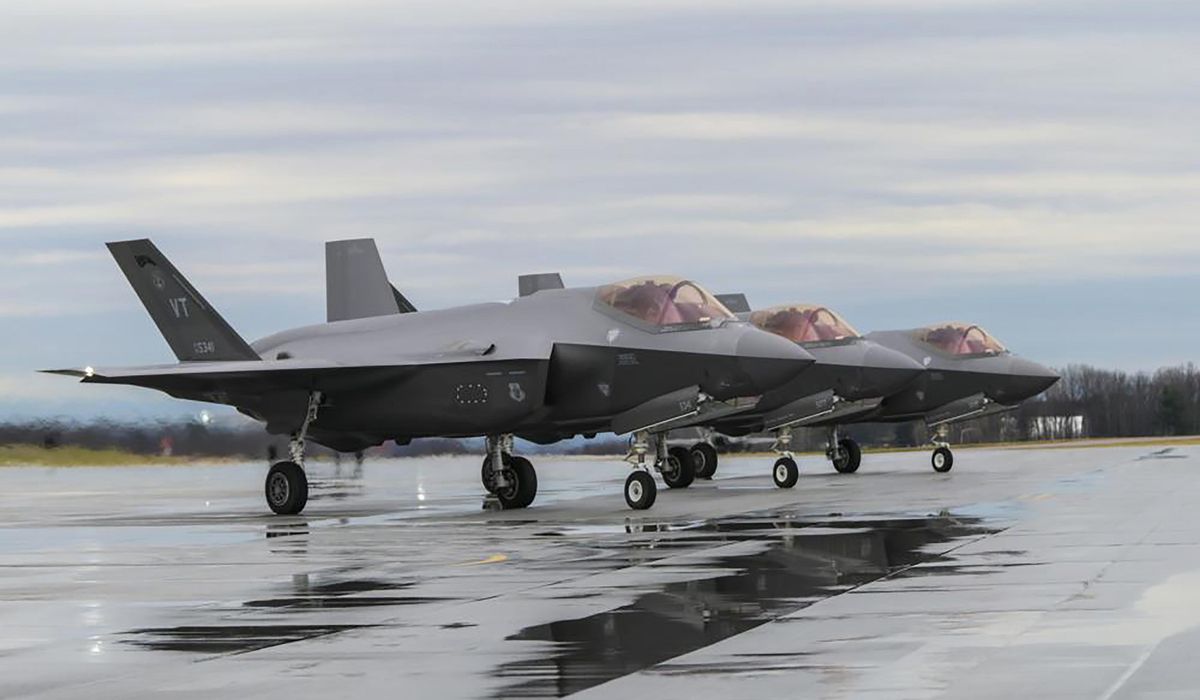
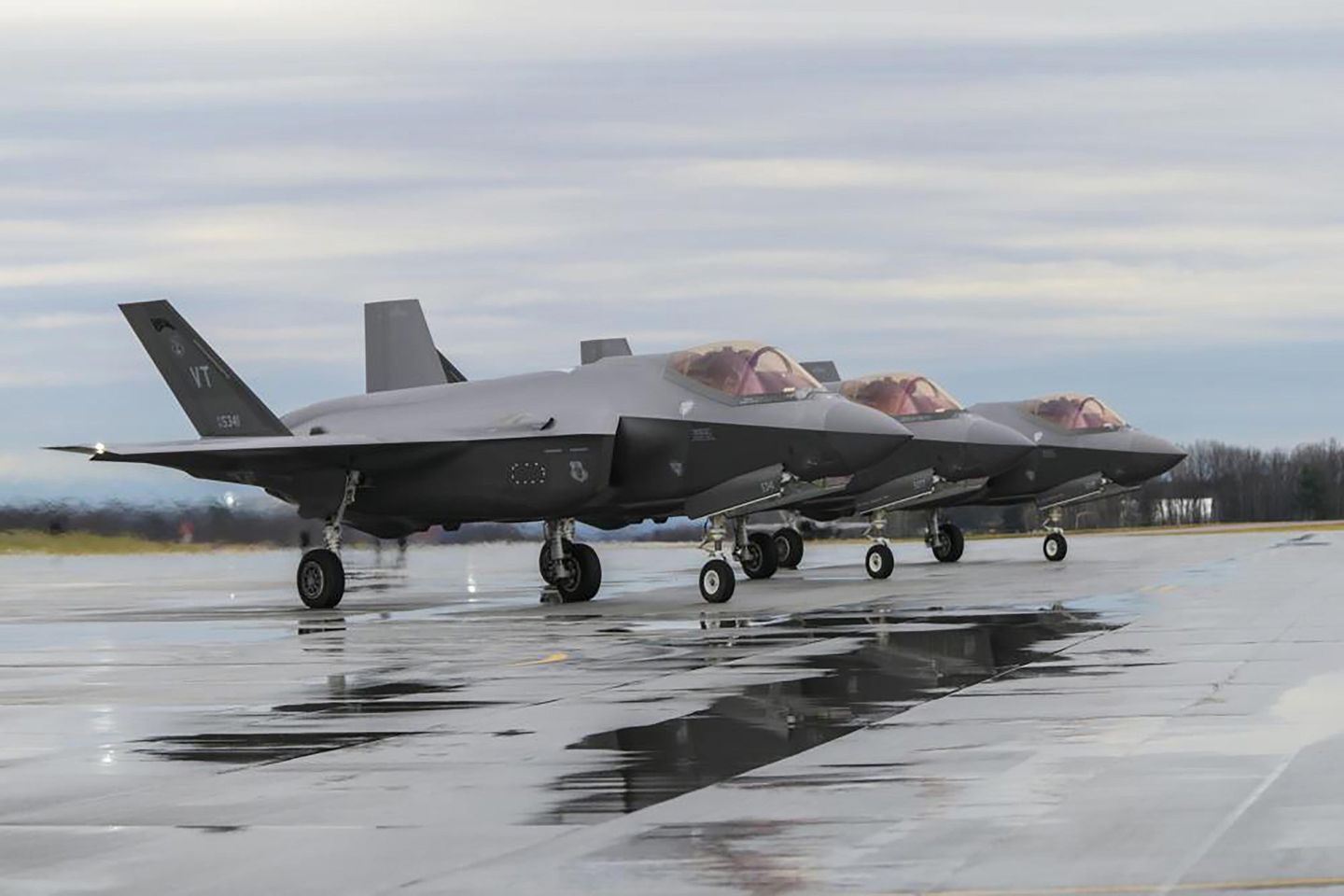
The F-35 Lightning II is the Pentagon’s most expensive single weapon system at $80 million to $100 million apiece, but analysts say the program hasn’t met performance goals while sustainment costs continue to increase.
The U.S. Government Accountability Office recently released a report about the F-35 program and a $13.7 billion strategy the Defense Department launched last year to improve the readiness of the jet fighters.
“The strategy aims to address challenges we’ve identified, such as a lack of spare parts,” the GAO watchdog group said in their June 11 study. “However, we found that multiple issues could threaten its success — such as constrained industry capacity to meet increasing demand for parts.”
Marine Corps Lt. Gen. Gregory L. Masiello, executive officer of the F-35 Lightning II’s program office, told lawmakers Tuesday that the F-35 is the cornerstone of U.S. airpower policy.
“For the U.S. and for many of our allies and partners, this is the capacity fighter at scale. There isn’t anything else like it in what it does,” Gen. Masiello said during a hearing of the Airland subcommittee of the Senate Armed Services Committee.
“My job, and the job of our Joint Program Office is to ensure that our globally-deployed or deployable fleet for the U.S. and our allies and partners is ready, is affordable, is lethally effective, and survivable.”
More than 1,300 operational F-35 jets have rolled off the assembly line, with about 830 being flown by the Navy, the Marine Corps, and the Air Force. The remaining fighters are with more than 20 partner nations that are part of the F-35 program, Gen. Masiello said.
“The program is truly joint,” Gen. Masiello said.
Sen. Kevin Cramer, the North Dakota Republican who chairs the Airland Subcommittee, said the F-35 is a cornerstone of American air power and one of the most consequential defense programs in a generation.
“The F-35 is a strategic asset that strengthens deterrence, enhances interoperability, and reinforces the alliances and partnerships that underpin global security,” Mr. Cramer said. “Its success among our allies and partners is a testament to both its unmatched capabilities and its ability to enable seamless operations alongside United States forces.”
He said the success of a program like the F-35 can’t be judged solely because of how many countries have signed on.
“The program must continue delivering the advanced capabilities our service members need on schedule and at a reasonable cost,” Mr. Cramer said.
Sen. Mark Kelly of Arizona, the senior Democrat on the subcommittee, said the F-35 will remain a cornerstone of U.S. and allied air power for the foreseeable future.
“We’ve got new capabilities … that are slow to be deployed, despite that this is a multibillion dollar effort. We all understand that there are challenges with the new technology,” he said. “I think it’s fair to say that we’ve made some mistakes along the way.”
Mr.. Kelly said he considers himself a strong supporter of the F-35 Lightning II program.
“Its capability is not like anything we’ve really had before, but that also means that if we’re going to continue to support it, we need accountability,” he said. “We need to have a clear understanding of how the [Defense Department] is improving readiness, controlling costs, and ensuring that the program delivers on the promises.”
Recent U.S. military operations such as Midnight Hammer and Epic Fury — both aimed at eliminating Iran’s nuclear ambitions — have demonstrated the capability of the F-35 and its crew, Gen. Masiello said.
“I have been told by many operators that this is the only aircraft that can hit some of the targets that it was able to hit, and see everything that [it] could to actually act as a quarterback of the joint force,” Gen. Masiello said.