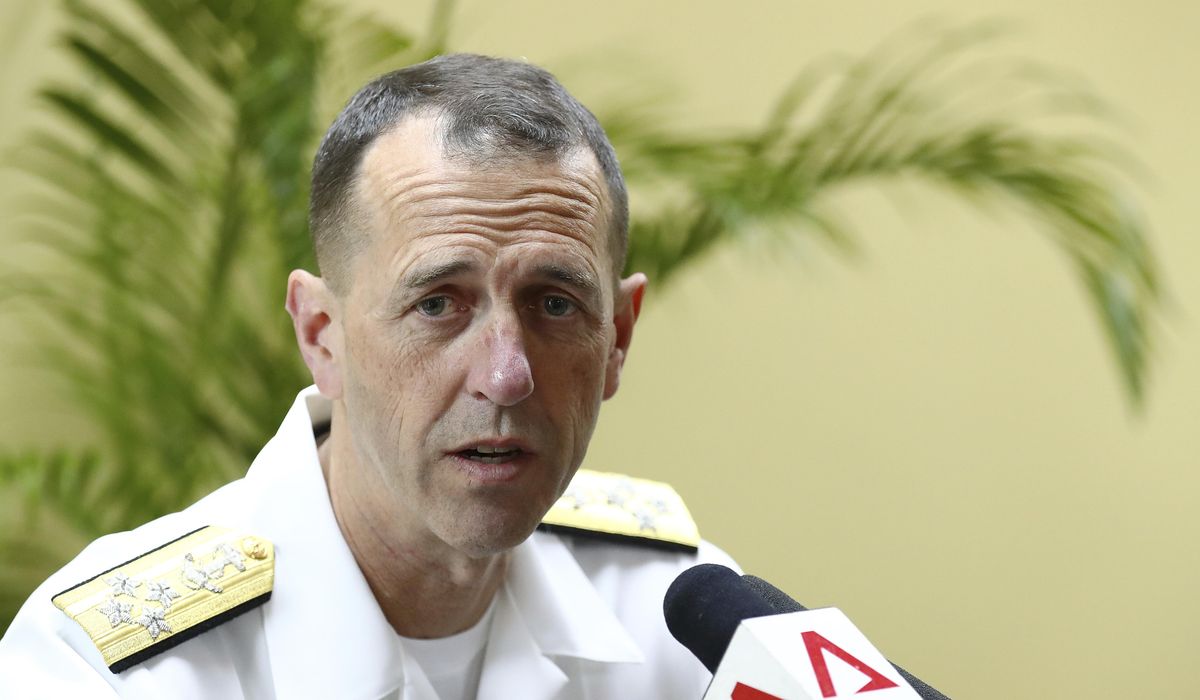
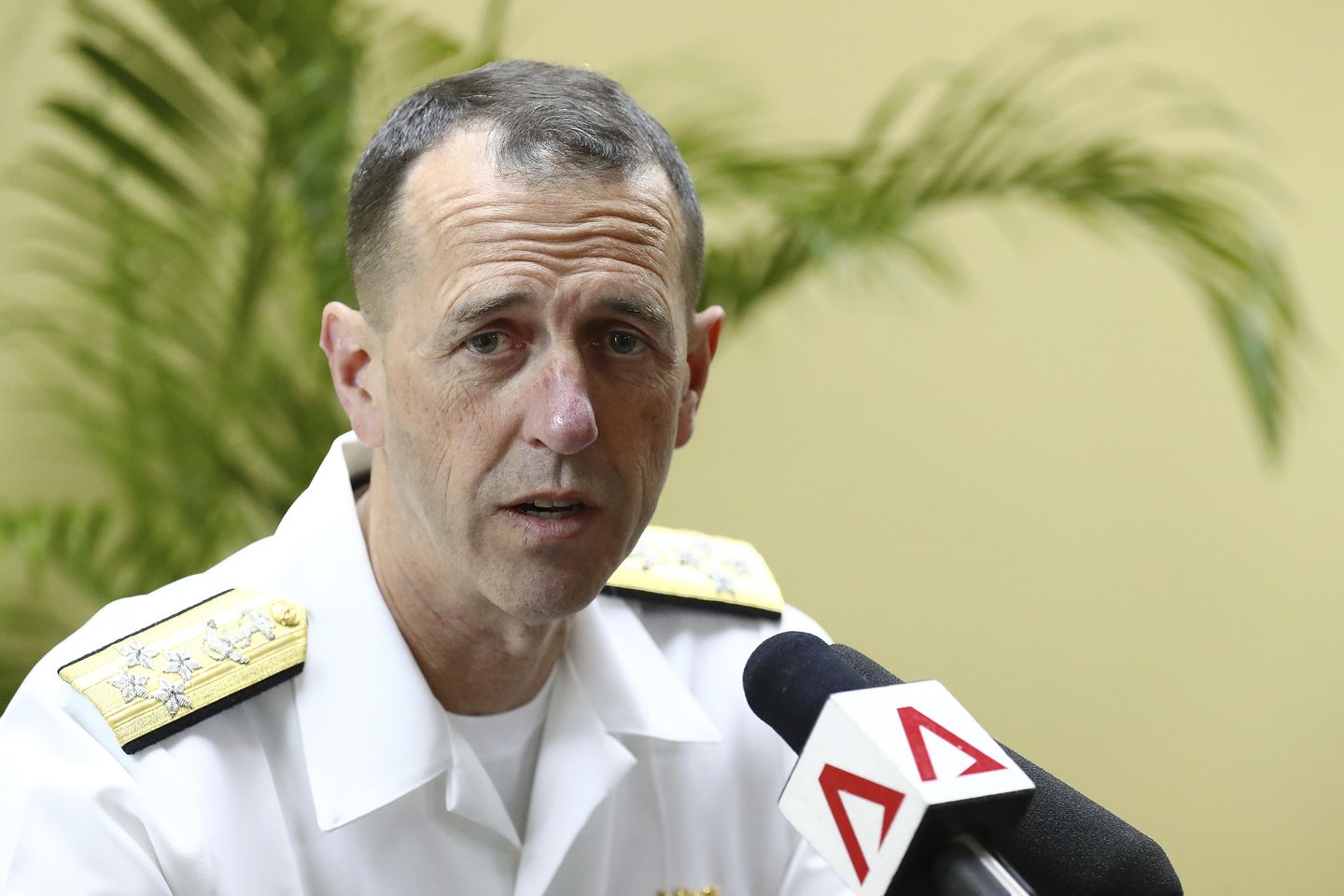
The navy that wins in a conflict in the critical Indo-Pacific region isn’t necessarily the one with the most hulls in the water, retired Adm. John Richardson, a former chief of naval operations, said Wednesday.
China’s People’s Liberation Army navy, known as the PLAN, has a fleet of about 390 ships compared with 300 in the U.S. Navy. However, size isn’t everything, Adm. Richardson said in the introductory remarks to IndoPac 2026, a national security forum hosted by The Washington Times’ Threat Status at the U.S. Navy Memorial.
A successful navy “will be the one that adapted most intelligently along the way, that kept pace with national strategy as it evolved, stayed ahead of the threat, and exploited the technological revolution before the adversary could,” Adm. Richardson said.
He said Beijing has made enormous investments in a specific vision for how the next global war could be fought — area denial and long-range precision strikes intended to keep the U.S. Navy at a distance and degrade its ability to project power in the Western Pacific.
“Those investments are real, and they deserve serious respect, but they are also fixed,” Adm. Richardson said. “They reflect bets on a particular technological moment.”
Beijing has not stressed still-evolving technological innovations such as the autonomous systems revolution and artificial intelligence-enabled sensor fusion, he said.
“They are the environment we can shape if we move with sufficient speed and intelligence,” Adm. Richardson said.