President Trump is trying to make a deal with a tribe of people who do not make deals. He is trying to arrive at a practical settlement with a people who live in an eschatological ecosystem focused on a divinely appointed future and not primarily on politics. Money and power for the Iranian regime may be nice in the interim, but are essentially means to an end that have little to do with prosperity and stability. Shia communicants are committed to the emergence of end-times, to the culmination of history as we know it. All arrangements are transitory in the light of an immanent finality.
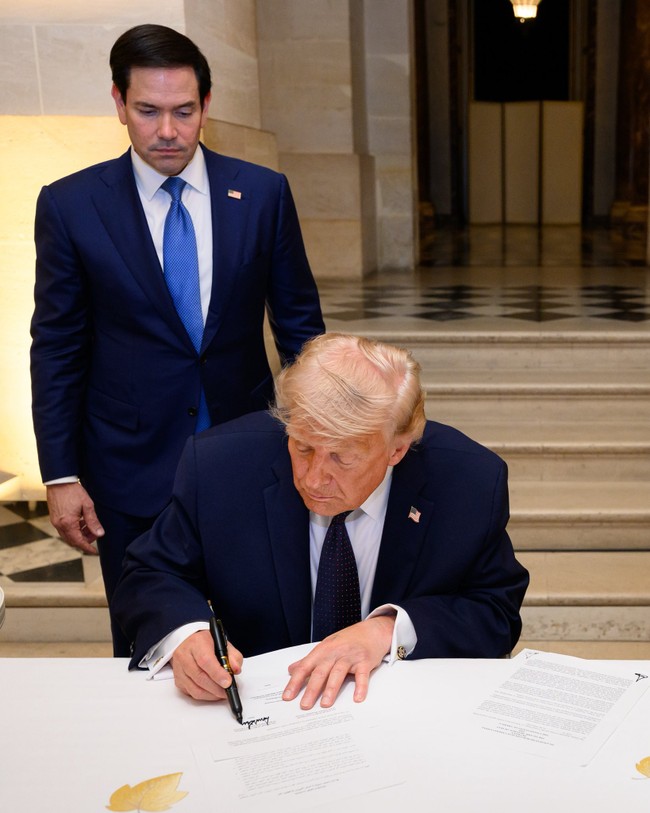
The deal itself is not only fragile, as we have seen, but is an easily predictable failure. The MOU is most likely not a sop to the Iranian team to allow them to sell the “deal” to their IRGC overlords — who may be a pack of nutters, but they are not stupid. We know — or should — that the IRGC will never surrender its “right to enrich uranium,” and the Strait of Hormuz will likely always remain contentious. For the Revolutionary Guard, the point of a “deal” is nothing but perpetual deferral while it solidifies its resources. For Trump, as many believe, the point of a deal is to bring down gas prices, put money in the electorate’s pocket, and survive the mid-term elections. Then we’ll see.
Matt Martgolis and Victor Davis Hanson take a more positive view: The Regime is in a position of weakness, its industry and military are in shambles, the nation is effectively broke, and it is running out of time. I continue to be skeptical. The fact is that Iran will stick by its “sacred principles,” it will freely humiliate the American Vice President by deprecating him at the negotiation venue, it will close Hormuz again, and it will walk out of the meetings in a state of pride and indignation. Of course, it will walk back in — before leaving again. Trump’s rhetorical percussion does not intimidate the Iranian hardliners at home.
What is the real issue here? Edward Andrews’ Islamic Ideology: Awaiting Al-Mahdi—The Twelfth Imam and the Future of Islam is very clear about the uselessness of political dealings with adherents of Muslim and particularly Shia ideology. These groups, he writes, “view their actions as part of a long historical continuum of Islamic expansion, adapting their methods to the modern world’s complexities. Their strategies are deeply rooted in a selective interpretation of Islamic history and eschatology, aimed at establishing a global Islamic dominance as prophesized in their eschatological beliefs.”
For the Shia faithful amongst the Iranian Revolutionaries, it is the Twelfth Imam, the hidden Mahdi or Messiah, who will rise after a millennial period to restore justice and establish truth, leading Muslims to a period of ultimate victory. The concept of the Mahdi, helming battles against the forces of evil, which include oppressive rulers (e.g., the Americans and the Israelis), is central to the Shia worldview and expectations for the future. “This intertwining of eschatology and realpolitik can complicate the political landscape in Muslim-majority countries,” as well as in their relation with other sovereign states. That goes without saying.
There is no mention of the Mahdi in the Quran. It is through the Hadith, or sayings attributed to Muhammad, that the Mahdi gained ascendancy in the radical Shia branch of Islam. Shi’ites believe that the Mahdi is a descendant of the Prophet Muhammad, from the line of his daughter, Fatima, a lineage underscoring his legitimacy and divine appointment. Such conviction will guide the moral decisions of the Shia in their apocalyptic view of history.
For those on the other side of the table or the Strait, navigating these beliefs with understanding, education, contextual interpretation, and determination is vital for fostering a successful outcome, some form of enforceable restraint or submission, in negotiation and conflict with such rigidly sectarian adversaries.
Richard Fernandez (the Belmont Club), for his part, does not fully address the dynamics that are involved. “Contrary to popular belief,” he writes, “radical causes are not all about belief; they are mostly about money.” The profit-making Strait “can be shut not only by Iran and not only by the USN, but also by Israel simply by retaliating against Iran’s proxy attacks. This lack of monopoly was the flaw in Tehran’s calculation. Iran’s whole business model was built around blackmail. What they didn’t count on was others dealing themselves in.”
This is an interesting speculation but does not go far enough, and those who cling to it will eventually find themselves on the losing side of any dispute. The inability or unwillingness to recognize the occult and vaticinal nature of Twelver Shia eschatology will lead inevitably to failure for those who reject, oppose, or contend with the followers of so oracular and mantic a religious stance.
A man like Trump who lives in a world of “deals,” of business compacts and entrepreneurial enterprises, is on a different planet from a messianic and chiliastic enemy, for whom the “obliteration” (Trump’s word) of their country is ultimately a kind of triumph. Various traditions claim the reappearance of the Mahdi will be accompanied by fire and flood, turbulence and war, and that his parousia can be hastened by bringing the world, or portions of the world, to the brink of catastrophe. This would entail even Iran, which is a hard thing for Westerners to understand. The mindset is real, as the scholarship and the chronicles attest. The physical demolition of the country, should it come to that, is only the first step toward vanquishing the infidels. Better to nuke them out of existence, think the Revolutionary Guard, but self-immolation in critical circumstances can also be the vestibule to the Eternal Mosque. That is the covenant endorsed by the Mahdi.
Loss on the material plane, if necessary, will generate in the course of time a new Sharia-based Islamic dispensation. Destruction is reconstruction. Losing can be winning, which means the Shi’ite canon of thought and action cannot lose, whatever the consequence of the arbitration. From the Iranian perspective, this is what the controversy is fundamentally all about. Whatever the cost, victory is guaranteed.
If we cannot see this, if we cannot realize that we are treating with a non-rational actor who is ready to court havoc and devastation as a stepping stone rather than a stumbling block, then we are blind to the momentum of history and the indispensable scriptures that make up the theology of the faith. We are transacting out of ignorance.
Recommended: Shia, Iran, and Trump
The sequel is that the rational side of the proceedings will suffer frustration at best and an ignominious miscarriage at worst. There is no “deal” to be had. The only answer is real obliteration, the elimination not merely of a leader here and a politician there, but of the regime itself, down to the last man, if possible. Assassination is not the answer but only a stopgap. This is war, not diplomatic paintball or geopolitical scrabble. There is a job to be done, and a way must be found to do it, hopefully with the help of the Iranian people themselves. But in the current stalemate with the Iranian regime, Trump’s strength as a dealmaker turns out to be his greatest weakness.
This is where the misconceived and misnamed “deal” is tending.
Editor’s Note: Thanks to President Trump and his administration’s bold leadership, we are respected on the world stage, and our enemies are being put on notice.
Help us continue to report on the administration’s peace through strength foreign policy and its successes. Join PJ Media VIP and use promo code FIGHT to receive 60% off your membership.