While Pakistan attempts to position itself as a peace broker between the United States and Iran, it continues persecution of Muslims living in Kashmir and designates the Kashmiri grassroots protest movement as “terrorists.”
The violent crackdown includes communication blackouts, lethal force, mass arrests and bounties. It marks a dangerous escalation in its crackdown on Kashmiri people, highlighting a severe human rights crisis and growing instability.
In Pakistan-occupied Kashmir (PoK), peaceful public demonstrations quickly turned into deadly violence. This happened after Pakistani authorities used force, shut down mobile internet, and arrested civil society leaders.
The PoK government has since ordered sedition cases to be registered against four prominent leaders of the banned Jammu Kashmir Joint Awami Action Committee, according to a notification seen by Reuters. It has also announced a 10 million rupee ($35,951) bounty for their arrest, after banning the group.
This crackdown on Kashmiris by Pakistan began early June. On 5 June, the PoK authorities announced that elections would be held on 27 July in the parts of Kashmir that they control.
The government then suspended all internet and mobile network signals in the region until 12 June. The PoK authorities also issued an advisory to “outsiders” to avoid traveling to the region from June 5-20. They instructed visitors, particularly tourists, to leave immediately. It was also reported that federal paramilitary troops were deployed.
These events occurred ahead of a protest planned for June 9 by the JKJAAC (Jammu Kashmir Joint Awami Action Committee) after negotiations failed with the PoK government over the make-up of the region’s legislature.
Talks between the JKJAAC and the PoK government broke down the month prior. The subject of negotiations was related to abolishing 12 seats in the region’s legislative assembly reserved for refugees from Indian-administered Jammu and Kashmir who settled in Pakistan after 1947.
JKJAAC argues that those seats are used by Pakistan-based political parties to influence government formation in Muzaffarabad, the capital of PoK.
Following the failure to reach an agreement, JKJAAC announced it would go ahead with its plan to hold a region-wide strike on June 9. The central demand of the protest was the abolition of those 12 refugee seats in the local legislative assembly.
The Jammu Kashmir Joint Awami Action Committee (JKJAAC), which is also known as the Joint Awami Action Committee (JAAC), is a civil-society coalition in PoK. It is a grassroots movement advocating for the economic and political rights of the people of Pakistan-occupied Kashmir. It raises public issues such as electricity tariffs, subsidies, governance, accountability, and political representation.
JKJAAC’s members include traders, transporters, lawyers, students, civil society members, and regional rights groups.
The organization (founded in 2023) has organized large-scale protests against the government of Pakistan since its inception.
Pakistan’s government had previously launched crackdowns on JKJAAC protests in 2024 and 2025. In May 2024, news reports noted the unlawful use of tear gas and lethal force during the Kashmir Long March by JKJAAC. Three protesters and one police officer were killed. In October 2025, at least nine people were killed, including six protesters and three police officers. Hundreds more were injured during regional protests.
Since June 5, the authorities have carried out yet another sweeping crackdown against JKJAAC leaders, members, and supporters.
The PoK Home Department recently issued an official notification that declared the Jammu Kashmir Joint Awami Action Committee is a “proscribed” organization under the “Azad Jammu and Kashmir Anti-Terrorism Act, 2014.” The organization was placed in the First Schedule as a banned outfit.
The notification accused JKJAAC of “terrorism, promoting hatred, creating anarchy, disturbing public order, and acting in a manner prejudicial to the peace and security of the state.” The ban was approved by the PoK president, after which the security crackdown intensified across the region.
Police raided and sealed the organization’s central office in Muzaffarabad on June 7. According to media reports, more than 100 people associated with the JKJAAC were arrested on June 6 and 7.
“The ban may remove JAAC from the formal political arena, but it cannot remove the grievances that brought it into existence,” wrote journalist Syed Mushahid Hussain Naqvi.
Tensions further escalated after trader-activist Shahzaib Habib, an executive member of JAAC, was shot by police on the night of June. 5 He was reportedly traveling in a car with JAAC leader Umar Nazir Kashmiri when their vehicle was stopped. He later died from his injuries. Protesters describe the incident as a suspicious interception and ambush involving security forces.
The news became a major flashpoint and fueled public anger in Rawalakot. On June 7, people gathered outside the Combined Military Hospital (CMH) in Rawalakot where Shahzeb’s body was brought for a post-mortem.
A sit-in and funeral party gathered outside the hospital, which eventually became the center of further mobilization. Protesters and family members demanded accountability and linked the killing to the wider crackdown on JAAC.
On June 7, 2026, violent clashes erupted in Rawalakot between security forces (which included local police and reinforcements) and JAAC supporters. The confrontation marked one of the most serious escalations ahead of the planned June 9 protest.
Local accounts claimed that the total number of casualties was close to 150–200, while official figures are far lower. Officially, authorities acknowledged the deaths of security personnel and protesters/civilians, with initial figures varying across reports.
Those reporting on the protests are also targeted by authorities.
On June 6, journalist Sohrab Barkat, who is from the region, was arrested under sections 20 (defamation) and 26-A (fake and false information) of the Prevention of Electronic Crimes Act, 2016 for allegedly “promoting” and “endorsing” the JKJAAC through his YouTube channel. He is currently being held in custody on physical remand.
The unrest has now moved beyond a single protest. It reflects deeper public anger over political representation, refugee seats, security crackdowns, communication blackouts, arrests, and the wider perception that Islamabad and the PoK administration are using force to suppress local political mobilization.
The entire situation raises serious human-rights concerns and requires international scrutiny. A peaceful protest over political representation and public rights was met with a sweeping security response, proscription under anti-terror laws, arrests of leaders and supporters, as well as a region-wide communication blackout that prevented people from contacting families, accessing emergency help, or documenting events on the ground.
The reason why a part of Kashmir is today controlled by Pakistan is because it was illegally seized by Pakistan during the partition of India in 1947.
The historic region of Kashmir is now divided between three countries. Pakistan controls a part of the region, known as Pakistan-occupied Kashmir (PoK) and the Northern Areas. China controls a smaller area of Kashmir (through a boundary settlement with Pakistan and occupation of land during the 1962 Indo-China War), while the remaining territory forms the Indian Union Territories (UT) of Jammu and Kashmir, and Ladakh.
The Kashmir Valley is predominantly Muslim, Jammu has a Hindu majority, and Ladakh’s demographics are split closely between Muslims and Buddhists (Buddhists account for approximately 45% of the population in Ladakh.)
There are no Hindus remaining in Pakistan-occupied Kashmir due to killings and forced conversions, though it is still home to ancient Hindu sites.
The current demography of Kashmir is not a result of natural changes. Ancient Kashmir was home to a majority Hindu and Buddhist population for thousands of years. Islamic invaders from Central Asia took control in the 14th century. Under Islamic rule, Hindus faced periods of persecution. In the early 1800s, Sikh rulers controlled the region, followed by a Hindu dynasty from the mid-1800s through 1947.
In 1947, the Princely State of Jammu and Kashmir became part of the Republic of India. Shortly thereafter, Pakistani armed forces and Pashtun tribesmen invaded the area, forcing the largest Kashmiri political party to approve the accession. Indian forces were deployed to counter the attacks by Pakistan.
In 1948, the UN Security Council passed Resolution 47, which required all Pakistani military personnel to be withdrawn from the region before a plebiscite could be called. This would have confirmed the people’s wishes to join India. Instead, Pakistan increased its military presence, and no plebiscite was held. In the areas of Kashmir that remained outside of India, Pakistan-occupied Kashmir, approximately 41,000 Hindu families were forced to flee Pashtun tribesmen.
Another major blow to the Hindu and other non-Muslim populations of Kashmir came between 1989 and 1991.
Thirty-six years ago, Kashmiri Hindus (known as Kashmiri Pandits) experienced massive devastation when they were cleansed from their ancestral homeland. In 1989, a Pakistan-sponsored insurgency launched a terror campaign of targeted killings, rape, threats, and destruction of Hindu properties and religious sites. This campaign spanned over many years.
Events on January 19, 1990 culminated in the forced displacement of over 350,000 people. This represented 95% of the Hindu population in the Kashmir Valley.
On that day, newspapers, posted fliers, and mosques issued declarations that called Kashmiri Hindus “kafirs” or “infidels” who had to leave Kashmir, convert to Islam, or be killed. The religious persecution and ethnic cleansing of Kashmiri Hindus from the Valley resulted in a sudden demographic change that has since tremendously changed the region.
In the months after January 19, 1990 hundreds of thousands of displaced Hindus were forced to live in refugee camps in the neighboring region of Jammu and in other parts of India for years, and some camps still exist today. It is for these reasons that January 19 is commemorated as Kashmir Exodus Day.
After illegally capturing parts of Kashmir, the Islamic Republic of Pakistan did not carve out a liberal democracy. It created a hardline authoritarian regime where the rights of even Muslim Kashmiris are severely violated.
That is why this June, local citizens once again took to the streets to demand basic economic relief, better governance and political reforms. In response, security forces used tear gas, batons, and live ammunition against demonstrators. In addition, the local government imposed strict internet and communication shutdowns across multiple districts. Human rights groups observed that this prevents independent verification of the true casualty numbers.
The heavy-handed response has drawn widespread international condemnation. The International Human Rights Foundation (IHRF) criticized Pakistan’s government for branding a peaceful civil movement as “terrorist” to avoid outside scrutiny.
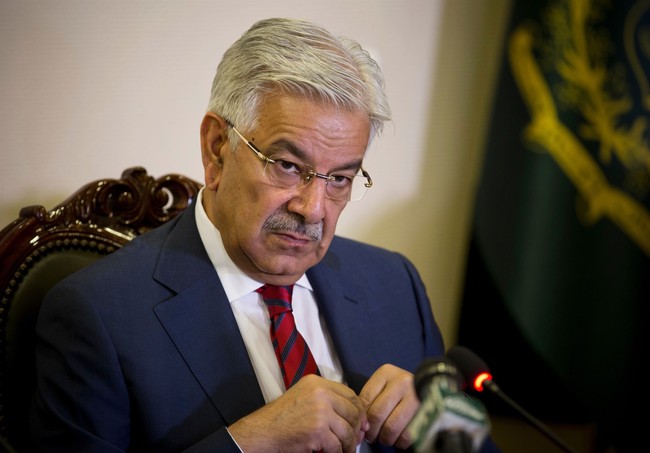
Yet, Pakistan’s Defense Minister Khawaja Asif urged protesters to observe “loyalty to the state” and complete obedience to it for dialogue to take place after violent crackdowns on the protests in the PoK region claimed the lives of both the civilians and the police.
While being obviously incapable of effectively running the PoK, Pakistan is also eyeing on taking over the rest of Kashmir, which is part of India. A Kashmir that is taken over by Pakistan will not be a place where Muslims, Hindus, Sikhs, or Buddhists will be safe. This is evident in how Pakistan violates and persecutes even the Muslim Kashmiris who request basic human rights.
Editor’s Note: Do you enjoy PJ Media’s conservative reporting that takes on the radical left and woke media? Support our work so that we can continue to bring you the truth.
Join PJ Media VIP and use promo code FIGHT to receive 60% off your membership.