BEIRUT — Mourners gathered Sunday in Beirut to pay their respects to a much-loved Lebanese conservationist who died after succumbing to wounds sustained in an Israeli strike on her home on the country’s southern coast.
Mona Khalil, who spent more than two decades protecting sea turtles along Lebanon’s coastline, was critically injured in the strike on her home in the village of Mansouri earlier this month and died of her wounds Friday. She was 76.
The Orange House, which Khalil helped build into a small conservation hub and ecotourism site in Mansouri, became a refuge for endangered loggerhead and green sea turtles and a training ground for volunteers documenting nesting activity along the coast.
News of her death triggered an outpouring of grief among environmentalists and those who volunteered and worked with her over the years.
Journalist and environmental activist Fadia Jomaa first met Khalil in 2016 while researching sea turtles in Lebanon and then decided to volunteer with her project.
For the volunteers, “this relationship didn’t stop at being a volunteering relationship – Mona became our mother,” Jomaa said.
Jomaa became one of Khalil’s closest collaborators, eventually helping manage the sea turtle conservation project with her. She also brought her own children to volunteer, introducing them to the work of protecting nesting turtles and hatchlings along Lebanon’s southern coast.
During the previous war between Israel and the Lebanese militant group Hezbollah in 2024, Khalil initially refused to leave Al-Mansouri beach, Jomaa said. The Lebanese army ultimately persuaded her to evacuate for her safety. “She was the last one to leave the area,” Jomaa said.
“She had an awful time in Beirut,” Jomaa said, adding that Khalil longed to return to the south, to the Orange House and the beach she had spent years protecting.
Another Israel-Hezbollah war erupted in March. Hezbollah fired across the border into Israel on March 2, two days after Israel and the U.S. attacked its ally, Iran.
Khalil could have left Lebanon altogether. She held Dutch as well as Lebanese citizenship, having lived in the Netherlands before returning to Lebanon and settling in what had once been her grandmother’s home – the building that would later become known as the Orange House
But she refused to leave her home again.
“She said I am a civilian, I have no weapons, I will shut my door,” Jomaa said.
On June 4, an Israeli strike hit her home. Khalil and her domestic worker were rushed to the hospital. It was not clear what the intended target of the strike was.
The Israeli military said in a statement that Khalil “was not a target of the IDF” and that “there is no known IDF strike in which she was injured,” but added that “strikes were conducted in the area after the IDF issued evacuation warnings.” It said it “deeply regrets any harm caused to civilians and remains committed to operating in accordance with international law.”
Khalil’s condition initially appeared hopeful after surgery, Jomaa said, but she succumbed to her wounds two weeks later.
“It is a great loss for conservation, for the country, and for all of us who cared about the sea and the natural heritage of Lebanon,” said Johnny Baaklini, a former volunteer at the Orange House who worked closely with Khalil.
Like Jomaa, he recalled that Khalil “treated us, the conservation advocates, like her kids.”
“It feels impossible to describe the impact Mona personally had on me and on so many other young naturalists,” he said.
At the heart of Khalil’s work was a narrow stretch of coastline, Al-Mansouri beach in Tyre province. Each nesting season, she and volunteers would patrol the beach at night, marking fresh tracks in the sand and carefully relocating vulnerable nests away from human activity and coastal light pollution.
The Orange House also functioned as a small beachfront bed-and-breakfast.
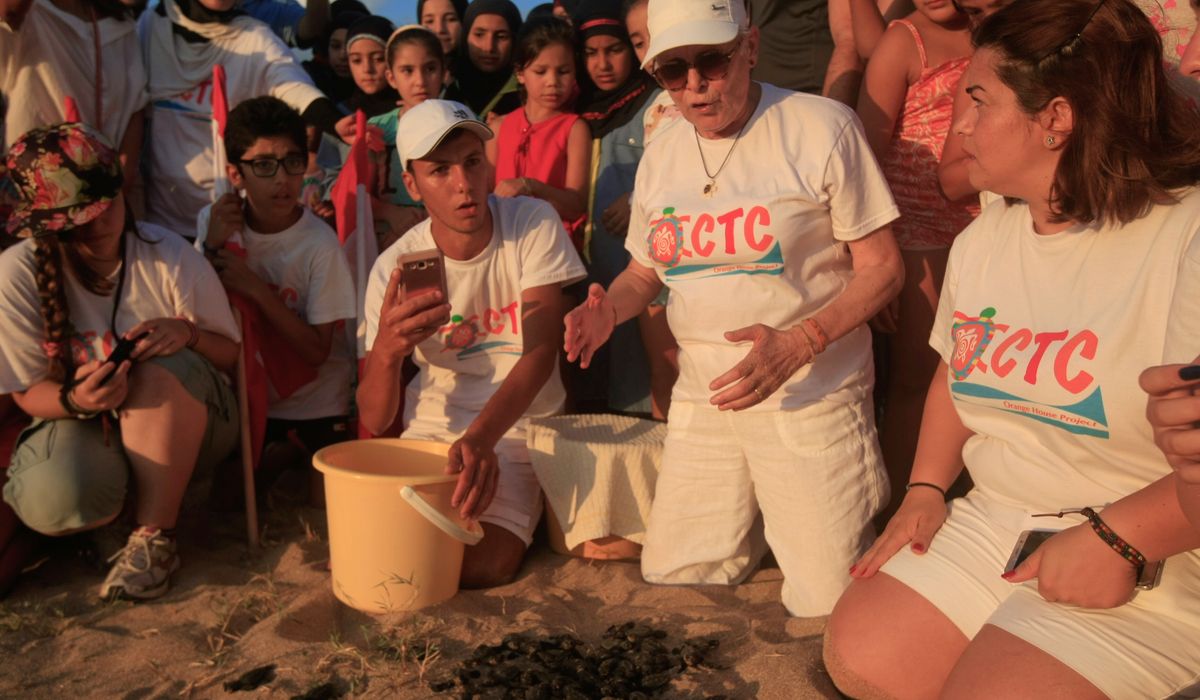
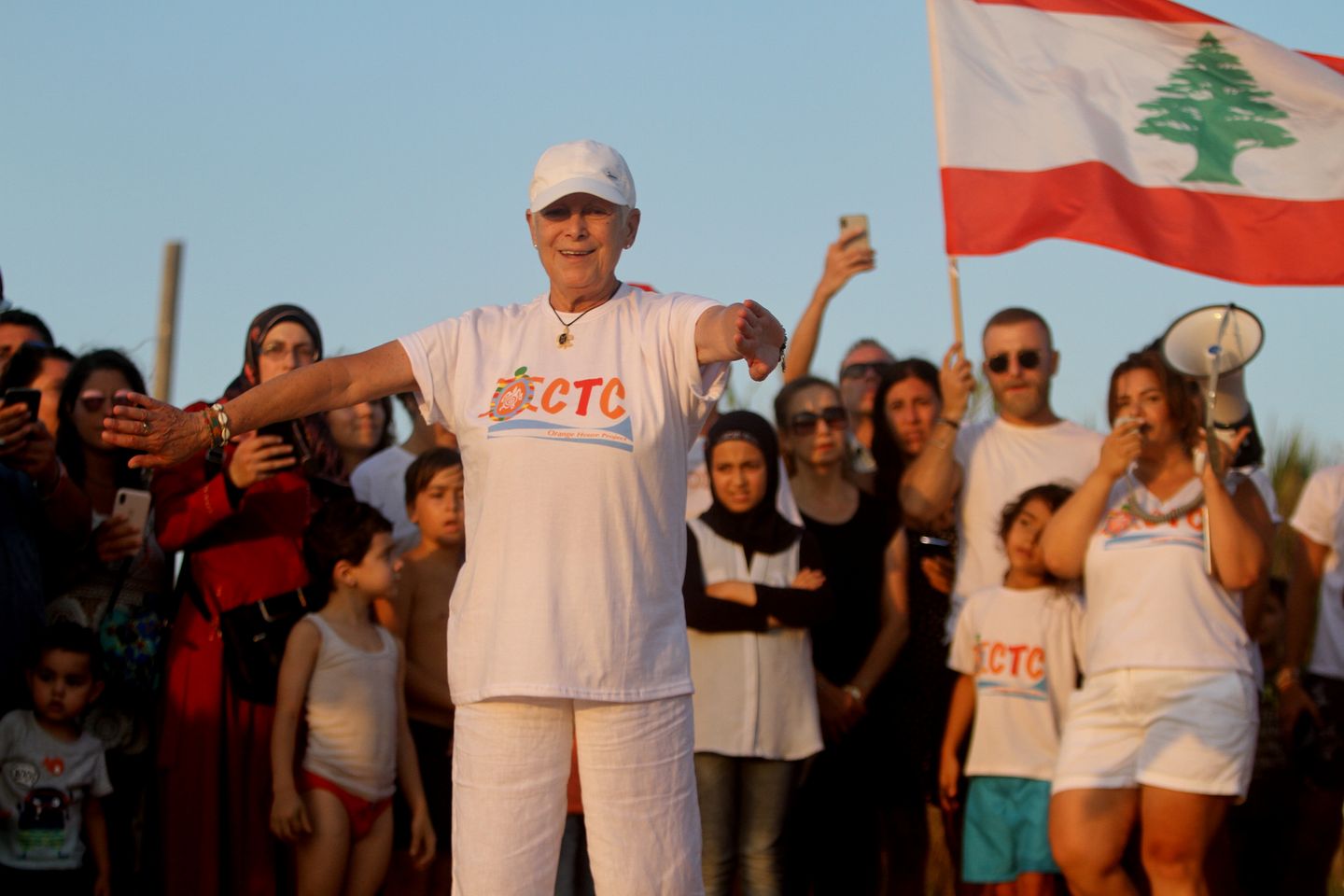
During the summer nesting season, Khalil organized sea turtle hatchling viewings for visitors. Many families brought their children to watch the small miracle unfold.
These viewings typically took place at sunset, when volunteers would guide groups to the beach to observe hatchlings making their way from protected nests to the sea.
“She used to say, ‘My soul will stay here,’” Jomaa said, recalling conversations in which Khalil would point to an olive tree or a small hill overlooking Al-Mansouri beach. “She used to say, ‘This is where you will bury me.’”
Where Khalil will ultimately be buried remains uncertain and is tied to the security situation in the area, Jomaa said.