Christian persecution in Africa is ablaze in Ethiopia.
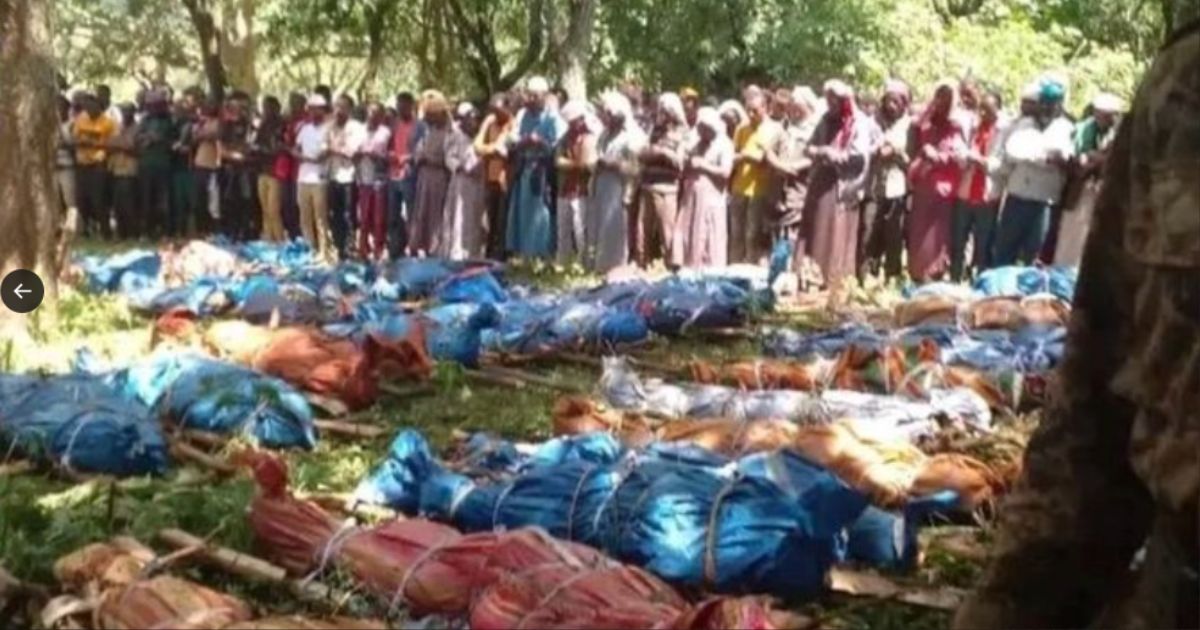
At least 37 Orthodox Christians were killed June 1, with more than 280 houses torched, according to InDepthNews.
The World Council of Churches website, oikoumene, reported that an Orthodox church that was more than a century old was torched. Two other churches were looted.
Christians are being massacred in Ethiopia, and most of the world’s media couldn’t care less.
Churches burned. Families slaughtered. Entire communities displaced.
If this happened to almost any other group, it would dominate headlines for weeks.
Pray for our persecuted…
— Kristan Hawkins (@KristanHawkins) June 8, 2026
The center of the violence was the town of Aseko, which is about 105 miles from Addis Ababa, the country’s capital, according to APA.
Should the U.S. pressure African nations to protect Christians?
The site said that since May 30, members of the Oromo Liberation Army have been beheading Christians amid the wave of violence.
A statement from Ethiopian Prime Minister Abiy Ahmed said the attacks seek to “inflame ethnic and religious tensions and deepen social divisions.”
13 Orthodox Christians Massacred, Historic Church Burned in East Arsi Attacks
ETHIOPIA ― 💥Thirteen Orthodox Christian worshippers have been killed and a century-old church destroyed in a series of attacks in Ethiopia’s East Arsi Zone, according to church officials and local… pic.twitter.com/QgoV42xo7L
— ⓉⓃ (@tesfanews) June 3, 2026
A social media post from Tesfa News reported that “The 101-year-old Tsellota Gabriel Church was also set on fire and completely destroyed.”
“Documented reports indicate that more than two hundred Orthodox Christians, mostly Amhara, have been killed in the last two years in the East Arsi Zone alone.
“Human rights groups and government critics have accused the administration of PM Abiy Ahmed of repeatedly denying or downplaying reports of extrajudicial killings of civilians,” the report said.
🚨BREAKING: Another Islamist Massacre of Christians in Ethiopia. At least 50 Christians were slaughtered in a horrific Islamist attack in Ethiopia.
This is yet another targeted massacre of believers, but the mainstream media and global elites remain mostly silent.
Where is the… pic.twitter.com/oXm9Ir2Aa6— And We Know©🇺🇸 (@andweknow) June 9, 2026
Christian persecution in Ethiopia is nothing new.
“Across multiple regions of Ethiopia affected by prolonged internal conflict, Christian communities have faced attacks on places of worship, the killing or detention of clergy and worshippers, and the displacement of civilians,” Mesfin Tegenu, executive chairman of the American Ethiopian Public Affairs Committee, wrote in an Op-Ed in The Hill.
“U.S. government human-rights reporting has documented unlawful killings, arbitrary detention, and collective punishment linked to Ethiopia’s internal conflicts, while international religious-freedom monitors have warned that instability and weak accountability have increasingly exposed faith communities to violence,” he wrote.
31 may 2026 ethiopia — 101-Year-Old St.Gabriel Church Burned, 13 Christians martyred
13 innocent Orthodox Christians were k*lled while defending their faith
Over 200 homes were burned to the ground, leaving 280 families (nearly 1,500 people) displaced and homeless overnight.… pic.twitter.com/SrvaqyC8s1
— Mr Patel 🕉️ (@Patelindianlion) June 8, 2026
“What makes the current moment especially alarming is the persistence of impunity. Repeated reports of harm to civilians have produced limited accountability, reinforcing perceptions that perpetrators of religiously motivated violence face few consequences,” he wrote.
“Local appeals for protection often go unanswered. International concern is acknowledged, but too often without sustained follow-through,” he wrote.
Advertise with The Western Journal and reach millions of highly engaged readers, while supporting our work. Advertise Today.