DUBAI, United Arab Emirates — Israel and Iran traded fire early Monday in their first attacks since the U.S. struck a ceasefire two months ago, threatening to drag the Middle East back into a full-scale war.
The war, launched by the U.S. and Israel on Feb. 28 with strikes on Iran, has shaken the global economy, driven energy prices up around the world and made many basics, including food, more expensive. Officials have been unable to turn the ceasefire, agreed April 8, into a deal to permanently end the conflict.
During the truce, Iran has maintained its stranglehold on the Strait of Hormuz — a crucial passage for the world’s oil and natural gas and the primary reason global fuel prices skyrocketed. Israel has continued to strike Hezbollah, Iran’s ally in Lebanon, and pushed deeper into that country. And on Monday, Yemen’s Houthi rebels, another Iranian ally, fired at Israel and warned they would target Israel-affiliated ships in the Red Sea.
With little apparent progress in the peace talks, Israel and Iran firing at each other again, and the Houthis joining the fight, the risk of the war fully erupting again appeared higher than at any point since the ceasefire.
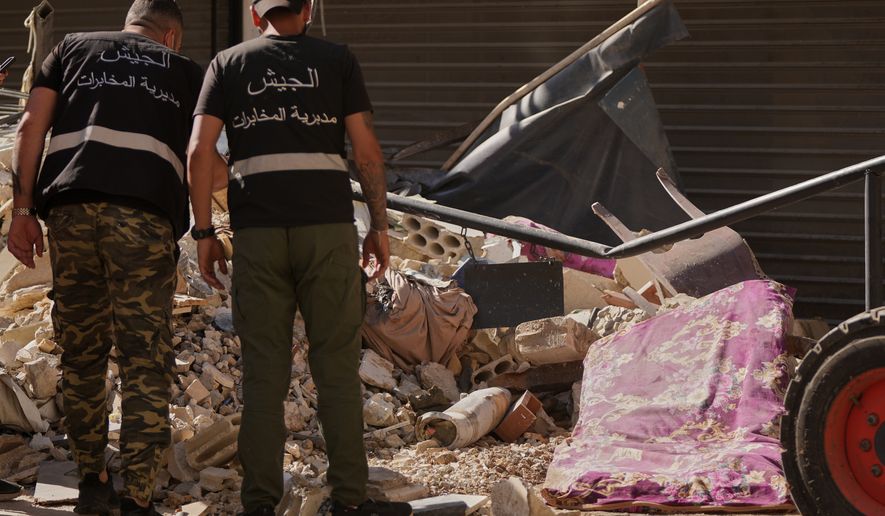
Lebanese intelligence officers look at an …
more >
In his first comments since the exchange of fire, U.S. President Donald Trump wrote online: “Israel and Iran must immediately stop ‘shooting.’”
Diplomats are racing to save the ceasefire
Two regional officials said concerted diplomatic efforts were underway Monday to salvage the ceasefire between Iran and the United States.
Officials from Egypt, Saudi Arabia, Turkey, Pakistan and Qatar have urged the Trump administration to pressure Israel to rein in its strikes on Iran and Beirut. They have also urged Iranian officials to stop attacks on Israel, they said. Both officials spoke on condition of anonymity because they were not authorized to speak to reporters.
One of the officials, who is involved in mediation efforts between Iran and the U.S., said the Pakistan-led mediators were furious about the Israeli strike Sunday on Beirut’s southern suburbs, which came while Pakistan’s interior minister was in Tehran in a fresh bid to push U.S.-Iranian negotiations forward.
Israel and Iran traded strikes
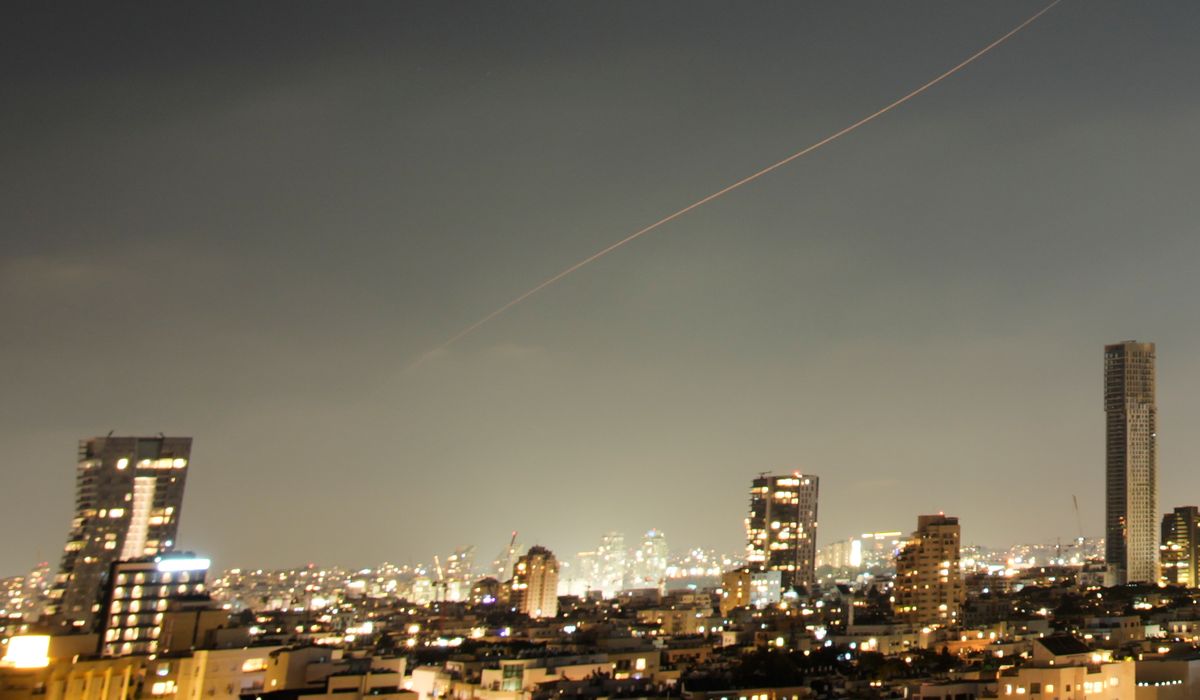
Iran launched waves of attacks on Israel on Monday, and Israel launched strikes on central and western Iran. It was their first exchange of fire since the ceasefire.
Iranian state television reported the sound of explosions being heard in Isfahan, Karaj, Tabriz and Tehran, without immediately elaborating. Iran closed the airspace around Tehran’s Imam Khomeini International Airport after the Israeli attack.
The semiofficial Fars and Mehr news agencies said Israeli strikes hit a petrochemical factory in the city of Mahshahr in Khuzestan province. They did not elaborate on any damage. The Israeli military later confirmed the strike on the petrochemical plant and also said it targeted truck-based missile launchers.
Israel said its strikes were in response to an Iranian missile attack. Tehran had warned on Sunday it would retaliate after Israel struck Beirut’s southern suburbs without warning. When Israel struck back, Iran fired again.
Iran’s paramilitary Revolutionary Guard said it had targeted two military bases in Israel, describing the attacks as being part of Operation Nasr, or “Victory.” The Guard said it launched the missiles after Israel targeted radar sites in three areas of Iran.
Explosions could be heard in central Israel as air defenses sought to intercept incoming Iranian fire. Sirens also sounded across neighboring Jordan.
Iran blamed the United States for the escalation.
“No one believes that the Israeli regime would take any action without coordination with the United States,” Iranian Foreign Ministry spokesman Esmail Baghaei said during a briefing with journalists in Tehran. “The United States bears responsibility for the Israeli regime’s aggression.”
Tensions appear to be growing between Trump and Netanyahu
Trump and Israeli Prime Minister Benjamin Netanyahu launched the war in a closely coordinated attack, with Israeli officials proudly boasting of unprecedented “shoulder to shoulder” cooperation throughout the conflict, which reached 100 days on Monday.
But since the first strikes, the two men have moved in opposite directions, with tensions sometimes spilling out into the open. Netanyahu appears to have openly defied Trump with his strike Sunday in Beirut and subsequent attacks in Iran, while Trump has voiced his displeasure with Israel, occasionally cursing or belittling Netanyahu by declaring to the Financial Times that “I call all the shots.”
The White House did not respond to messages about Monday’s Israeli strikes and whether they were done in coordination with the U.S.
The differences between the leaders appear to be rooted in the domestic considerations of each. Netanyahu faces elections this fall and is under heavy public pressure to strike back against ongoing Hezbollah attacks on northern Israel. He also is wary of appearing too subservient to Trump.
The U.S. president, meanwhile, also faces elections — for Congress in November — and is eager to wrap up a war that has jolted the global economy and raised prices for consumers.
The Houthis claimed an attack on Israel
Yemen’s Iran-backed Houthi rebels claimed an attack on Israel on Monday and said Israel-affiliated vessels would again be a target in the Red Sea, putting the waterway, as well as the Gulf of Aden and the narrow Bab el-Mandeb Strait connecting them, in danger. The statement from Brig. Gen. Yahya Saree was broadcast on the Houthis’ al-Masirah satellite news channel.
The threat might serve to further drive up oil prices since Saudi Arabia is using its East-West Pipeline to export oil through the Red Sea as an alternative to the Strait of Hormuz.
The Houthis made a similar threat during the Israel-Hamas war in the Gaza Strip and killed at least nine mariners and sank four ships in over 100 attacks, often targeting vessels with tangential or no ties to Israel.
The assaults upended shipping in the Red Sea, through which about $1 trillion of goods passed each year before the war.
___
This story has been updated to correct the day the Iran war started to Feb. 28.
___
Associated Press writers Matthew Lee in Washington; Michelle L. Price in Bridgewater, New Jersey; Elena Becatoros in Athens, Greece; and Samy Magdy in Cairo contributed to this report.