
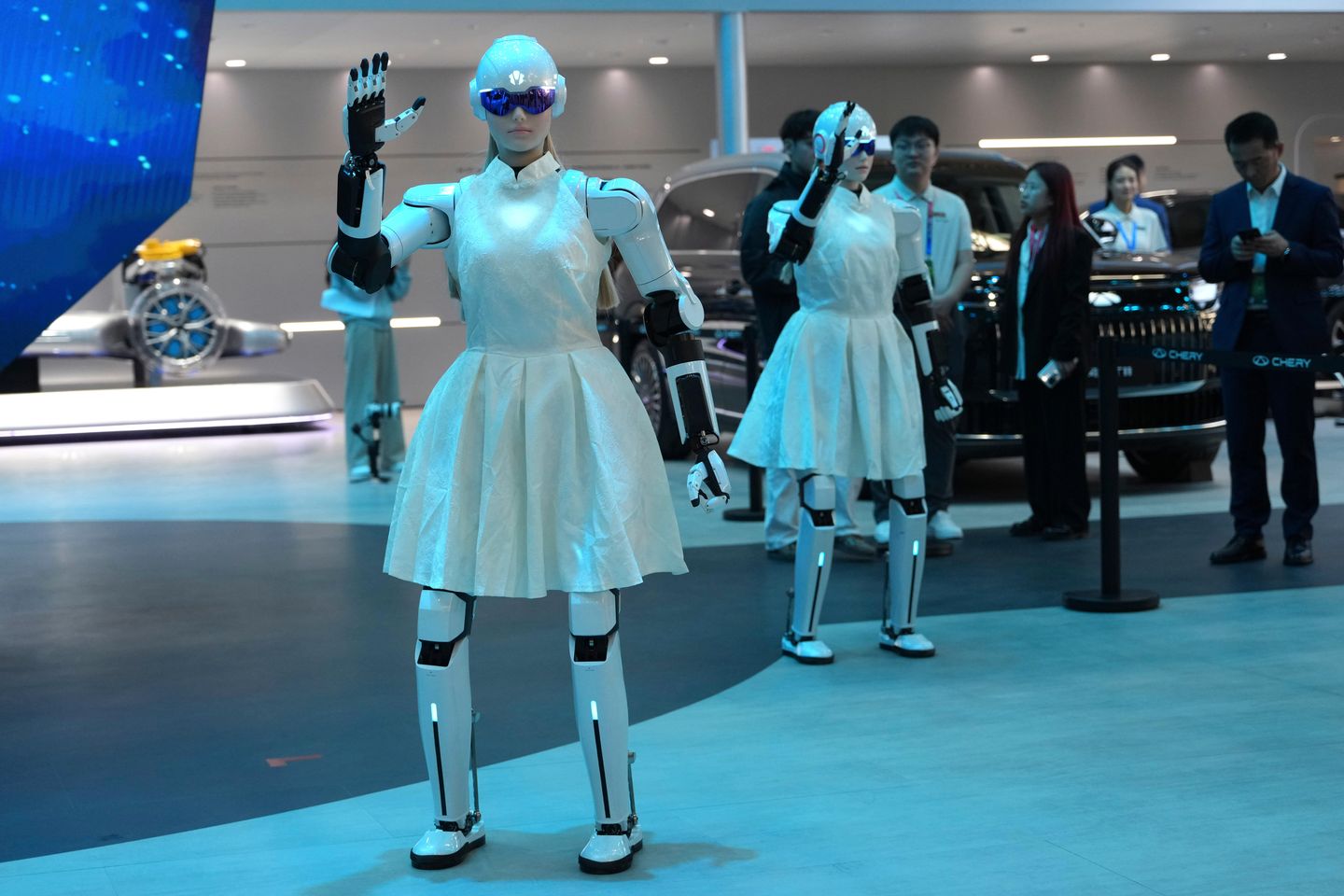
A bipartisan group of lawmakers introduced legislation to block the importation of robots made in China, as experts sound the alarm over security risks from advanced robots made by U.S. rivals.
The Guarding the U.S. Against Adversarial Robotics Dominance (GUARD) Act would require national security agencies to begin a review process for any humanoid and quadruped robots made by China or other countries.
The legislation was introduced Wednesday by Republican Reps. John Moolenaar of Michigan and Jay Obernolte of California and Democratic Rep. Jennifer McClellan of Virginia.
Those deemed a “national security threat” would be placed on the Federal Communications Commission’s Covered List, effectively banning them from use in the U.S. Any robot that is not reviewed within one year would be automatically placed on the list, Mr. Moolenaar said in a news release.
“Robots made by China are a threat to national security, critical infrastructure, and American workers. They contain backdoors that can be hijacked for espionage, and our legislation will stop these threats now before China can embed them throughout America,” Mr. Moolenaar said in the release.
The lawmakers targeted the China-based robotics firm Unitree, which critics point out has extensive ties to the Chinese military. The company was valued most recently at about $1.6 billion and filed a $610 million initial public offering with the Shanghai Stock Exchange.
The IPO coincided with a move into international markets, where Unitree is looking to expand sales in the U.S. through approved distributors and to supply robots to Japan Airlines.
Last year, Mr. Moolenaar and every other member of the U.S. House Select Committee on China sent a letter to the Trump administration demanding that Unitree be added to the Pentagon’s 1260H Chinese military companies list, the Department of Commerce Bureau of Industry and Security (BIS) Entity List and the FCC’s Covered List to better reflect its potential security risks to U.S. companies.
The legislation comes as U.S. robotics manufacturers face an uphill battle in competing with Chinese companies. Beijing currently controls roughly 89% of the world’s critical minerals used in the production of advanced robots, meaning U.S. firms heavily rely on Chinese supply chains for their manufacturing needs.
“The GUARD Act is a commonsense step towards protecting our national security, supporting American robotics companies, and ensuring the United States leads in the next generation of trusted robotics technology,” Mr. Obernolte wrote in the release.