As museum artifacts from a seemingly ancient civilization, those 30 years old or younger know little or nothing about roadside pay phones, cigarette vending machines, rabbit-ear TV antennas, and cars with roll-down windows.
Likewise, those same young adults have no experience with the screeching sound of dial-up modems, national anthem TV sign-offs, door-to-door encyclopedia salespeople, or Wild West chat rooms of early online life.
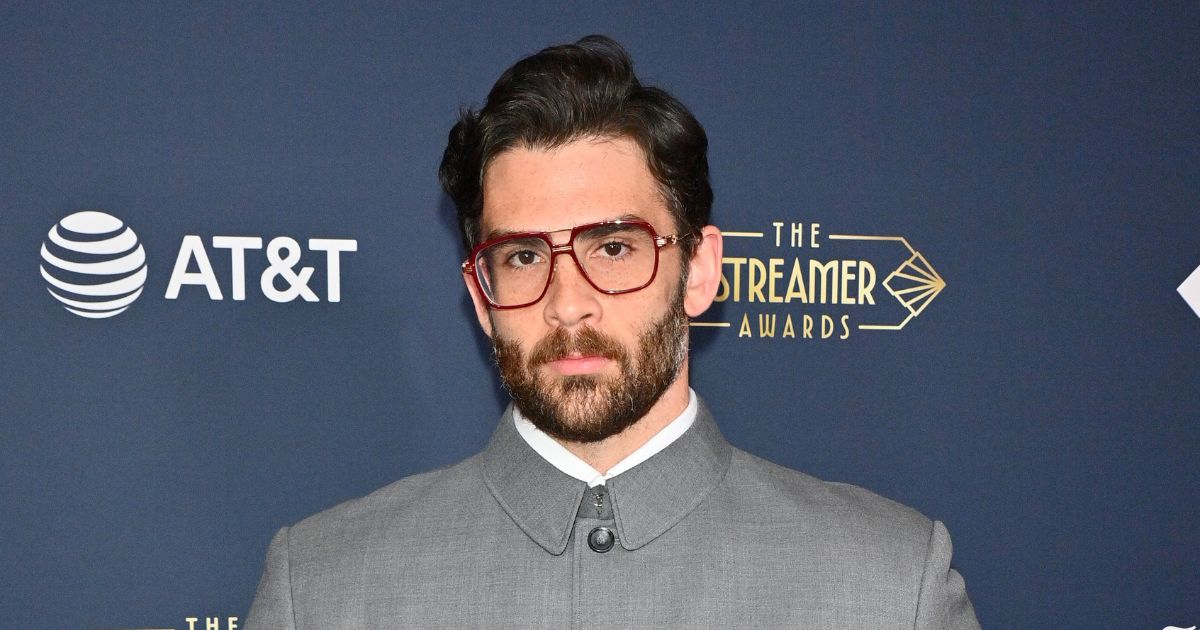
But just as fossils of bygone eras are difficult to imagine for those too young to identify with Millennials or too old to count as Gen Z-ers, it is equally difficult for many people 50 years and older to understand something else. And that is, how can far-left Hasan Piker be as popular and influential among 30-year-old males as he currently is?
The underlying question is even more basic. Who is Hasan Piker? Is he a Jersey-born, misunderstood online influencer speaking truth to power, or a bombastic merchant of hate with over three million followers?
Especially admired among young progressive men, Democrat surrogate Piker is also widely criticized as malicious, dehumanizing, and supportive of extremist violence. Such criticisms are especially warranted when reviewing his well-documented history of offensive remarks, largely aimed at Jewish groups.
Examples of Piker’s venomous and anti-Semitic slurs are commonplace. Calling Orthodox Jews “inbred,” he has used phrases such as “rabid ultra-Zionist pigs,” labeled supporters of Israel as “liberal Nazis,” and attacked an anti-Hamas viewer on his livestream as a “bloodthirsty, violent, pig-dog.”
Moreover, Piker has praised or even justified the actions of terrorist groups such as Hamas, Hezbollah, and the Houthis. Expressing praise, Piker has stated that “Hamas is a thousand times better than Israel,” and reportedly framed Houthi attacks as “not only moral, but just.” In context, the Houthis’ official slogan includes “Death to America,” “Death to Israel,” and a “Curse on the Jews.”
But in further crossing the line from political critique into endorsement of violence, Piker said if someone cared about healthcare, “You would kill [Senator] Rick Scott.” And equally outrageous, Piker also denied or minimized the Hamas-authored massacre of Oct. 7.
In downplaying the worst atrocity against Jews since the Holocaust, he claimed that the attack was a “direct consequence” of Israeli and U.S. policy, that there was “no evidence” of sexual violence documented by United Nations investigators, and that during the outrage “it doesn’t matter if rape happened.”
And if those remarks and their twisted justifications weren’t enough, Piker also said that “America deserved 9/11.” Again, he later tried to whitewash that outlandish assessment as merely satirical or imprecisely phrased.
While many, if not most, mainstream Democrats have ignored or even criticized Piker, there have been notable exceptions who have excused his comments or even appeared with him at party-friendly gatherings.
By contrast, many Republicans have denounced Piker’s comments, and no GOP elected official or major figure has publicly supported him either through words or joint appearances. That disparity in how members of each party have reacted to Piker’s comments is undeniable.
Examples of that divide include Democrat House candidate Effie Phillips-Staley, who, while claiming not to agree with everything Piker says, appeared on his livestream and defended the value of his platform for reaching young voters.
California Rep. Ro Khanna also connected with Piker at events where the streamer was a featured participant. Yet rather than explicitly criticizing his rhetoric, Khanna shamelessly framed his appearance on Piker’s broadcast as a political move to reach a massive audience of young men who might otherwise drift toward the right.
Although not technically a Democrat, Independent Bernie Sanders has publicly collaborated with Piker several times, predictably appearing with him at a “tax-the-rich” rally and on the “Fighting Oligarchy” tour. And despite the influencer’s objectionable comments, the lawmaker has maintained a long-standing, politically motivated relationship with him.
Black Lives Matter activist and former Missouri Rep. Cori Bush featured Piker as a guest of honor at a recent “May Day” rally in St. Louis. Praising him onstage for his “uncompromising” positions, she cryptically added that the movement needs people who will “go say the thing.”
What’s more, during the 2024 Democratic National Convention, the Harris campaign invited Piker to livestream from the floor as part of its “Creators for Kamala” initiative, which was rationalized as a way to meet young voters “where they are.”
But while none of those events constitute explicit support for Piker’s ultra-divisive comments, his appearances at rallies, livestreams, or campaign gatherings have normalized his inflammatory rhetoric and implicitly legitimized him.
And therein lies the problem. Directing hate at an entire people targeted for extermination and justifying terrorism against the very nation offering free speech protection for his reckless comments not only bites the hand that feeds him, but also makes the answer to the earlier question of who Hasan Piker is disturbingly easy to answer.
The views expressed in this opinion article are those of their author and are not necessarily either shared or endorsed by the owners of this website. If you are interested in contributing an Op-Ed to The Western Journal, you can learn about our submission guidelines and process here.
Advertise with The Western Journal and reach millions of highly engaged readers, while supporting our work. Advertise Today.