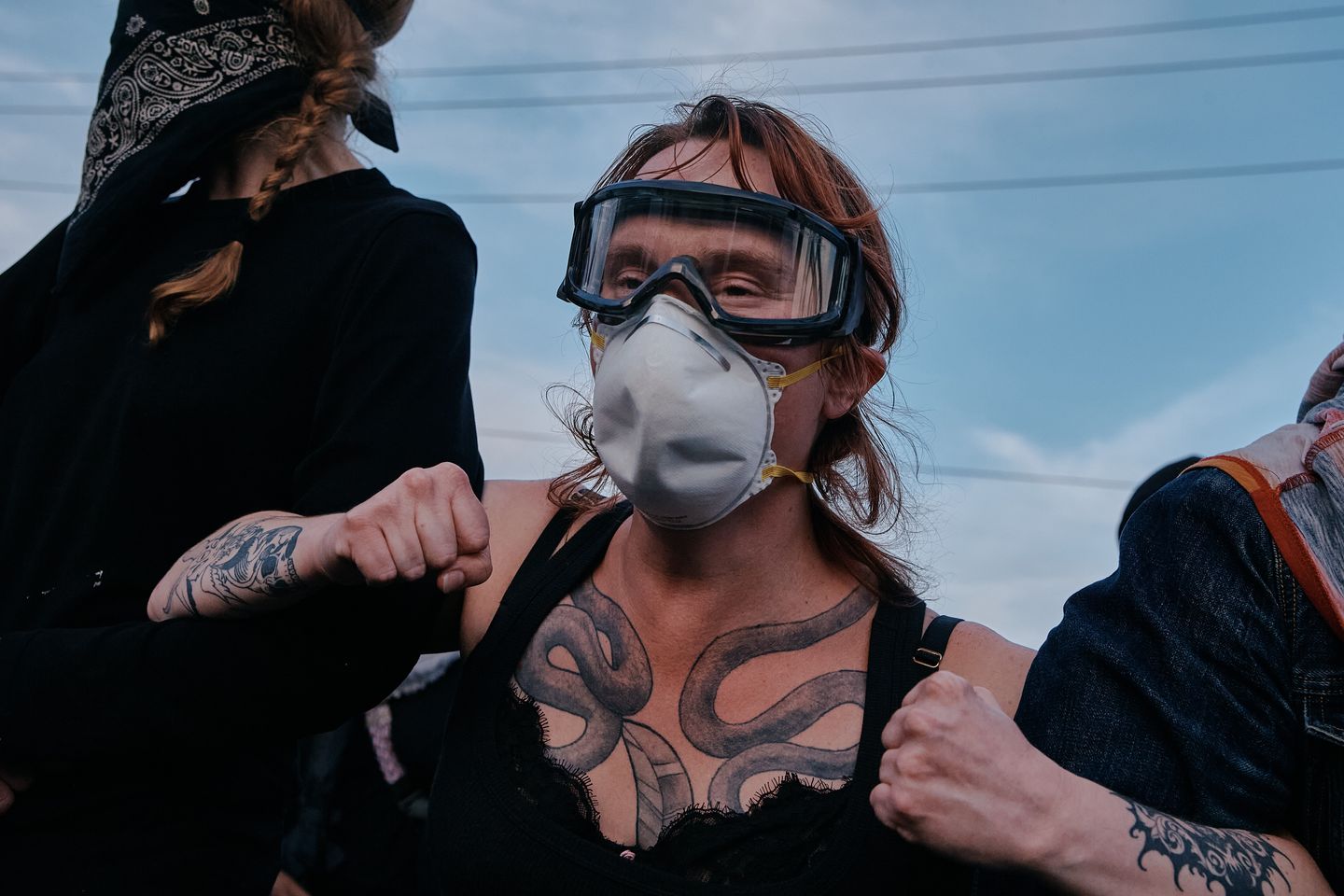
Leftist activists at a panel discussion in Berkeley, California, recently delivered a stark verdict on the state of radical activism: They have failed to translate big turnout in radical leftist movements into lasting political change.
They complained that today’s activism is dominated by influencer culture, draining energy from the unglamorous work of successful community organizing. The Women’s March and Black Lives Matter protests were major social movements in raw numbers, they said, but it was questionable whether they produced durable political victories.
Influencer culture and corporate co-opting, it seems, is diluting left-wing radicalism.
“Don’t let your babies grow up to be podcasters. Because if resistance becomes nothing more than branding, performance or monetized identity, then apathy and authoritarianism begin feeding each other. And that is precisely the terrain where fascism thrives,” said Jason Myles, the host of the “This Is Revolution” podcast who moderated the recent panel discussion.
The event, titled “Radicals, Realists and the State of Activism in the U.S.,” was hosted by the “Green and Red Podcast,” which describes itself as a showcase for “radical environmental and anti-capitalist politics.”
In his opening remarks, Mr. Myles said that when activism on the left becomes content, it is “monetized, branded, algorithm-driven” and risks becoming performative rather than effective.
He reflected on the 2020 racial justice uprising after the killing of George Floyd, which spawned massive protests, corporate performative allyship and mainstream political discourse around defunding the police. He then asked why all the energy from the summer of 2020 vanished.
The panel identified several possible explanations, including crisis fatigue from their resistance movement against President Trump, the COVID-19 pandemic and the war in Gaza.
“In this new political environment, anti-fascism, socialism, and even basic dissent are increasingly portrayed as existential threats,” Mr. Myles said.
He compared the national response to Floyd’s killing by local law enforcement in Minneapolis to the comparatively muted reaction this year to the deaths of anti-ICE protesters Alex Pretti and Renee Good at the hands of federal law enforcement. He suggested the scale of the 2020 uprising was situational, not structural.
“When we see George Floyd, the country burns. We saw Pretti and Good killed in real time, and it was more ’tsk tsk,’” Mr. Myles said.
Environmentalist activist Scott Parkin said journalists and influencers regularly outnumber the protesters at this year’s demonstrations against U.S. Immigration and Customs Enforcement operations in Minneapolis.
“Every time there would be any sort of action, an action with 10 people, there’d be twice as many reporters at it — and half of those would be like people just live-streaming, being influencers,” said Mr. Parkin, a senior campaigner with Rainforest Action Network who organizes with Rising Tide North America.
He conceded that while he received most of his information about what was happening on the ground in Minneapolis from Instagram streamers. Still, he said the movement loses focus when people make it more about themselves than the cause.
Thomas Zeitzoff, a professor at the School of Public Affairs at American University, called social media a “double-edged sword.”
“We can get a lot of people together, but do we have enough sustained pressure to enact change? And I would say the answer is maybe not. It depends,” he said.
Annie Leonard, former Executive Director of Greenpeace US, responded, “I don’t think we’ve had a lot of political victories come out of the protest movement lately. So that’s a sad question.”
She later added, “Are protests producing more influencers than political victories? I don’t think they’re actually producing either very well.”
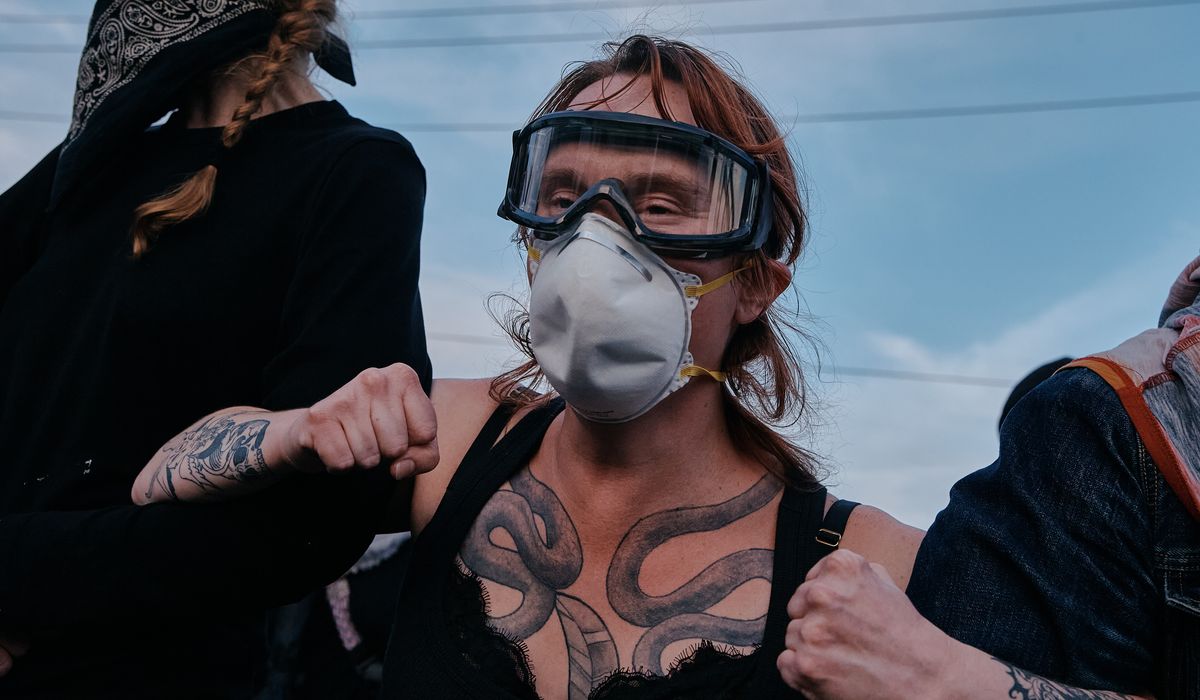
The critique fell flat with protesters who swarmed ICE’s Delaney Hall detention facility in Newark, New Jersey, on Saturday.
“The number of people who are in this out of the humanity in their hearts — it overpowers any kind of feeling of vanity or ego trying to, for lack of a better phrase, to make something go viral or monetize things,” a masked antifa activist told The Washington Times.
He also defended the left-wing influencers and live-streamers: “They’re here doing what I believe is almost akin to independent press.”
The protesters at Delaney Hall on Saturday night set fires, hurled projectiles and clashed with police. Several activists were arrested.