Are investors in “passive” index funds being misled about how shares held in those funds are being voted? After providing some relevant background below, I argue that failing to properly disclose the active voting of passive fund shares could violate consumer protection provisions, anti-fraud provisions, or other related provisions covering deceptive practices.
When it comes to asset managers, BlackRock, State Street, and Vanguard are often referred to as the “Big Three,” and it has been reported that together “they are the largest shareholders in 88% of S&P 500 companies.”
A large part of this immense control of corporate America stems from shares held in “passive” funds that millions of Americans invest in. Passive funds are generally designed to track the results of a given index such as the S&P 500. Given that no active management is involved, such funds typically charge lower fees.
At least part of the theory behind passive funds is that they provide great diversification to unsophisticated investors while allowing them to piggyback on the capital allocation-growth magic of free markets.
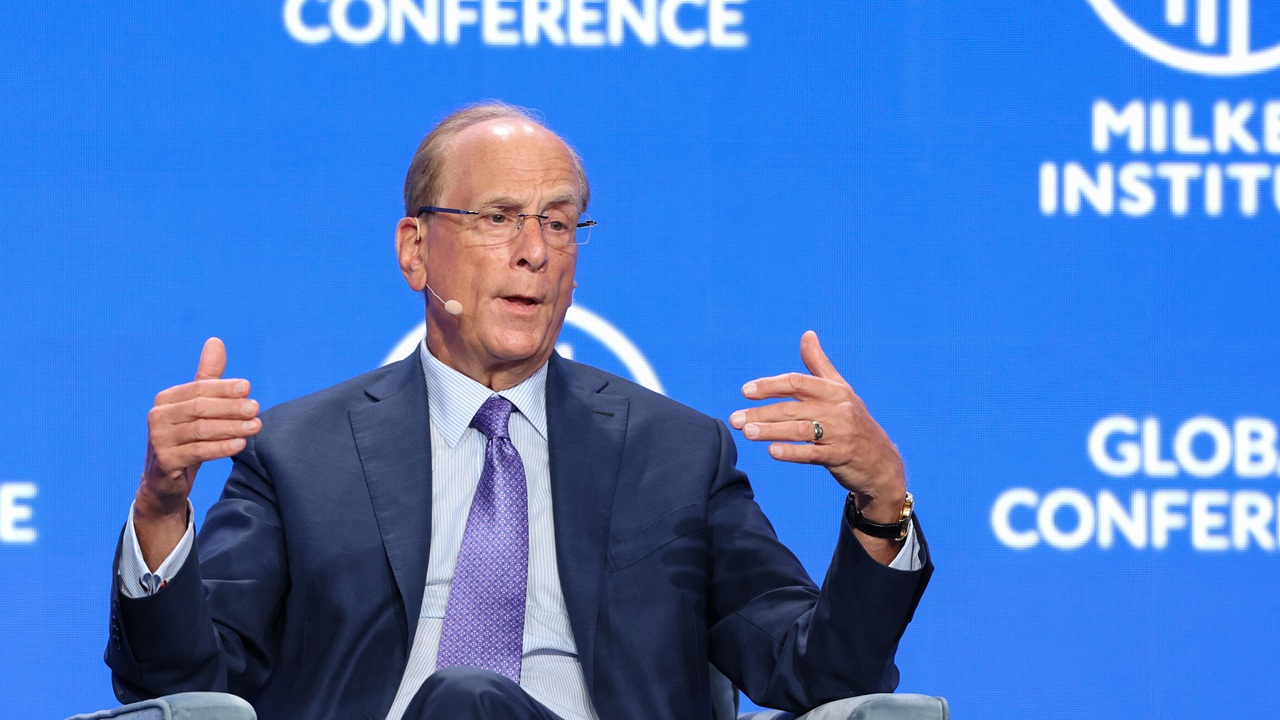
Putting aside for a moment concerns about the viability of free-market capital allocation if everyone is invested in index funds, one puzzling feature of passive funds is that their proxy voting is often anything but passive. In fact, Larry Fink, CEO of BlackRock, has stated that using the voting power of BlackRock’s funds to force corporations to bend the knee to his woke vision of corporate utopia is a core feature of his role.
This is particularly disturbing when people think they’re signing up for passive investments, when in reality their money is being leveraged by woke stewardship teams to undermine investors’ values without their consent. And given the entire model’s efficiency rationale, one should likely assume those woke stewardship teams replace company-specific expertise with top-down ideology.
Now, some may argue that we are post-woke when it comes to corporate governance, pointing to articles with headlines like: “How BlackRock Abandoned Social And Environmental Engagement.” But there are very real reasons to be concerned that asset managers like Fink are just waiting for the political winds to change. So those concerned with keeping corporations focused on the bottom line and free from ideological capture by leftist neo-racists and neo-Marxists should continue to stay vigilant.
And we have certainly seen some positive movement on that front, including President Donald Trump’s recent executive order, “Protecting American Investors From Foreign-Owned and Politically Motivated Proxy Advisers,” which among other things addresses related concerns about proxy advisers by calling for “action to enhance transparency concerning the use of proxy advisers, particularly regarding ‘diversity, equity, and inclusion’ and ‘environmental, social, and governance’ investment practices.”
But what about those asset managers and their very active proxy voting schemes? A couple of proposals for improvement involve increased mirror or pass-through voting.
In mirror voting, the asset manager may retain control of 10% of the passive fund’s votes, while the rest mirrors the votes of investors writ large such that if “other investors support a proposal or a director by 75%, then the votes over the cap [are] voted 75 to 25 as well.” Meanwhile, pass-through voting allows the true owners of the fund to select a voting benchmark to reflect their voting preferences.
Certainly, attempts could be made to force asset managers to vote all shares held in passive funds via mirror voting, pass-through voting, or some other similar mechanism. Even if that happens, myriad related issues remain unresolved.
First, to the extent pass-through voting is understood to mean offering clients voting choice options, the scope of options becomes critical.
Second, to the extent pass-through voting places direct responsibility for discrete proxy votes on clients, the reality of rational ignorance means many proxies will go unvoted.
Third, promoting alternative voting structures potentially lets asset managers off the hook in terms of whether they should be subject to fiduciary duties in connection with their voting decisions and the extent to which any such duties have been breached.
Fourth, focusing on voting may obscure the engagement elephant in the room. Even with some asset managers promoting “dual-track” engagement options, concerns remain about the extent to which the new options boil down to left and far left, though this may also raise issues of false advertising.
Finally, there is some uncertainty about which voting agendas fill any gap left open by asset managers reducing their active voting.
Having said all that, we should likely all be concerned about the consequences of failing to hold asset managers sufficiently accountable when it comes to proxy voting past, present, and future—and making sure related disclosures don’t mislead is one way to improve accountability. A recent settlement by Vanguard of a suit brought against it, BlackRock, and State Street by Texas Attorney General Ken Paxton can certainly be viewed as a strong step in the right direction, but another route to accountability could be to make it a form of false advertising for asset managers to offer “passive” or “index” funds wherein the shares are actively voted by the asset manager without prominent and full disclosure of the asset managers use of the funds voting power.
Such an approach could allow investors to make more fully informed decisions while reducing the undue influence of woke asset managers without excessive regulation.