President Donald Trump’s trip to China places Taiwan back where Beijing always wants it: under pressure, under scrutiny, and under threat.
Taiwan President Lai Ching-te isn’t watching this meeting like a man checking diplomatic weather; he’s watching it like the leader of a free island that China keeps trying to isolate, intimidate, and eventually absorb.
China’s leaders understand ceremony, leverage, and timing. They also smell weakness when there’s blood in the water, which is why I vividly remember the 2021 Alaska meeting and how it hangs around this story like smoke in a conference room.
You remember that Anchorage meeting, right? When Antony Blinken, then secretary of state, and Jake Sullivan, then national security advisor, sat across from Yang Jiechi, then China’s top foreign policy official, and Wang Yi, then China’s foreign minister and state councilor. China’s opening remarks turned into a public scolding, and the Biden team looked stunned as Beijing delivered a lecture in front of the cameras. Reading the archives is downright infuriating.
DIRECTOR YANG: On the eve of the Chinese Lunar New Year, President Xi Jinping and President Joe Biden had a phone conversation. The two presidents agreed to step up communication, manage differences, and expand cooperation between our two countries. We are having this dialogue today to follow up on the common understanding of the two presidents reached during their phone conversation. And having this dialogue is, in fact, a decision made by the two presidents. So for the people of the two countries and the world, they’re hoping to see practical outcomes coming out of our dialogue. And with Xinjiang, Tibet, and Taiwan, they are an inalienable part of China’s territory. China is firmly opposed to U.S. interference in China’s internal affairs. We have expressed our staunch opposition to such interference and we will take firm actions in response.
On human rights, we hope that the United States will do better on human rights. China has made steady progress in human rights and the fact is that there are many problems within the United States regarding human rights, which is admitted by the U.S. itself as well. The United States has also said that countries can’t rely on force in today’s world to resolve the challenges we face. And it is a failure to use various means to topple the so-called “authoritarian” states. And the challenges facing the United States in human rights are deep-seated. They did not just emerge over the past four years, such as Black Lives Matter. It did not come up only recently. So we do hope that for our two countries, it’s important that we manage our respective affairs well instead of deflecting the blame on somebody else in this world.
Nobody should pretend one meeting defines an entire foreign policy, but bad first impressions travel far in adversarial capitals. Beijing learned something from that day, or at least thought it did.
Trump isn’t walking into that room as a president trying to prove he belongs on the world stage. Xi Jinping, China’s president and general secretary of the Chinese Communist Party, knows that. Beijing may still test him, because testing American presidents ranks somewhere between doctrine and habit in Chinese statecraft.
The question is whether Xi believes Trump wants a public deal so badly that Taiwan becomes a bargaining chip. Taiwan has reason to care because every vague sentence, every pause, and every carefully softened word echoes across the Taiwan Strait.
Calling Taiwan “Taiwan” doesn’t insult China by itself; American officials use its name constantly because the United States maintains unofficial relations with Taiwan under the Taiwan Relations Act while recognizing Beijing as China’s government. As Fox News reports, there’s a great deal of speculation involved in this meeting.
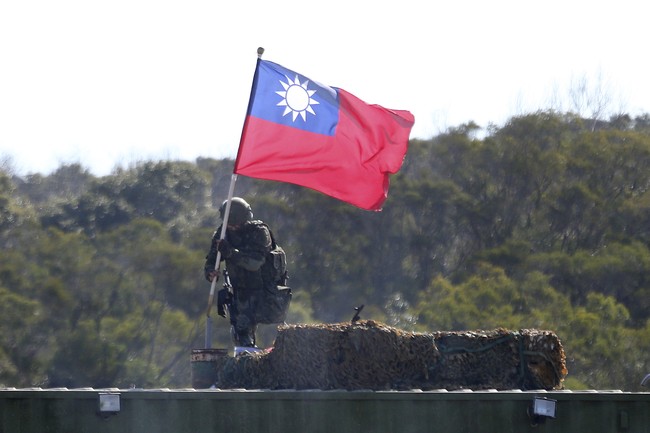
The de facto independent nation of 23 million people has spent decades living under threat from the Chinese Communist Party, which claims Taiwan as its territory despite never having ruled it for even a day.
Observers here warn that Xi may try to offer Trump a deal: cooperation on tariffs, fentanyl, U.S. business access, or global flashpoints like Iran and Ukraine in exchange for Trump accepting a larger Chinese role in Taiwan’s future.
Taiwan’s Deputy Minister of Foreign Affairs Francois Wu recently told Bloomberg News, “What we are the most afraid is to put Taiwan on the menu of the talk between Xi Jinping and President Trump.”
Huang Kwei-bo, a professor in National Chengchi University’s Department of Diplomacy, told Fox News Digital that Taiwan shouldn’t assume nothing will change. “Taiwan shouldn’t rule out the possibility that the United States and mainland China could reach an understanding behind the scenes, agreeing to reduce arms sales to Taiwan, or become less active in helping us meaningfully participate in international space,” he said.
Beijing objects when language treats Taiwan as a separate sovereign state or moves toward formal recognition. China’s government insists Taiwan belongs to China, while the U.S. has long maintained a deliberately careful policy built around the Taiwan Relations Act, the three Joint Communiques, and the Six Assurances.
Taiwan lives inside that careful wording every day.
Lai thanked the United States this week for helping strengthen Taiwan’s defenses, and he said Taiwan won’t yield to outside pressure. Beijing calls Lai a separatist, refuses dialogue with him, and keeps applying pressure through military exercises, diplomatic squeeze plays, and international exclusion.
China also blocked Taiwan from attending the World Health Assembly, while Taiwan Health Minister Shih Chung-liang prepared to lead a delegation to Geneva anyway. Taiwanese Foreign Minister Lin Chia-lung has also expressed interest in going.
China doesn’t just pressure Taiwan with warships; it pressures Taiwan with empty chairs, blocked invitations, and the steady message that Taiwan should disappear from the room.
Taiwan also faces a defense spending fight at home. The United States has raised concern over delays after Taiwan’s opposition-controlled parliament approved only part of Lai’s requested $40 billion supplementary defense packages.
Beijing watches those disputes, too. A divided Taiwan gives China more room to probe, while a distracted America gives China more room to pressure. A president hungry for ceremony gives China more room to flatter, and Trump’s advantage is that he understands deals, pressure, and public strength in ways China can’t dismiss as academic chatter.
The Taiwan test won’t be measured only by what Trump says beside Xi; it will be measured by what Beijing does afterward. More aircraft near Taiwan, more warships in the strait, more diplomatic punishment, or more demands for American restraint would tell the story clearly enough. Taiwan isn’t asking for poetry from Washington; it’s watching for steel in the voice, clarity in policy, and the kind of resolve China hears without needing a translator.
America’s foreign policy fights don’t stop at the water’s edge anymore, and neither should serious coverage. Join PJ Media VIP today and use promo code FIGHT for 60% off. We’ll keep digging into the stories Washington would rather soften, blur, or bury.