The U.S. ceasefire with Iran is intact despite a second day of hostilities in the Strait of Hormuz and attacks on a critical Gulf ally, the Trump administration said Tuesday.
President Trump cited progress in squeezing Tehran through military and economic means, as the U.S. Navy succeeded in escorting more merchant ships through the Strait of Hormuz.
Mr. Trump said the U.S. retains the upper hand in sluggish peace talks because his blockade is crashing Iran’s economy. He said its currency is worthless.
Tehran wants to make a deal, he said, but factions within the country are busy “playing games.”
“They should do the smart thing,” Mr. Trump said in the Oval Office. “We don’t want to go in and kill people.”
Defense Secretary Pete Hegseth confirmed an April 7 ceasefire remains in place despite the attacks and an exchange of fire between U.S. and Iranian forces this week that resulted in the sinking of at least six Iranian boats that had been harassing commercial vessels in the Strait of Hormuz.
“The ceasefire is not over,” Mr. Hegseth told Pentagon reporters.
Standing alongside Air Force Gen. Dan Caine, chairman of the Joint Chiefs of Staff, Mr. Hegseth said the Iranian attacks have so far remained “below the threshold” necessary to declare the ceasefire void.
At the White House, Mr. Trump declined to say what type of Iranian actions would invalidate the ceasefire.
“They know what to do,” he said. “They know what not to do, more importantly.”
Mr. Trump and his war-fighters sized up the situation on the second day of Project Freedom, a U.S. mission to guide neutral commercial vessels that have been trapped by Iran’s clampdown on the Strait of Hormuz.
Iran is using the Strait of Hormuz, which carries a fifth of the world’s oil, as leverage in peace talks in its war with the U.S. and Israel.
Project Freedom successfully guided multiple ships through the strait, including one from shipping giant Maersk, though Iran is saber-rattling with stepped-up aggression and fiery rhetoric.
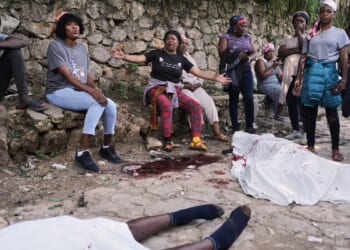
The United Arab Emirates said Tuesday it faced a new round of missile and drone attacks from Iran, testing the Middle East ceasefire.
“The Ministry of Defense confirms that the sounds heard in scattered areas of the country are the result of the UAE’s air defense systems intercepting ballistic missiles, cruise missiles, and drones,” the government said on X.
The UAE fended off over a dozen missile and drone attacks on Monday, and an oil facility caught fire from an attack. The Emiratis said the strikes originated in Iran.
Iranian Foreign Minister Seyed Abbas Araghchi said that as Pakistan mediates peace talks, “the U.S. should be wary of being dragged back into [a] quagmire by ill-wishers. So should the UAE.”
“Project Freedom is Project Deadlock,” he wrote Tuesday on X.
Mr. Trump said Iran is in no position to play around with the U.S. because his crushing blockade is eating into Iran’s oil revenues and exacerbating economic problems Iran had even before the war.
The Iranian rial — the Islamic Republic’s currency — was trading at 42,000 to 1 U.S. dollar on Tuesday.
“Their economy is crashing,” Mr. Trump said. “I hope it fails. You know why? Because I want to win.”
The U.S. and Israel launched military strikes against Iran on Feb. 28 to prevent Tehran from obtaining a nuclear weapon, diminish its missile program and prevent it from supporting terror proxies in the Middle East.
On Tuesday, Mr. Trump repeated his belief that striking first was necessary to stop Iran from getting nuclear weapons.
“Maybe we wouldn’t all be here right now. I can tell you, the Middle East would have been gone, Israel would have been gone, and they would have trained their sights on Europe first and then us,” Mr. Trump said. “Because they’re sick people, these are sick people, and we’re not going to let lunatics have a nuclear weapon.”
Mr. Trump says Iran has not met his terms for preventing it from obtaining a nuclear weapon. Yet so far, he has not renewed strikes on Iran’s territory.
The president, speaking in the Oval Office, said U.S. forces are “doing very well” against Iran.
“We’ve basically wiped out their military in about two weeks,” Mr. Trump said.
Mr. Hegseth said Iran’s remaining naval forces today consist of the swarm of small boats it has deployed against commercial vessels trying to pass through the Strait of Hormuz.
The U.S. is dealing with those smaller boats during Project Freedom.
“Project Freedom is defensive in nature, focused in scope, and temporary in duration, with one mission: protecting innocent commercial shipping from Iranian aggression,” Mr. Hegseth said. “Iran is the clear aggressor — harassing civilian vessels, threatening mariners from every nation indiscriminately, and weaponizing a critical chokepoint for its own financial benefits.”
Some U.S. allies and some voters at home want to wind down the war, citing the economic fallout.
The national average price of a gallon of gas stood at $4.48 on Tuesday, a 40-cent increase from a week ago and nearly $1.50 higher than at the start of the war on Feb. 28, according to the AAA motor club.
Mr. Trump says the economic squeeze will ease and be worth it to prevent Iran from getting a nuclear weapon.
Iranian Parliament Speaker Mohammad Bagher Ghalibaf on Tuesday suggested Iran is poised to withstand more pain than the U.S.
“We know full well that the continuation of the status quo is intolerable for America,” he wrote, “while we have not even begun yet.”
Iran’s foreign minister, Mr. Araghchi, traveled to Beijing on Tuesday, marking his first meeting with the Chinese since the start of the war.
He is meeting with China’s Foreign Minister Wang Yi to discuss bilateral relations and “regional and international developments,” according to a statement from Iran’s Foreign Ministry posted on Telegram.
The sitdown is part of a broader diplomatic tour Mr. Araghchi has undertaken over the past few weeks. The diplomat has visited Oman, Pakistan and Russia, meeting with other foreign ministers and leaders to discuss the war.
The visit is one week before Mr. Trump’s summit with Chinese President Xi Jinping, which was postponed due to the war.
Beijing is a strategic partner to Tehran, making the subject a thorny one, but Mr. Trump said he is on the same page as Mr. Xi.
“We get along well,” Mr. Trump said. “He’s been very nice about this, in all fairness.”