One day after a defeat at the U.S. Supreme Court, New Jersey’s attorney general appeared to flagrantly disregard the ruling that her office’s demand for donor information harmed a pregnancy center’s First Amendment rights.
Attorney General Jennifer Davenport filed a motion in state court, asking the court to lift its temporary stay on the subpoena from her office to the pregnancy center and to resolve its legality.
Davenport’s office claimed that the pregnancy center in question, First Choice Women’s Resource Centers, had sued in federal court “to create duplicative litigation.” The AG’s office also wrote that “only this [state] court actually has the ability to enforce the subpoena.”
Kristen Waggoner, president and CEO of Alliance Defending Freedom, which represents the pregnancy center, noted that Davenport got the timeline exactly backward.
First Choice filed the first lawsuit in the case. As Supreme Court Justice Neil Gorsuch wrote in his opinion for the unanimous court, then-Attorney General Matt Platkin filed a suit in state court “shortly after” First Choice filed in federal court.
“The duplication [Davenport] now blames on First Choice is one her own office created,” Waggoner noted.
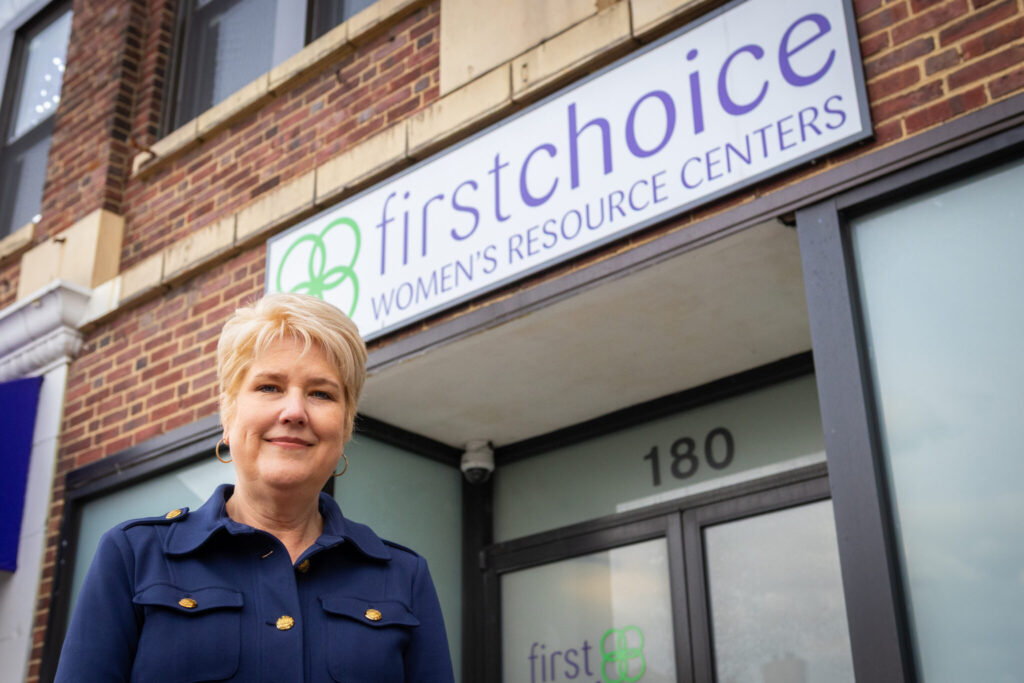
“First Choice Women’s Resource Centers serve women across New Jersey with free pregnancy tests, ultrasounds, and support,” Waggoner explained. “For more than two years, the NJ AG’s office has demanded its donors’ identities, internal communications, and other protected information, citing New Jersey’s consumer protection law, but without any consumer complaints.”
The Supreme Court Ruling
Lower federal courts held that First Choice did not have standing to sue because it could not demonstrate harm from the subpoena. The Supreme Court reversed, finding that the mandate for donor disclosure burdens First Choice’s First Amendment right of free association.
The Supreme Court cited NAACP v. Alabama (1958), which secured the precedent that donors have a First Amendment right to contribute to causes anonymously.
“Since the 1950s, this court has confronted one official demand after another like the attorney general’s,” Gorsuch wrote. “Over and again, we have held those demands burden the exercise of First Amendment rights. Disputing none of these precedents but seeking ways around them, the attorney general has offered a variety of arguments. Some are old, some are new, but none succeeds.”
In response to the Supreme Court’s overturning of the abortion precedent Roe v. Wade (1973) in Dobbs v. Jackson Women’s Health Organization (2022), Platkin established a “Reproductive Rights Strike Force.” That strike force issued a “consumer alert” accusing pro-life pregnancy centers of “seek[ing] to prevent people from accessing comprehensive reproductive health care” by “provid[ing] false or misleading information about abortion.”
Pro-life pregnancy centers like First Choice offer various services to women facing crisis pregnancies, such as counseling, food, shelter, clothing, and baby items, in an attempt to convince them not to undergo abortions and to prepare them to take care of their babies. These centers compete with abortion centers, and Democrats have suggested that they engage in misleading advertising to do so.
Confirming the Subpoena Is ‘Retaliatory’
Waggoner condemned Davenport’s filing as “part of a longer pattern of attempting to evade federal civil rights review.” She also said it strengthens First Choice’s claim that “the subpoena is retaliatory.”
“A state AG’s office has spent more than two years using its coercive subpoena power to target a pro-life pregnancy center without any evidence of wrongdoing,” she noted. “The Supreme Court just unanimously affirmed that demanding private donor information chills First Amendment rights and gets First Choice into federal court. One day later, the AG is racing to a state court to enforce the same subpoena before federal review can occur.”
Davenport’s office declined to provide any comment to The Daily Signal beyond its letter to the court.