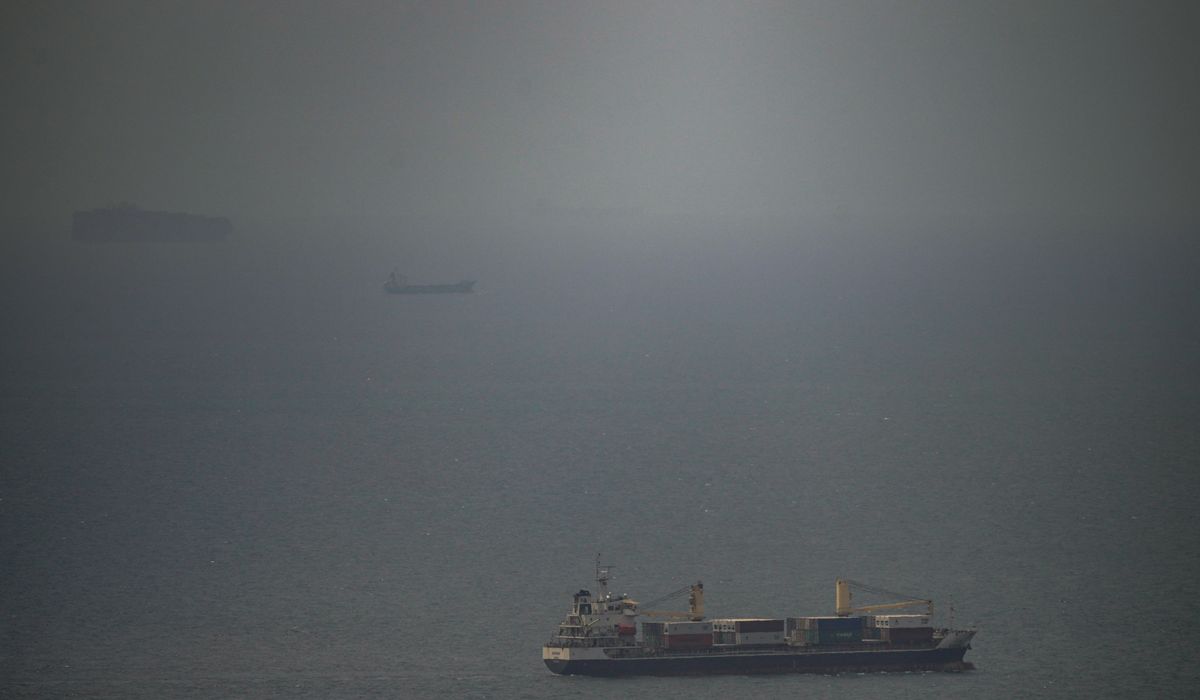
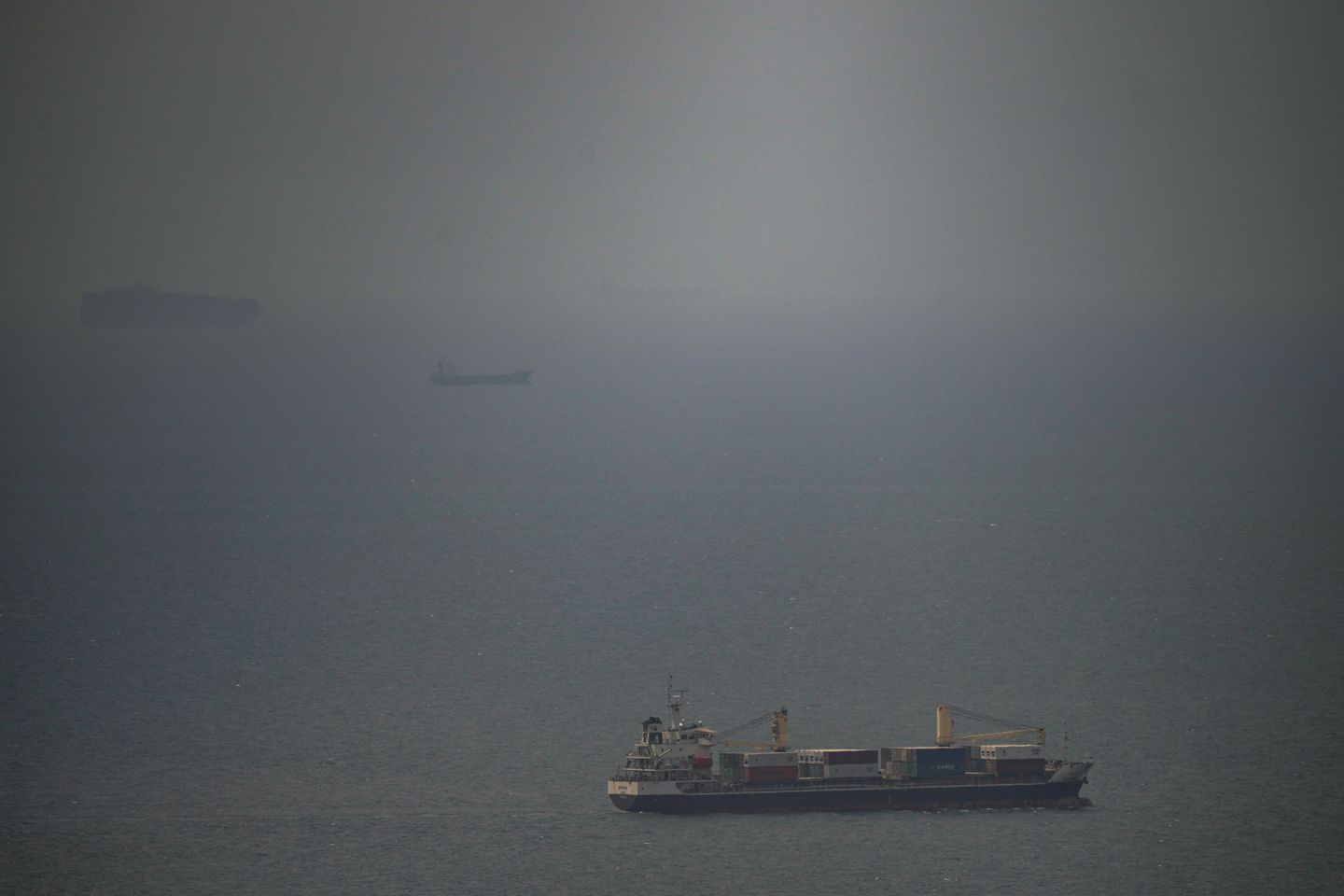
Iran’s naval forces fired on and seized two container ships near the Strait of Hormuz on Wednesday, as Tehran and U.S. forces vied for control of critical waterways and the upper hand in tenuous peace talks.
The Islamic Revolutionary Guard Corps Navy said it seized the two ships, identified as the MSC Francesca and the Epaminodes, for attempting to traverse the strait “without the necessary permits.”
Iranian forces directed the ships to their coast, as the Islamic Republic tries to reassert control over its maritime neighborhood in response to President Trump’s blockade of Iranian ports.
Iran also fired on a third ship Wednesday without seizing it.
The U.S. and Iran are jockeying for economic supremacy, while Pakistani mediators look for ways to end the war.
It hasn’t been easy. Vice President J.D. Vance postponed a trip to Islamabad on Tuesday after the U.S. side got mixed signals from Tehran.
Then, Mr. Trump agreed to withhold new attacks on Iran while its “fractured” leadership drafts a peace proposal for Pakistani mediators.
The White House said Mr. Trump has not set limits on how long the extended ceasefire should last.
“I’m not going to set a timetable for the president,” White House press secretary Karoline Leavitt said. “He has not done that, and I won’t.”
She said Mr. Trump wants to give factions within Iran enough space to forge a “unified proposal” instead of sending mixed messages.
“President Trump ultimately will dictate the timeline,” she said.
Tensions are running hot despite the ceasefire and hopes for renewed talks
U.K. Maritime Trade Operations said an IRGC gunboat near Oman fired upon one of the vessels seized Wednesday without a radio warning. There were no casualties, but the ship sustained serious damage.
The second ship was fired on by guard forces in the same area, just east of the Strait of Hormuz. There were no reported casualties or damage to the ship.
Iranian state media outlet Tasnim said at least one container ship “did not heed warnings from the armed forces of the Islamic Republic of Iran and was therefore targeted.”
Iran closed the Strait of Hormuz for all Western-linked cargo ships after Mr. Trump last week imposed a U.S. blockade of Iranian coastal ports.
Mr. Trump is hoping his blockade of Iranian ports forces Tehran to get serious about negotiations. The Iranians say it is a violation of the agreed-upon pause in fighting.
“A complete ceasefire only makes sense if it is not violated by the maritime blockade and the hostage-taking of the world’s economy, and if the Zionist warmongering across all fronts is halted; reopening the Strait of Hormuz is impossible with such a flagrant breach of the ceasefire,” Iranian Parliament Speaker Mohammad Bagher Ghalibaf posted Wednesday on X.
Mr. Trump says the primary aim of his war, which is entering its eighth week, remains the same: Keeping Iran from obtaining a nuclear weapon.
In a positive sign, Mr. Trump said Wednesday that eight Iranian women protesters scheduled to be executed by the regime will no longer be killed.
“Four will be released immediately, and four will be sentenced to one month in prison,” Mr. Trump posted on Truth Social. “I very much appreciate that Iran, and its leaders, respected my request, as President of the United States, and terminated the planned execution.”
The regime accused the women of throwing projectiles, among other alleged crimes, during the January protest against the Iranian leadership and providing assistance to protesters injured during the massive uprising, according to international humanitarian rights organizations.
Mr. Trump called attention to the women earlier this week, though Iran said none of the women was facing execution and two of them had been released already.
Elsewhere, the United Kingdom and France hosted military planners from more than 30 nations to facilitate a plan for the safe passage of consumer ships through the Strait of Hormuz once hostilities have ended.
The talks build on the apparent progress made last week at a Paris summit, attended by 51 nations.
The countries called for an “unconditional, unrestricted and immediate” reopening of the Strait of Hormuz and agreed to establish an international defense mission which would escort commercial ships.
International shipping companies are reluctant to send vessels through the waterway over fears of Iranian drone and missile attacks. At least 20% of the world’s oil travels through the waterway each year, and its closure has put significant pressure on global energy markets.
In Europe, especially, where countries have worked to wean themselves off of Russian oil, the strait’s closure has been devastating.
German airline Lufthansa said it would cancel 20,000 shorter flights through October as a fuel-saving measure because the Iran war has increased costs.
Lufthansa said the cancellations equate to “approximately 40,000 metric tons of jet fuel, the price of which has doubled since the outbreak of the Iran conflict.”
Dutch air carrier KLM canceled 160 flights through May due to rising fuel costs, and other airlines have considered price hikes.
Fatih Birol, executive director of the International Energy Agency, said Wednesday the world is “facing the biggest energy crisis in history.”
“Plus, there are vital commodities that we are losing — petrochemicals, fertilizers, helium, sulfur, altogether a major, major issue,” Mr. Birol said at the Petersberg Climate Dialogue in Berlin.
Mr. Birol said there is an opportunity for a major response from countries, much as nations adopted nuclear power and other technologies after the 1970s oil crisis.
“We are more fortunate now than 50 years ago, because we have many available technologies which are cost-effective,” Mr. Birol said.
In the meantime, Americans are paying more at the pump — an average of $4 per gallon — compared to about $3 per gallon when the Middle East conflict began on Feb. 28.
Treasury Secretary Scott Bessent told skeptical Democrats in Congress on Wednesday that gas prices will return to low levels.
“I think the conflict will end, I think gasoline prices will come back to where they were or perhaps lower,” Mr. Bessent told the Senate Appropriations Committee. “President Trump has shown that he is good at getting energy prices down.”
• Kerry Picket contributed to this story.