The “ceasefire” with Iran was scheduled to end today, with Donald Trump having effectively said that Iran would do certain things “or else.” Iran had been saying that it would not even sit down for negotiations unless/until the U.S. made certain concessions, including ending the blockade and accepting that Iran was keeping its uranium.
Tuesday began seeming as if the Iranians on one side and JD Vance, Steve Witkoff, and Jared Kushner on the other were heading to Pakistan for more discussions. But the rhetoric of both sides didn’t change, and ultimately neither side headed out for Pakistan. This would seem to suggest that Trump would now unleash the American military to bring the Iranian regime to its knees, given the rhetoric he had been repeating, including that the ceasefire would not be extended.
But the opposite happened. Yesterday afternoon, Trump dramatically announced that he was extending the ceasefire indefinitely. “Based on the fact that the government in Iran is divided and at the request of Pakistani Chief of Army Staff General Asim Munir and Prime Minister Shehbaz Sharif,” he wrote. “We were asked to halt the attack on Iran until their representatives arrive with a unified proposal. Therefore, I have instructed the military to continue the blockade and remain alert and ready, and to extend the ceasefire until their proposal is submitted.”
Iran quickly responded that they do not accept the ceasefire extension and does not hold itself to any such standard. They have stated that the continued blockade of the Strait of Hormuz (which Trump is claiming is costing Iran over $500 million per day) is an act of war. Iranian television reported that “Iran will not recognize the ceasefire declared by Trump, may not abide by it, and will act according to its national interests.”
Reuters reported that an advisor to Iran’s Parliament Speaker said on Wednesday, “Trump’s ceasefire extension means nothing. The losing side cannot dictate terms. The continuation of the siege is no different from bombardment and must be met with a military response. Moreover, Trump’s ceasefire extension is certainly a ploy to buy time for a surprise strike. The time for Iran to take the initiative has come.”
The Houthis are reported to be preparing to start their attacks again in the Red Sea; on Wednesday morning, British authorities received a report from a cargo ship in the Oman area, stating it was hit by fire from a boat belonging to Iran’s Revolutionary Guards; and by 10 a.m. in the Middle East, Reuters reported that at least three cargo ships had been fired upon by Iran.
Throughout all of this, the Ayatollah has remained silent and invisible, supposedly having been severely wounded weeks ago. Some pundits theorize that Trump extended the ceasefire until there is an official statement from the Ayatollah; others think he is being shrewd, and more believe that he backed down inappropriately.
An important lens to look at all of this through is that U.S. Ambassador Mike Huckabee was brought back from Israel and is now to become part of the negotiating team between Israel and Lebanon, and possibly with Iran as well. Huckabee is a true friend of Israel and deeply understands the nuances of the region, so this will hopefully help the situation.
The region remains an uncertain powder keg, and there is no way to know what any of the players involved will do. By the time you read this, circumstances may change, one or more parties may have started attacking, and even missiles might be launched (Iran repeatedly said on Tuesday that they have ballistic missiles aimed and ready), and the situation is truly volatile.
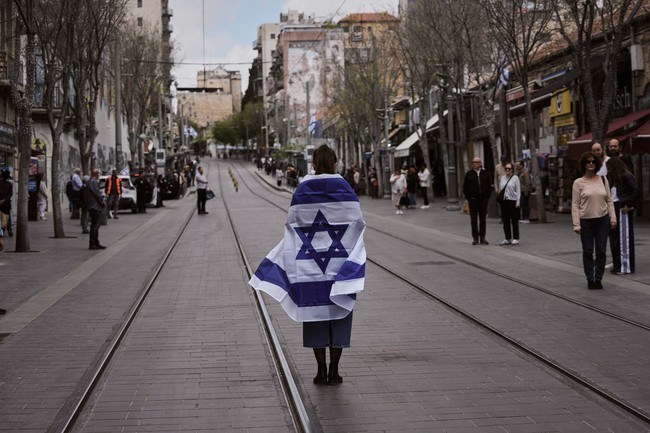
But today is Yom Ha’Atzmaut, Israeli Independence Day. On this day in 1948 (the 5th of Iyar in the Hebrew calendar, it was May 14 in the Gregorian calendar), the modern State of Israel was declared. With an unbroken Jewish presence in the land of Israel for 3700 years, there has been no official nation of Israel since 70 C.E. until this day. It is a day of joy and faith, a recognition that God’s covenants are eternal, and that miracles are not a thing of the past, but are present today. As David Ben-Gurion, Israel’s first Prime Minister, said, “To be a realist living in Israel, you must believe in miracles.”
And we do live today still in the midst of miracles: the existence of both Israel and the United States demonstrates that, for the U.S., even with all its challenges, is unique and miraculous. And Israel, thanks to God, is celebrating this holiday today.
In 2014, Rabbi Shlomo Riskin of Efrat, one of the greatest spiritual leaders of the last 200 years, proposed adapting this holiday. As the founder of the Center for Jewish-Christian Understanding and Cooperation, he created Yom Hallel on this same day, the “Day of Praise.” All Christians worldwide are invited to join the Jews in Israel in celebrating by reciting the full Hallel prayer; Psalms 113-118, praising God.
In this time of crisis in the world, with the Middle East in such a volatile position, there is no better time to take Rabbi Riskin’s recommendation and pray these Psalms today. Whatever is happening in the world, whatever challenges or dangers, the recitation of these powerful Psalms on this meaningful day makes a difference to each individual and to the world.
I pray that we will all take a few minutes to be grateful and to celebrate Israeli Independence Day. To be grateful to God. To celebrate life with the words of Psalms 113-118.
And in those few minutes, may we all help make this a true day of praise; and may peace come upon us all, Israel, the United States, and the world.
Chazak u’Baruch
Rabbi Michael Barclay
April 22, 2026
5th of Iyyar, 5786
20th day of the Omer
Enjoying PJ Media? Get exclusive content and support independent journalism with 60% off a PJ Media VIP membership. Use promo code FIGHT and join today.