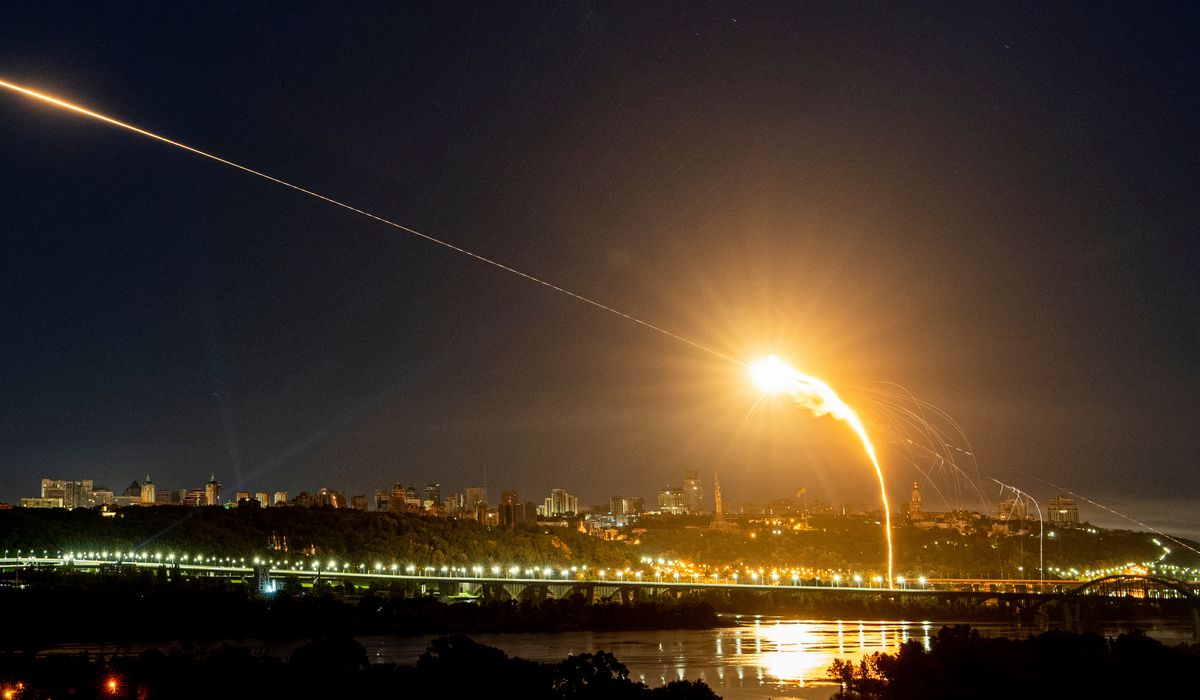
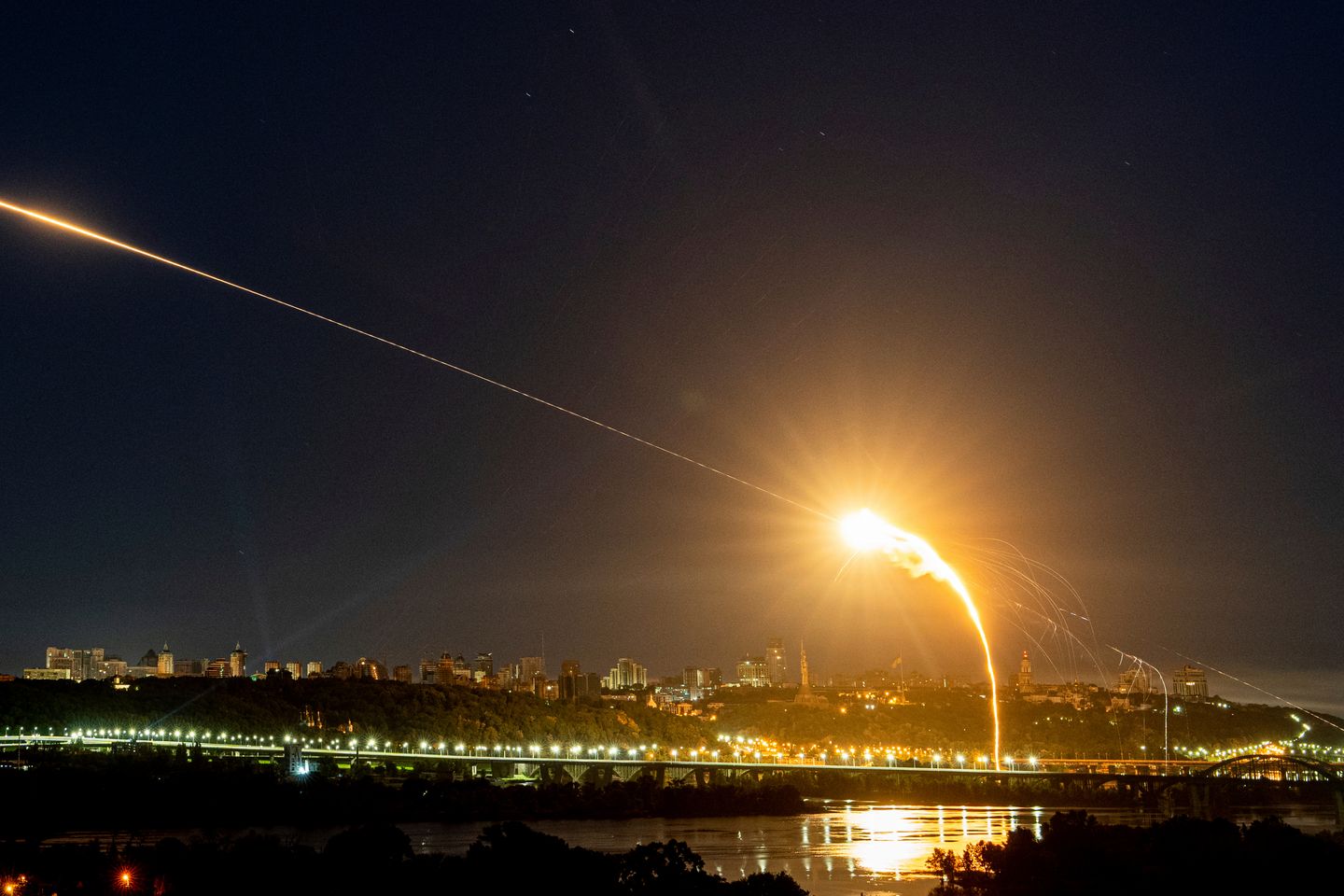
KYIV, Ukraine — Four years of trading blows with one of the world’s most powerful militaries has come at enormous cost in blood and treasure for Ukraine.
But holding the line against Russia has also earned the outnumbered and underfunded Ukrainians a reputation for creative, cost-effective and surprisingly successful new battlefield strategies — a war-tested expertise that is suddenly in huge demand.
Kyiv in recent days signed a series of long-term defense cooperation agreements with three Gulf states, a move analysts say reflects Ukraine’s broader effort to transform from a wartime aid recipient into a global security partner.
President Volodymyr Zelenskyy said Sunday that Kyiv has negotiated 10-year agreements with Saudi Arabia, the United Arab Emirates and Qatar, following the Ukrainian president’s regional tour aimed at deepening military and industrial ties.
While the deals vary in scope, they share a common objective: exporting Ukraine’s hard-won expertise in drone warfare, air defense and electronic warfare to a region facing a growing threat from missile and drone attacks.
“This is a partnership for 10 years,” Mr. Zelenskyy said in remarks broadcast on Ukrainian television, adding that discussions included co-production, technology transfers and long-term financing of defense manufacturing.
The most concrete of those three agreements was signed with Qatar, where military chiefs concluded a formal intergovernmental framework covering joint defense projects, industrial cooperation and technology partnerships.
In Saudi Arabia, the agreement signed by defense ministries constitutes more of a framework designed to enable future contracts, investments and joint programs, rather than committing to specific purchases.
With the United Arab Emirates, cooperation has been agreed in principle, while technical details are still being finalized, according to Ukrainian officials.
Taken together, the agreements point to a new model of defense cooperation — one that goes beyond arms sales to include co-production, training and long-term industrial partnerships.
Ukrainian officials say they are not merely exporting technologies. Instead, Kyiv is offering what Mr. Zelenskyy described as an integrated approach to defense: not only interceptors, but command systems, electronic warfare capabilities and operational expertise developed during more than four years of high-intensity war with Russia.
That experience is now in high demand in the Gulf, where recent attacks from Iran and its regional allies have exposed critical vulnerabilities in civilian and oil infrastructure, particularly to low-cost drones modeled on Iran’s Shahed systems.
More than 200 Ukrainian specialists have already been deployed to the region, according to Ukrainian officials. They’ve been tasked with advising local forces on how to counter such threats and integrate air defense systems more effectively.
The pitch is straightforward: Ukraine has faced — and adapted to — the kinds of attacks Gulf states now fear.
For Kyiv, the push is as much economic as it is strategic: After years of expansion at breakneck speed, Ukraine’s defense industry now has production capacity that far exceeds the state’s purchasing power.
“Today, Ukrainian companies can produce roughly six times more than the government can afford to buy,” lawmaker Halyna Yanchenko told The Washington Times, warning that delays in export policy risk squandering a rare opportunity.
She advocates what she calls the “export of factories,” a model based on licensing, joint production and building manufacturing capacity abroad rather than simply shipping finished weapons.
That approach is reflected in the Gulf agreements, which include provisions for co-production both in Ukraine and in partner countries, as well as long-term financing commitments tied to defense output.
A race to open export channels
Industry officials say the stakes are high.
“It is necessary to put in place all the decisions required to allow Ukraine’s industrial base to export,” Serhiy Vysotskyi, deputy head of the National Association of Ukrainian Defense Industries, told The Times. “If nothing is done, Ukraine risks becoming just a testing ground or a bank of technologies that others will later exploit.”
Estimates from Ukraine’s National Security and Defense Council suggest defense exports could reach several billion dollars in 2026, including equipment, components and services. But unlocking that potential depends on regulatory changes and political decisions that are still being debated in Kyiv.
The Gulf agreements highlight a broader shift in Ukraine’s wartime strategy.
Since Russia’s full-scale invasion in 2022, Kyiv has relied heavily on Western military aid to sustain its defense. Now, officials are seeking to leverage the country’s combat experience to build a parallel role as a provider of security.
Mr. Zelenskyy said Ukraine has already received interest from at least 11 additional countries in the Middle East and beyond.
This renewed effort is also tied to geopolitical timing: As tensions in the Middle East rose and drone warfare became more widespread, Ukraine’s experience — particularly in defending against mass, low-cost aerial attacks — has gained new relevance.
In that sense, the war that has strained Ukraine’s economy and infrastructure has also created a unique export commodity: real-world expertise in modern, high-intensity warfare.
Between dependence and ambition
The shift, however, remains incomplete.
Ukraine is still dependent on Western financing and military support to sustain its war effort. As significant as they may be, the Gulf deals do not change that reality in the short term.
But they do nonetheless suggest an emerging strategy: using wartime innovation to secure long-term industrial partnerships, attract foreign investment, and reshape the country’s position in the global defense market.
If successful, the approach could allow Kyiv to turn the experience of war into a durable source of economic and geopolitical leverage.
For now, the agreements signal intent — and a bet that the lessons learned on Ukraine’s front lines can be exported far beyond them.