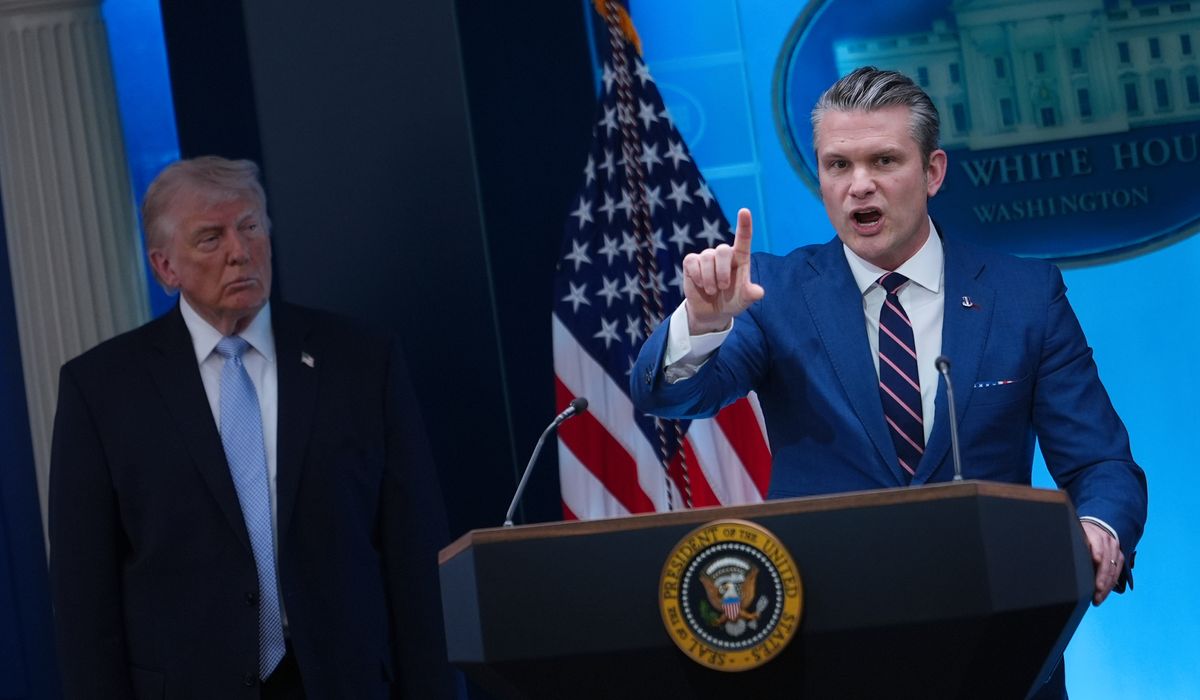
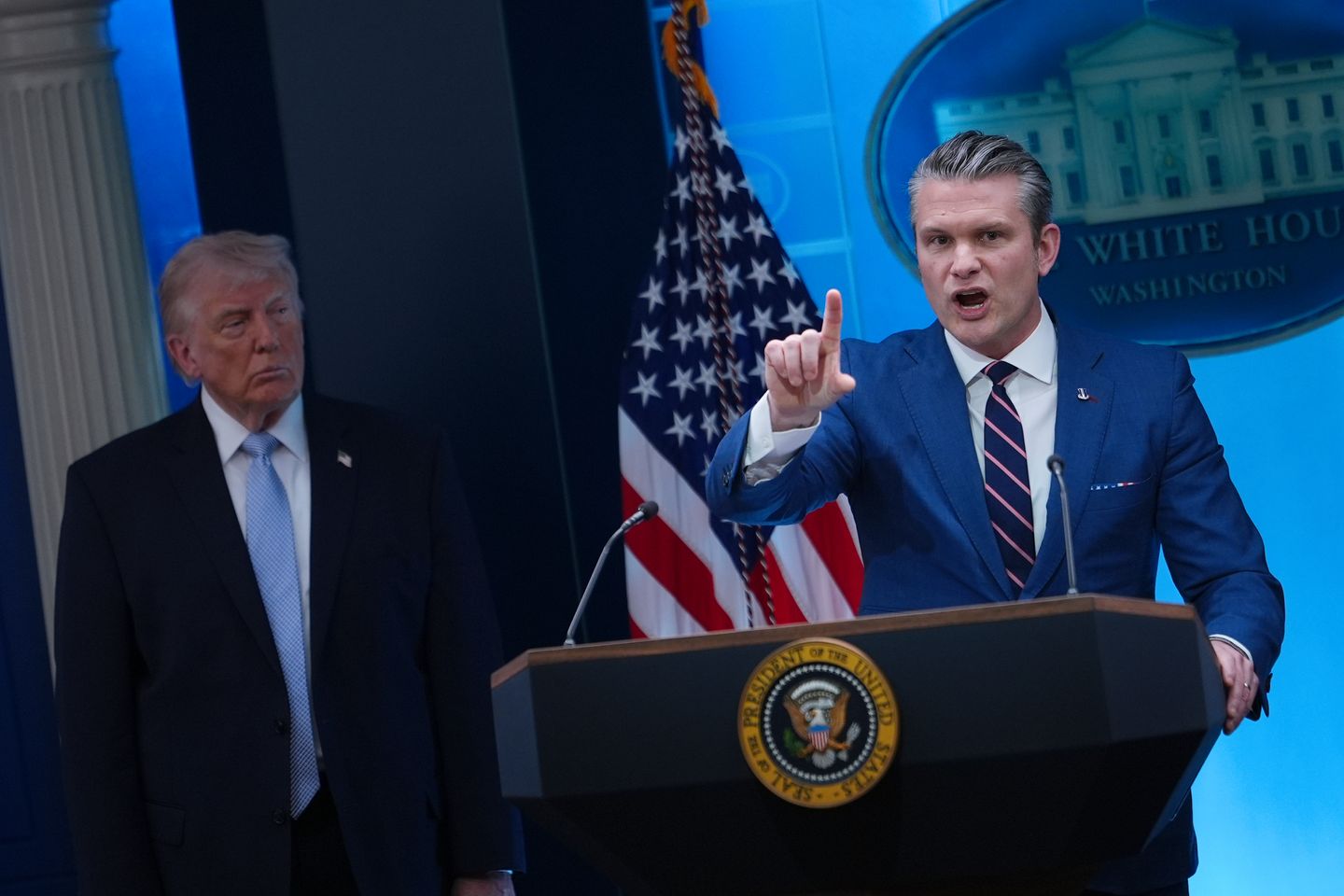
Defense Secretary Pete Hegseth led a worship service at the Pentagon on Wednesday in which he recited what he described as a military prayer tied to the Old Testament book of Ezekiel — but observers quickly noted the words bore far closer resemblance to a famous monologue from Quentin Tarantino’s 1994 film “Pulp Fiction” than to any biblical text.
Mr. Hegseth told those assembled he was sharing a prayer given to him by the lead mission planner of a combat search and rescue operation — known as CSAR — that recovered two downed airmen from Iran earlier this month. He called it “CSAR 25:17,” saying he believed it was “meant to reflect Ezekiel 25:17.”
The actual Ezekiel 25:17 reads: “And I will execute great vengeance upon them with furious rebukes; and they shall know that I am the Lord, when I shall lay my vengeance upon them.”
What Mr. Hegseth actually recited was substantially longer and strikingly different. “The path of the downed aviator is beset on all sides by the iniquities of the selfish and the tyranny of evil men,” he said. “Blessed is he who, in the name of comradery and duty, shepherd the lost through the valley of darkness, for he is truly his brother’s keeper and the finder of lost children. And I will strike down upon thee with great vengeance and furious anger those who attempt to capture and destroy my brother. And you will know my call sign is Sandy One, when I lay my vengeance upon thee.”
Social media users were quick to flag the similarity to the well-known speech delivered by actor Samuel L. Jackson’s character Jules Winnfield in “Pulp Fiction,” in which Winnfield invokes the same Ezekiel citation just before killing a man.
In the film, Mr. Jackson’s character says: “The path of the righteous man is beset on all sides by the iniquities of the selfish and the tyranny of evil men” — language nearly identical to Mr. Hegseth’s recitation, with only a handful of words swapped out to fit a military context. Some users posted side-by-side video comparisons of the two deliveries online.
According to the Guardian, Mr. Hegseth made no mention of Mr. Tarantino’s script, Mr. Jackson’s performance or the film during the prayer service. The Department of Defense did not respond to requests for comment on the origin of the prayer text. A Pentagon spokesman, Kingsley Wilson, separately addressed Democratic lawmakers’ ongoing impeachment efforts against Mr. Hegseth, calling them “just another charade in an attempt to distract the American people from the major successes we have had here at the Department of War.”
The following day, Mr. Hegseth again drew on religious imagery at a Pentagon press briefing on the Iran war, comparing members of the media to the Pharisees — the New Testament-era group frequently depicted in conflict with Jesus Christ.
“I sat there in church and I thought: ’Our press are just like these Pharisees,’” he said, recalling a sermon from the previous weekend. “The hardened hearts of our press are calibrated only to impugn.” He added: “Sometimes it’s hard to figure out what side some of you are actually on.”
This article was constructed with the assistance of artificial intelligence and published by a member of The Washington Times’ AI News Desk team. The contents of this report are based solely on The Washington Times’ original reporting, wire services, and/or other sources cited within the report. For more information, please read our AI policy or contact Steve Fink, Director of Artificial Intelligence, at sfink@washingtontimes.com
The Washington Times AI Ethics Newsroom Committee can be reached at aispotlight@washingtontimes.com.