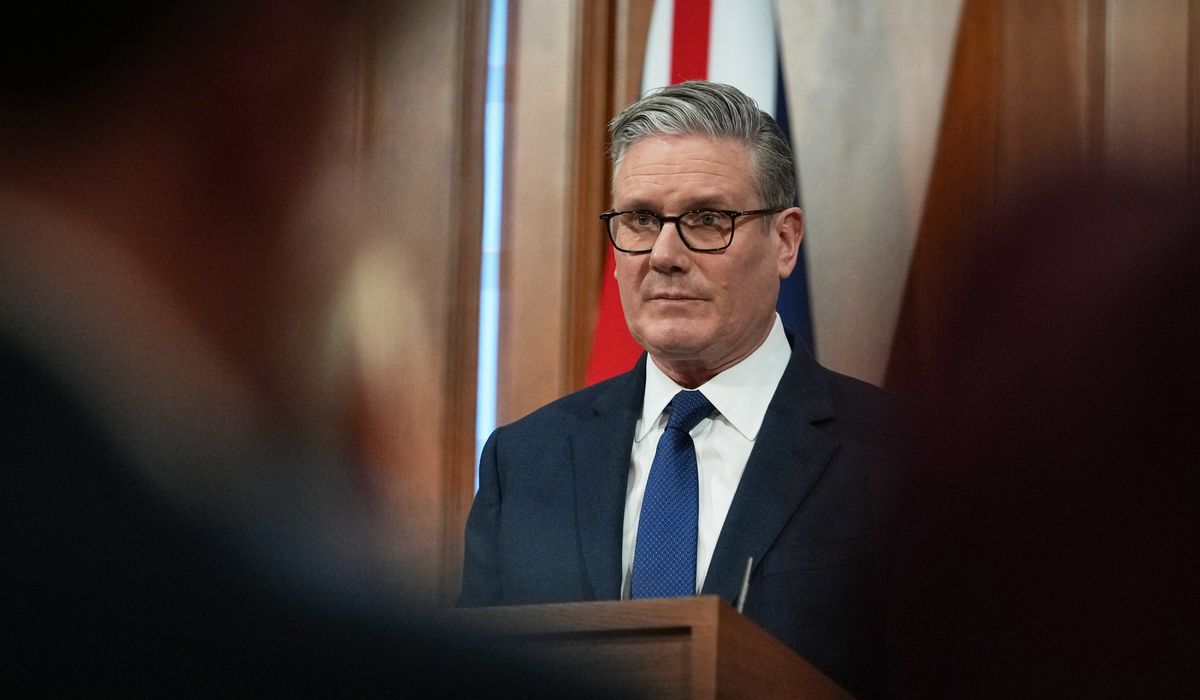
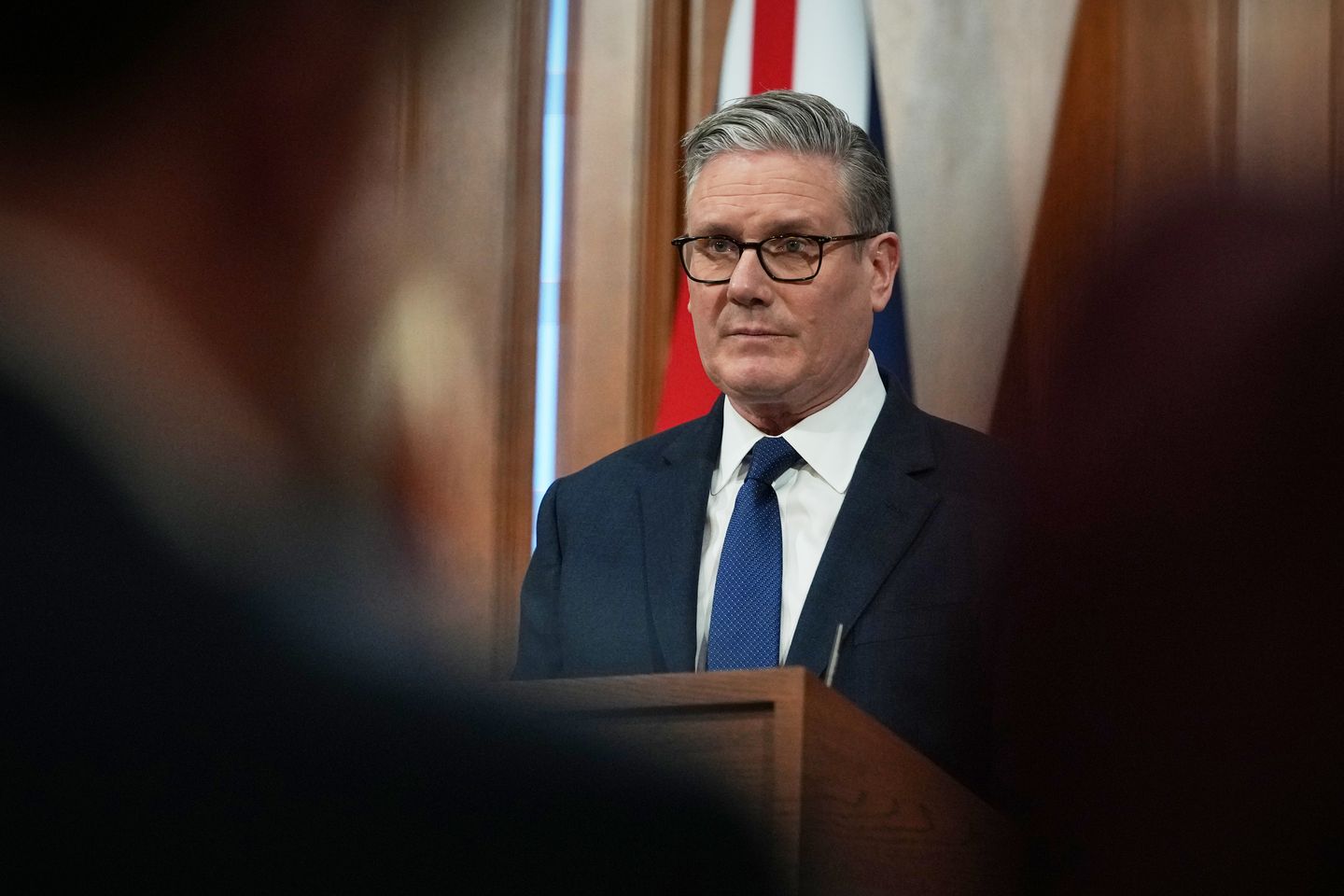
British Prime Minister Keir Starmer said Monday that the United Kingdom is “not supporting” the U.S. naval blockade of the Strait of Hormuz and that his country remains focused on bringing together a coalition of countries to reopen the critical waterway.
In an interview with the BBC, Mr. Starmer stressed that reopening the Strait of Hormuz remains a high priority for his government and that the U.K. is committing significant resources to finding a peaceful solution.
“It is, in my view, vital that we get the Strait open and fully open, and that’s where we’ve put all of our efforts in the last few weeks, and we’ll continue to do so,” he said.
After a U.S. diplomatic mission, led by Vice President J.D. Vance, failed to secure a deal with Iran in talks in Pakistan over the weekend, President Trump announced a blockade of the Strait of Hormuz on Sunday. The blockade is expected to take effect at 10 a.m. EDT Monday.
Mr. Starmer insisted that he would not commit British vessels to a blockade that he said did not have a lawful basis or a “clear thought-through plan.”
“My decision has been very clear that whatever the pressure, and there’s been some considerable pressure, we’re not getting dragged into the war,” the prime minister said.
Mr. Starmer has, for weeks, resisted calls from Mr. Trump to join the war against Iran or at least commit British vessels to reopen the Strait of Hormuz, which Iran has kept closed for more than a month.
The U.K.’s refusal has frustrated Mr. Trump and further strained Washington and London’s relationship, which was on the rocks before the war over the use of U.S. military bases for operations against Iran.
Mr. Trump has implied that the U.S. could leave the Middle East without securing the strait and has called on European countries to reopen it themselves.
Mr. Starmer and French President Emmanuel Macron have tried to build an international coalition to find a solution to the Hormuz crisis. But Mr. Starmer and others pointed out that a coalition would lead a strictly defensive mission after primary hostilities between the U.S., Israel and Iran have concluded.
At least 20% of the world’s oil and 25% of the world’s liquid natural gas pass through the Strait of Hormuz each year, and its closure has put dramatic pressure on global markets. Brent crude oil prices have hovered well above $90 a barrel since the start of the war and the S&P 500 experienced massive losses throughout March.
Although prices dropped significantly after last week’s announcement of a two-week U.S.-Iran ceasefire, continued threats from both parties have sent Brent crude back over $100 a barrel. The ceasefire, which was intended to allow for the safe passage of commercial tankers through the Strait of Hormuz, is set to expire April 21.