Don’t miss the full story, whose reporting from The Associated Press is the basis of this artificial intelligence-assisted article.
1. Why is gas cheaper on Native American reservations?
Tribal lands are exempt from state fuel taxes under more than a century of U.S. court rulings holding that states lack authority to tax Native Americans on their own land. While tribes still pay the federal fuel tax of 18.4 cents per gallon for gasoline, state taxes — which range from 9 cents per gallon in Alaska to 71 cents in California — don’t apply, allowing tribes to pass those savings directly to customers.
2. How much can drivers actually save?
Savings vary by state but can be substantial. Drivers near Seattle are finding gas about 75 cents cheaper per gallon on the Tulalip Reservation, while stations on Cattaraugus Indian Territory in New York are selling fuel roughly 50 cents below nearby towns. In California, the Chukchansi Crossing Fuel Station was 60 cents less than competing stations in the area.
3. How widespread are tribally owned gas stations, and where are they concentrated?
As of 2025, 245 tribes operate 496 convenience stores with gas stations across the United States. They are most prevalent in Oklahoma, California, Washington, Arizona, New Mexico, Wisconsin, Michigan, and New York, with some tribes — like the Choctaw Nation and the Oneida Indian Nation — running their own multi-location chains.
4. Are gas sales the primary source of revenue for these tribal businesses?
Gas is largely a draw to get customers inside, where snack and grocery sales generate more profit. Beyond fuel, tribal stores increasingly serve as grocery providers in rural food deserts, and many locations also offer drive-through smoke shops, car washes, and truck stop amenities. Around 205 tribal gas stations are located at or near casinos, and revenue from all these businesses funds essential reservation services, including roads, policing, health care, and education.
5. What’s driving the broader urgency around gas prices right now?
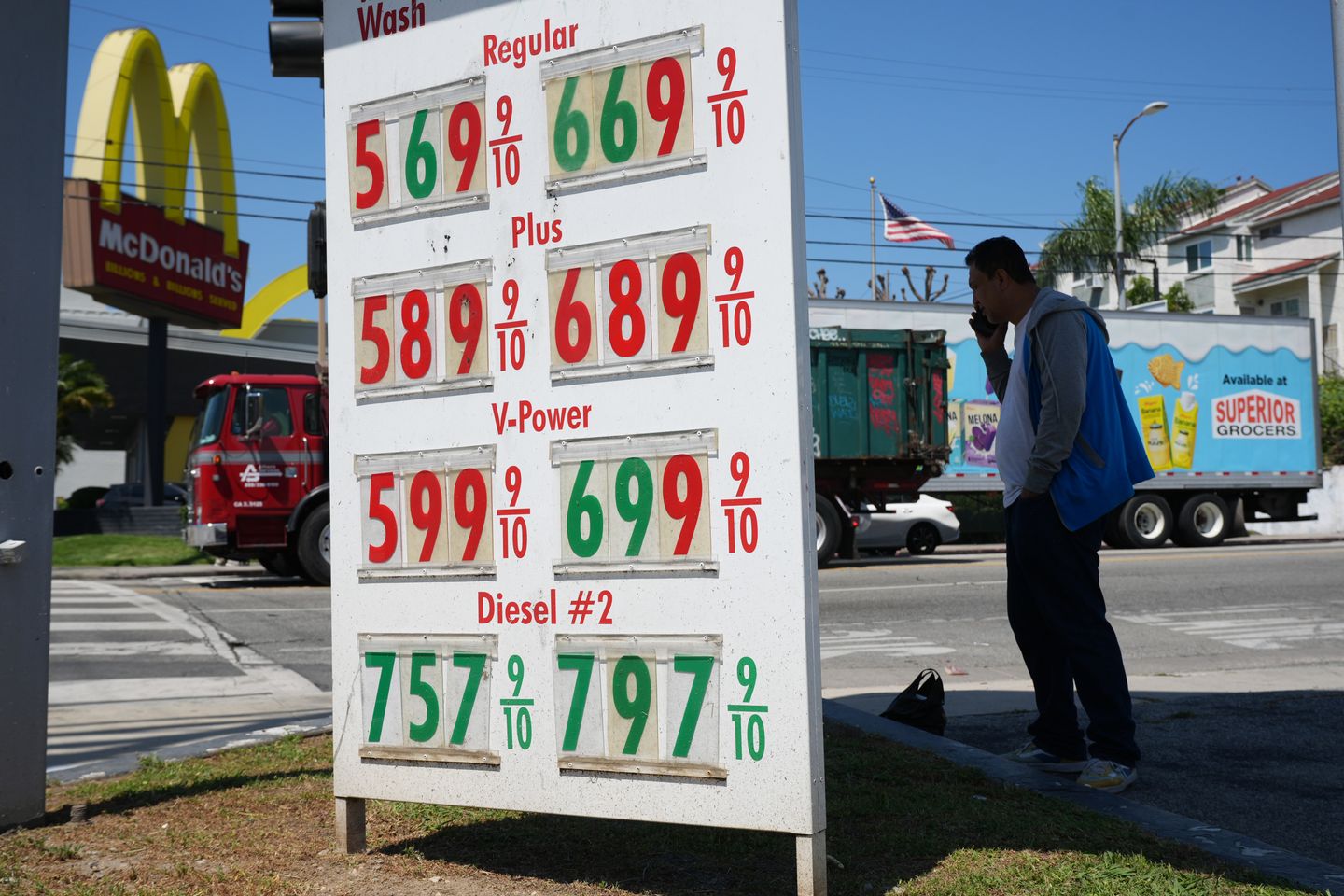
A war with Iran that began on Feb. 28 has pushed national average gas prices up more than $1 to $4.15 per gallon, according to AAA. Economists expect prices to keep rising and contribute to broader inflation as geopolitical tensions persist, prompting more drivers to use apps like GasBuddy to hunt for cheaper options — including tribally owned stations.
READ MORE: Tribal gas stations offer a reprieve from high prices during Iran war
This article was constructed with the assistance of artificial intelligence and published by a member of The Washington Times’ AI News Desk team. The contents of this report are based solely on The Washington Times’ original reporting, wire services, and/or other sources cited within the report. For more information, please read our AI policy or contact Steve Fink, Director of Artificial Intelligence, at sfink@washingtontimes.com
The Washington Times AI Ethics Newsroom Committee can be reached at aispotlight@washingtontimes.com.