The NASA manned spaceflight program has had little to cheer about in the last decade. The space shuttle program ended in 2011, and NASA astronauts had to hitch a ride on the Russian Soyuz spacecraft to get to the International Space Station (ISS).
In 2020, NASA began using SpaceX’s Dragon to shuttle astronauts to the ISS, and Boeing’s Starliner joined later. NASA’s manned program was so far behind its original 2016 delivery date that the agency was forced to use private rockets.
I guess it was better than begging the Russians to hitch a ride with them.
Finally, on April 1, NASA launched Artemis II and the Orion capsule. The Orion is the first NASA-built crewed spacecraft since the Shuttle’s retirement in 2011.
Except for a faulty $23 million toilet that was quickly fixed, the mission appeared to be nearly flawless. The spacecraft circled the Moon, capturing never-before-seen views of its dark side, and flew farther into space than any other human. It’s record 252,700 miles from Earth beats Apollo 13’s record of 248,600 miles.
Note: It’s 40 million miles to Mars during the Red Planet’s closest approach. We’ve got a ways to go.
NASA was rightly pleased and proud of the performance of Artemis.
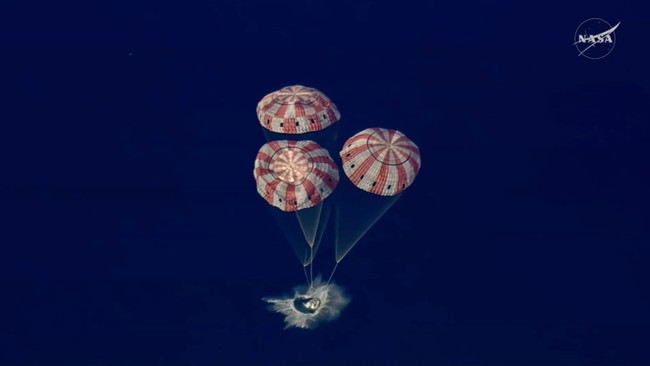
“The path to the lunar surface is open, but the work ahead is greater than the work behind us. It always will be,” said NASA Associate Administrator Amit Kshatriya after the successful splashdown in the Pacific Ocean on Friday night. “53 years ago, humanity left the moon. This time we return to stay.”
That remains to be seen. Artemis III, originally scheduled to land on the Moon, will now test “critical systems” in Earth orbit sometime in mid-2027. The actual Moon landing is tentatively scheduled for early 2028, but given NASA’s track record with massive delays (and the fact that SpaceX has yet to deliver a lunar lander), that date is likely to slip significantly.
The NASA inspector general report (OIG) of Nov. 2021 estimated that the Artemis program would cost U.S. taxpayers $95 billion between its inception in 2011 and 2025. Best estimates are that the cost now exceeds $100 billion.
“Looking ahead, without capturing, accurately reporting and reducing the cost of future SLS/Orion missions, the Agency will face significant challenges to sustaining its Artemis program in its current configuration,” adds the 73-page OIG report.
The Artemis is a money pit. The time has come for NASA to ask some hard questions: specifically, can the agency ask the American taxpayer to continue funding a program that private industry could better fund and manage?
The launch of Artemis II, NASA’s crewed lunar flyby, will cost about $4.1 billion. The entire program is expected to exceed $100 billion by the time astronauts are scheduled to step on the lunar surface once again in 2028. That is enough to send every American a check for roughly $300. Instead, that money is being aimed at the moon.The mixed track record of government-run space programs makes one thing clear: There are better uses for taxpayer resources. SpaceX has already shown the way, cutting launch costs, capturing the majority of global payload mass and building a satellite network that has proved itself on battlefields. It is time for the market, not Washington, to lead humanity into space.
NASA spends approximately $25 billion per year of taxpayer money. When pressed to justify this, proponents point to a familiar catalogue of products the agency first produced: memory foam, image sensors and emergency blankets. For a program that has consumed the economic output of a small nation, the returns look less like economic engines and more like marginal consumer upgrades. Do these improvements justify the cost? Could a competitive private market produce them faster and cheaper?
The answer to those questions is an unqualified “yes.”
“NASA’s own independently verified estimates found that developing a rocket like the Falcon 9 through traditional NASA contracting would have cost roughly $4 billion. SpaceX did it for $390 million,” says Julia R. Cartwright, a senior research fellow in law and economics at the American Institute for Economic Research.
“In 2025, SpaceX generated approximately $8 billion in profit and $16 billion in revenue — a figure that could soon exceed NASA’s entire annual budget,” writes Cartwright in the Post. “This is not a government program dressed up as progress. This is a real business, building real things that happen to be pointed at the stars.”
SpaceX is only one player in an ever-growing constellation of companies spending hundreds of billions of dollars in a new gold rush into space. In 15 years, some of these companies will have landed on the Moon and asteroids, far faster and more cheaply than any government, especially NASA.
No one does robot missions to the planets better than NASA. US probes have made fantastic, shattering discoveries on Mars, Jupiter, Saturn’s moons, and asteroids, pointing the way to a dazzling future beyond Earth for humankind.
Private industry would best accomplish manned missions to those planets. Unleash the genius of American entrepreneurship and capitalism, rather than burden the taxpayers with programs such as Artemis.
PJ Media will give you all the information you need to understand the decisions that will be made this year. Insightful commentary and straight-on, no-BS news reporting have been our hallmarks since 2005.
Get 60% off your new VIP membership by using the code FIGHT. You won’t regret it.