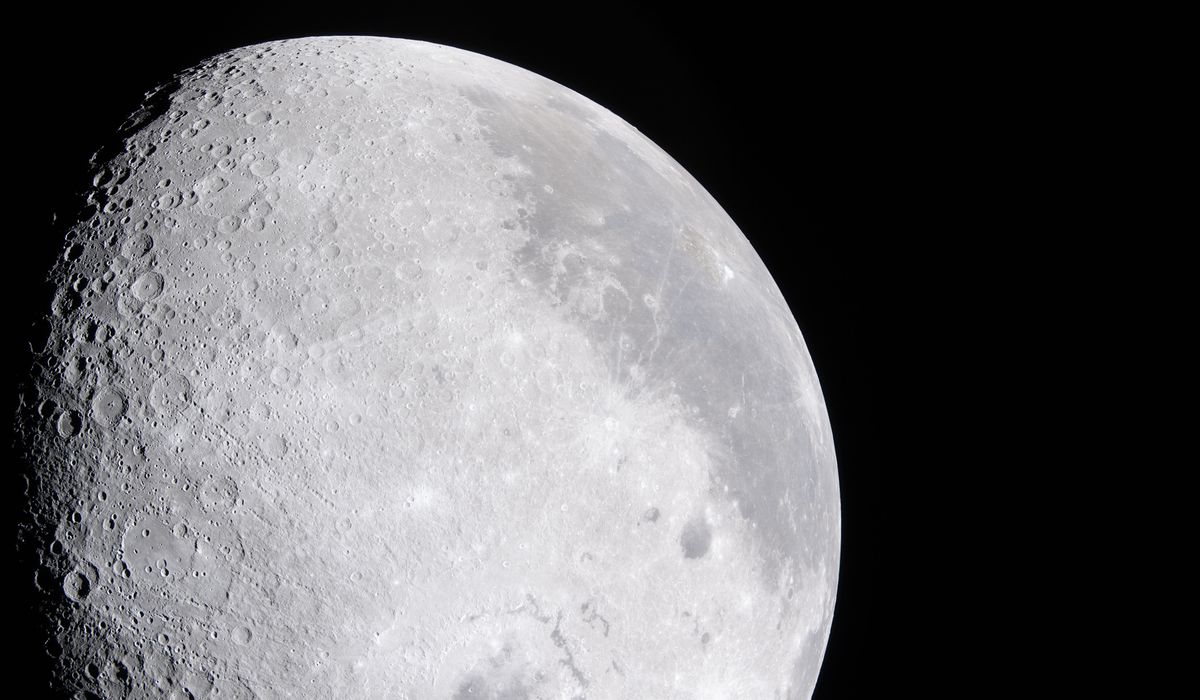
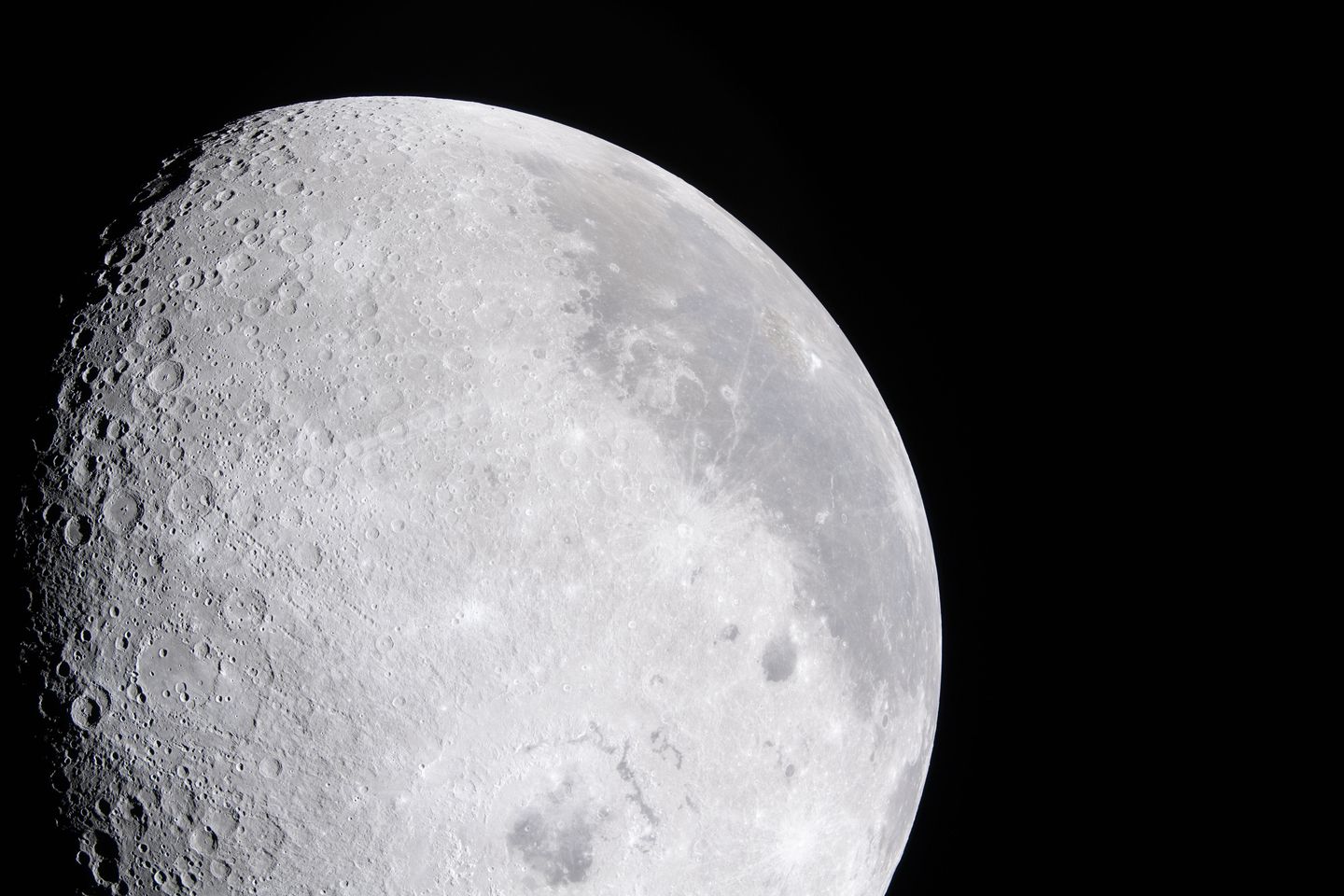
As NASA and rival space programs eye the moon for sustained commercial activity, and the space economy edges toward what one space entrepreneur says is a trillion-dollar industry, a fundamental legal and national security question remains unsettled: Who owns what is mined or built there?
Cliff Beek, CEO of SC Solutions and co-founder of Modern Pay Engine, tells The Washington Times that the lack of a clear framework for ownership, licensing and commercial activity on the moon remains a major unresolved issue for the emerging space economy.
“Jurisdictional control,” Mr. Beek said when asked who owns minerals on the moon and Mars. “Who owns it? That’s the question.”
It is a question without a clean answer, and the ambiguity is becoming harder to ignore.
Mr. Beek, speaking on The Times’ Threat Status podcast, pointed to the lunar south pole as a focal point. That region, he said, is where both NASA and Chinese space programs have focused their attention, drawn by large craters containing signs of ice and, by extension, the capacity to produce water and oxygen critical for sustaining human life and fueling a permanent lunar economy.
“The Chinese have landed,” Mr. Beek said. “It appears there’s a big focus on the south pole of the lunar surface, that appears to be where NASA and other groups are focusing.”
Mr. Beek said he favors a structured approach to resolving who controls what. “I’m one for clear licensing and ownership of assets and settlements,” he said, while cautioning against regulatory overreach that could strangle commercial development before it gets off the ground. He said he opposes over-regulation that would produce an impractical framework blocking responsible commercial activity.
But in the absence of that framework, Mr. Beek offered a blunt assessment of how ownership may ultimately be determined.
“Ownership becomes possession,” he said, “and who’s in possession of it?”
That statement carries significant weight in the current geopolitical environment. During the interview, Washington Times National Security Editor Guy Taylor referenced a prior conversation with Gen. Chance Saltzman and said the Space Force commander had discussed Chinese and Russian actions in space as leaving the United States in a “responsive posture, almost catching up.”
Mr. Beek, who has worked in space infrastructure and financial transaction systems for decades, argued that American leadership in developing the legal, financial and technological systems underpinning the space economy is not merely a commercial priority. It is a national security imperative.
“Whatever we do in space on the lunar surface does spill over to here at home,” he said. “The capability to be in a position to secure, safely secure the lunar surface and areas of space is really important for our security and for the growth of our life here on Earth.”
He added that a robust American presence in the space economy would generate tangible benefits domestically: stronger disaster response capabilities, new technologies and industries, and jobs. He suggested a stronger U.S. role would also shape the economic architecture that develops around future space activity.
The stakes, Mr. Beek suggested, go well beyond flags planted in lunar soil.
“If space becomes a real economic zone,” he said, “then the financial systems that need to support it obviously have to create this new investment for manufacturing and technology spillovers here at home.”
Mr. Beek also referenced NASA’s lunar base camp concept during the interview, describing a vision of sustained human and autonomous presence on the lunar surface, with mining, logistics and commercial services playing a central role.
“It’s incredibly important for the U.S. to have a presence there,” he said, “and for us not to militarize it, but to be able to develop the kind of technologies that will move us forward.”
For the latest discussions on national security, be sure to visit our Threat Status section.
This article was constructed with the assistance of artificial intelligence and published by a member of The Washington Times’ AI News Desk team. The contents of this report are based solely on The Washington Times’ original reporting, wire services, and/or other sources cited within the report. For more information, please read our AI policy or contact Steve Fink, Director of Artificial Intelligence, at sfink@washingtontimes.com
The Washington Times AI Ethics Newsroom Committee can be reached at aispotlight@washingtontimes.com.