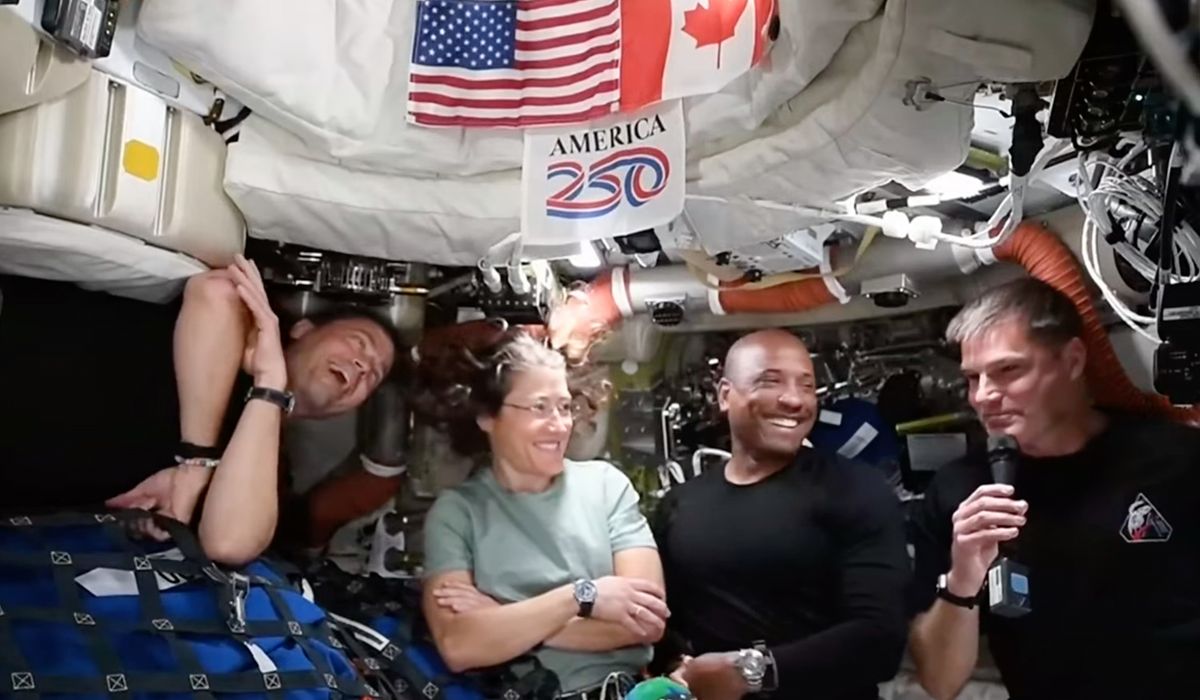
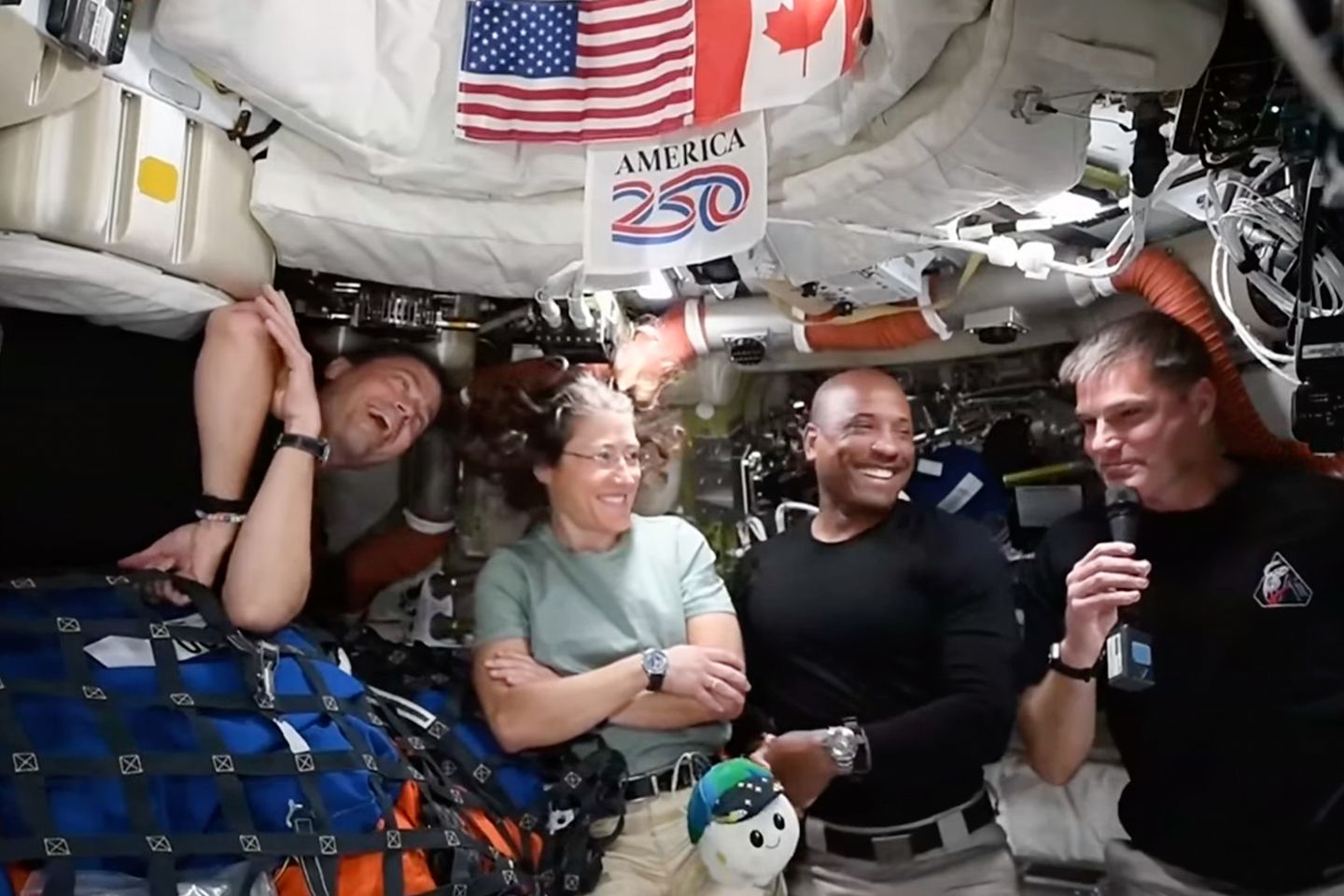
Four astronauts who flew farther from Earth than any humans in more than half a century are coming home tonight, and you can watch it live.
NASA astronauts Reid Wiseman, Victor Glover, Christina Koch and Canadian Space Agency astronaut Jeremy Hansen are wrapping up the final phase of their journey back to Earth after completing a historic lunar flyby. It was humanity’s first return to the vicinity of the Moon since 1972. Splashdown is targeted for 8:07 p.m. EDT (5:07 p.m. PDT) off the coast of San Diego, where a combined NASA and U.S. military recovery team will be standing by.
How to Watch
Live return coverage begins at 6:30 p.m. EDT and is available on NASA+, Amazon Prime, Apple TV, Netflix, HBO Max, Discovery+, Peacock and Roku.
Splashdown Timeline
At 2:53 p.m., NASA will conduct a third and final return burn to refine Orion’s path for atmospheric entry and splashdown.
At 7:33 p.m., Orion’s crew module will separate from the service module, exposing its heat shield for reentry through temperatures of about 3,000 degrees Fahrenheit.
At 7:37 p.m., Orion will perform an 18-second crew module raise burn to set the proper entry angle and align the heat shield for atmospheric interface.
At 7:53 p.m., the spacecraft will reach 400,000 feet above Earth’s surface while traveling nearly 35 times the speed of sound. The crew is expected to experience up to 3.9 Gs, and a planned six-minute communications blackout will begin as plasma builds around the capsule.
According to NASA’s mission timeline, drogue parachutes are scheduled to deploy at around 8:03 p.m. at roughly 22,000 feet in altitude, slowing and stabilizing the capsule. At about 8:04 p.m., at roughly 6,000 feet, the drogues will release and three main parachutes will deploy, reducing Orion’s speed to less than 136 mph.
At 8:07 p.m., Orion will slow to 20 mph before splashing down in the Pacific Ocean, completing a 694,481-mile journey.
What Happens After Splashdown
Recovery teams will assist Mr. Wiseman, Mr. Glover, Ms. Koch and Mr. Hansen onto an inflatable raft, then use helicopters to deliver them to the USS John P. Murtha. Once aboard, the astronauts will undergo post-mission medical evaluations before returning to shore, where aircraft will take them to NASA’s Johnson Space Center in Houston.
About the Mission
The Artemis II mission launched April 1 at 6:35 p.m. from Kennedy Space Center in Florida aboard NASA’s Space Launch System rocket, sending the first humans toward the Moon since 1972.
This article was constructed with the assistance of artificial intelligence and published by a member of The Washington Times’ AI News Desk team. The contents of this report are based solely on The Washington Times’ original reporting, wire services, and/or other sources cited within the report. For more information, please read our AI policy or contact Steve Fink, Director of Artificial Intelligence, at sfink@washingtontimes.com
The Washington Times AI Ethics Newsroom Committee can be reached at aispotlight@washingtontimes.com.