Israeli Prime Minister Benjamin Netanyahu ordered his government Thursday to start negotiations with Lebanon as “soon as possible” to disarm Hezbollah fighters, as violence between the Mideast neighbors threatened to undo the ceasefire President Trump struck with Iran.
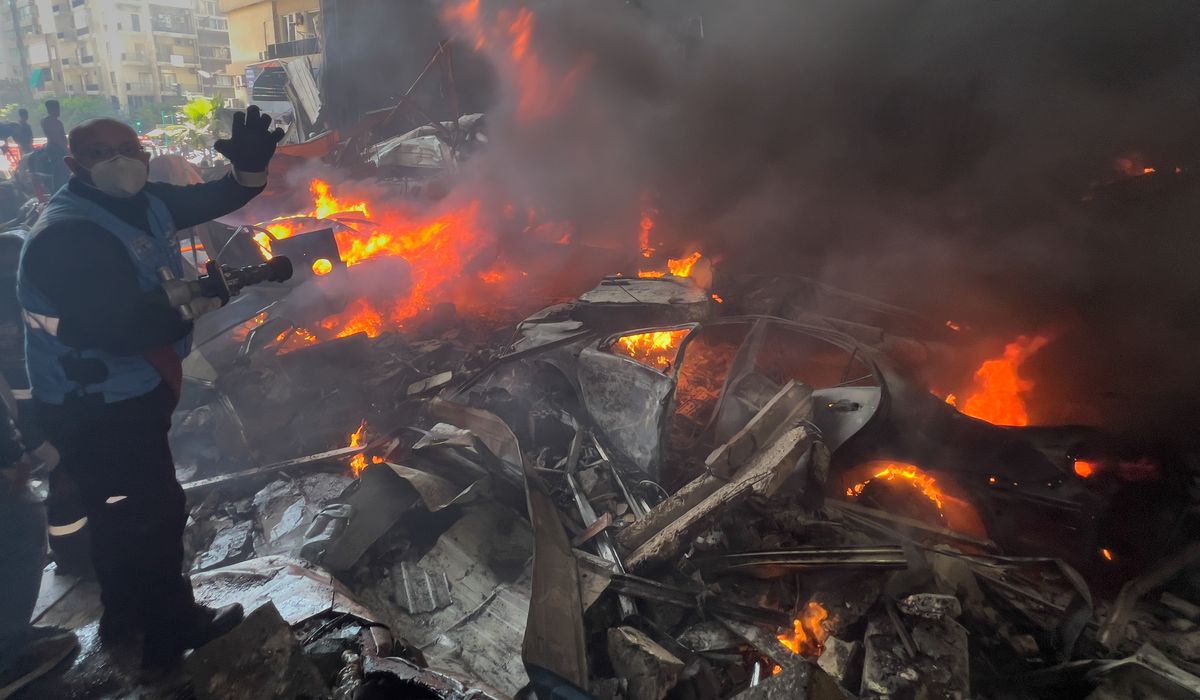
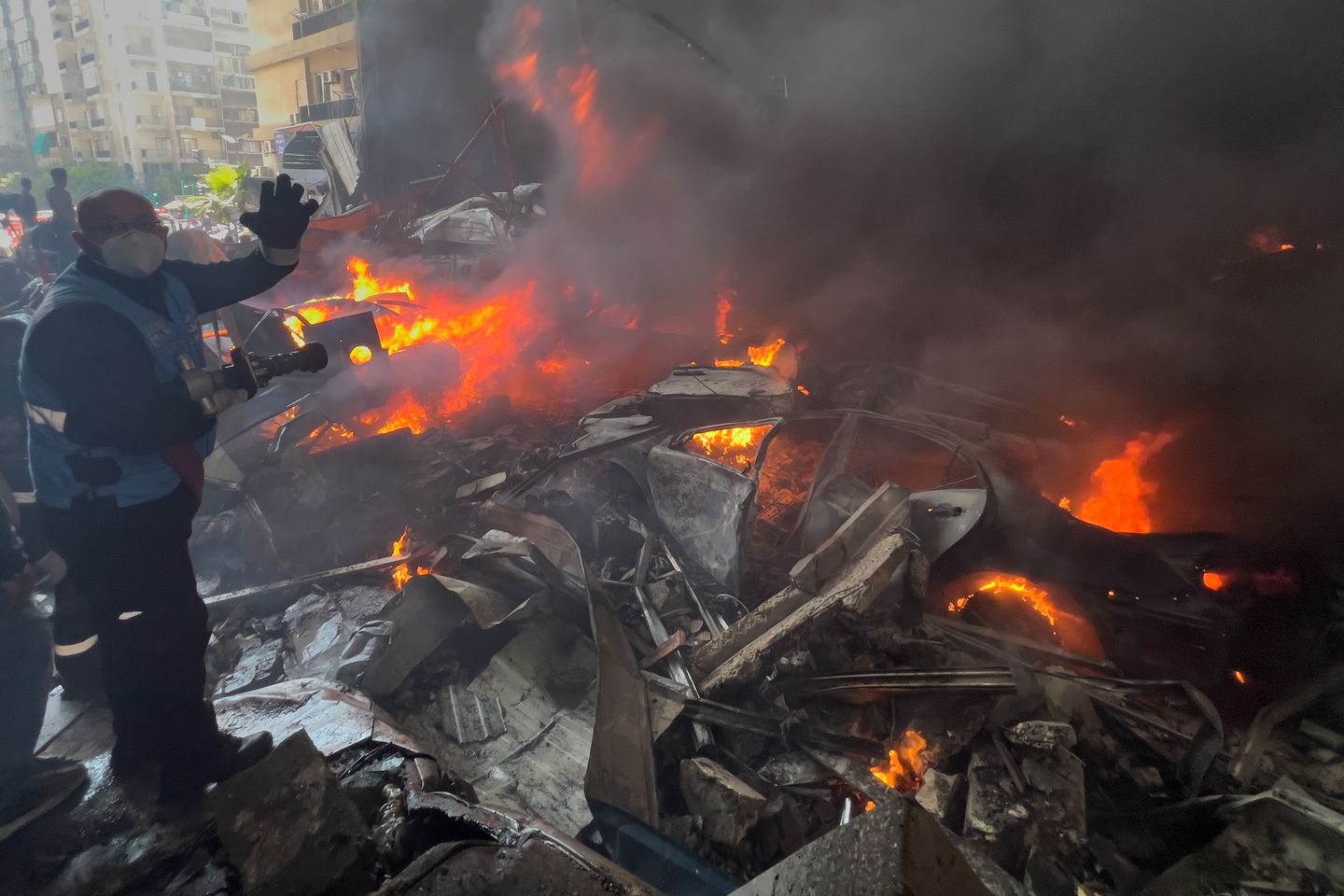
Mr. Netanyahu said talks would center on “arranging peaceful ties between Israel and Lebanon” as global leaders heaped pressure on Israel to stop leveling Beirut with bombing that killed civilians.
Strikes against Iran-backed militants in Lebanon emerged as the biggest threat to the two-week pause in fighting.
Iranian Parliament Speaker Mohammad Bagher Ghalibaf, writing Thursday on social media, pointed to the Pakistani government’s statement about the ceasefire, which explicitly included Lebanon.
He said any violations of the ceasefire agreement would “carry explicit costs and STRONG responses.”
“Extinguish the fire immediately,” Mr. Ghalibaf posted.
Slow traffic in the Strait of Hormuz, a critical passage for oil exports, remained the other sticking point ahead of deeper negotiations between the U.S. and Iran, scheduled to begin Saturday in Pakistan.
“Let’s be clear: the Strait of Hormuz is not open. Access is being restricted, conditioned and controlled,” Sultan Ahmed Al Jaber, CEO of Abu Dhabi’s state oil company, wrote on LinkedIn.
“Iran has made clear — through both its statements and actions — that passage is subject to permission, conditions and political leverage. That is not freedom of navigation. That is coercion.”
Oil prices neared $100 per barrel as traffic remained sluggish through the Strait of Hormuz, given Iran’s assertion of control.
U.S. stocks sank at the opening bell but rebounded on hopes the ceasefire would hold.
Mr. Trump is dispatching Vice President J.D. Vance and envoys Steve Witkoff and Jared Kushner to Islamabad this weekend to finalize a lasting peace with Iranian leaders who took over after top ranks were wiped out in U.S.-Israeli strikes.
On social media, Mr. Trump said the U.S. military is standing by with additional ammunition and weapons aimed at Iran until an authentic agreement is reached and carried out.
“All U.S. Ships, Aircraft, and Military Personnel, with additional Ammunition, Weaponry, and anything else that is appropriate and necessary for the lethal prosecution and destruction of an already substantially degraded Enemy, will remain in place in, and around, Iran, until such time as the REAL AGREEMENT reached is fully complied with,” Mr. Trump posted on Truth Social.
He said if Iran violates the agreement, “then the ’Shootin’ Starts,’ bigger, and better, and stronger than anyone has ever seen before.”
He added, “It was agreed, a long time ago, and despite all of the fake rhetoric to the contrary — NO NUCLEAR WEAPONS and, the Strait of Hormuz WILL BE OPEN & SAFE.”
All sides of the conflict are leaning into negotiations after Mr. Trump agreed late Tuesday to hold off on his promise to order the death of “a whole civilization” in Iran.
Officials in Tehran agreed to open the Strait of Hormuz as part of the Pakistan-brokered ceasefire of the war between Washington and the Islamic republic. However, Israeli strikes in Lebanon quickly put the ceasefire in doubt.
“I think the Iranians thought that the ceasefire included Lebanon,” Vice President J.D. Vance told reporters on Wednesday, adding that “we never made that promise.”
Mr. Ghalibaf warned Thursday that violations of the U.S.-Iran ceasefire will have “explicit costs,” as European leaders and others urged Israel to stop attacking Lebanon.
European leaders, meanwhile, toggled between calling on Hezbollah to disarm and scolding Israel over strikes that caused death and destruction.
“Israeli actions are putting the U.S.-Iran ceasefire under severe strain. The Iran truce should extend to Lebanon,” Kaja Kallas, who leads foreign affairs for the European Union, posted on X. “Hezbollah must disarm. The EU supports Lebanon’s efforts to disarm Hezbollah.”
French President Emmanuel Macron said France condemned the Israeli strikes “in the strongest possible terms.”
British Foreign Secretary Yvette Cooper said Lebanon should be included in the ceasefire, and Italy urged Israel to stop its bombardment.
The U.K. also rejected the idea of Iran setting up a toll system for the Strait of Hormuz, arguing that commercial ships should be able to traverse the waterway freely and safely under international law.
Britain’s Defense Secretary John Healey told reporters that the U.K. and its allies want to see the strait reopened soon and that the creation of a toll system, under which commercial vessels would pay an exorbitant price to safely travel through the waterway, would set a dangerous precedent.
His comments come after Mr. Trump implied that the U.S. could enter a “joint venture” with Iran to set up a toll system, which would theoretically generate revenue for Washington and Tehran.
The White House later walked back the idea, saying it was a rough concept from the president and not an accepted plan.
As oil prices remained high, the national average price of a gallon of gas stood at $4.17 on Thursday, up from just below $3 at the start of the war on Feb. 28, according to the AAA motor club.
Analysts say drivers should see some relief at the pump in the coming days if the ceasefire holds and oil prices stabilize.